In a fast-paced world where our devices are constantly vying for attention, having a reliable charging solution is more important than ever. Enter the 10-Port USB-C fast charger, a revolutionary charging dock that consolidates your charging needs into a sleek and efficient product. This innovative charger station doesnt just accommodate multiple devices; it elevates your entire charging experience, making it perfect for bustling offices or home entertainment setups.


Imagine having the power to charge 10 devices simultaneously, with each USB-C port delivering a maximum of 100W. This means your laptops, tablets, and smartphones can all be fueled up at lightning speed, eliminating the hassle of tangled cords and limited outlets. The versatility of this charger makes it suitable for various settings, from tech hubs and classrooms to gaming dens and even travelanywhere you need to plug in, this charging dock has you covered.


10-Port USB-C Fast Charger Station


What truly sets this charging dock apart is its intelligent control feature, supported by a multilingual “innovatechrger” app. Whether you speak English, German, Japanese, Mandarin, or French, you can effortlessly monitor and manage your devices from your smartphone. Set charging schedules, check power distribution, and even receive notificationsall from the palm of your hand. This ensures not only the safety of your devices but also optimal charging efficiency, reducing energy waste and keeping your workspace organized.


In conclusion, the 10-Port USB-C fast charger is more than just a charger; its a must-have for anyone who relies on multiple devices. Say goodbye to clutter and hello to convenience, as this charger station brings together smart technology and powerful performance. Whether at home or on the go, stay charged and connected with ease. Are you ready to revolutionize your charging experience?

Can I stick RFID on windscreen? Yes,RFID windshield tags are a special type of RFID tag designed to be affixed to a vehicle's windscreen, enabling identification and tracking of the vehicle or item.


Here are some detailed pieces of information about RFID windshiled tags:

1. Construction: RFID windscreen tags typically consist of a radio frequency chip, an antenna, and a support structure. The radio frequency chip is responsible for storing and processing data, the antenna is used for receiving and transmitting wireless signals, and the support structure is used to secure the tag to the windscreen.

2. Radio Frequency Technology: Windshield RFID tags utilize radio frequency technology for wireless communication. Common radio frequency bands used include Low Frequency (LF, 125 kHz), High Frequency (HF, 13.56 MHz), and Ultra-High Frequency (UHF, 860-960 MHz).
Uhf Rfid Windshield Sticker

3. Functionality: RFID windscreen tags can be used for vehicle management, parking management, logistics tracking, and more. With an RFID reader device, data on the tag can be read or written wirelessly without physical contact, thereby improving efficiency in item identification and tracking.

4. Installation Position: RFID tags windshield are typically installed on the interior side of the vehicle's front windscreen, away from the driver's line of sight to ensure driving safety. The tags can be installed through adhesive attachment or sandwiching between layers of the windscreen.
Rfid Tag On Windshield
5. Read Range: The read range of RFID tags for vehicle depends on the radio frequency technology and the characteristics of the tag itself. Generally, low-frequency tags have a shorter read range, while high-frequency and ultra-high-frequency tags have a longer read range.


In conclusion, RFID windshield stickers are specialized devices used for vehicle identification and tracking. With their wireless communication capabilities and easy installation, they provide efficient solutions for various applications such as vehicle management, parking management, logistics tracking. As a professional RFID tag manufacturer, Meihe has rich experience in producing RFID windshield tags. To learn more about RFID windshield tags, please feel free to contact us.

As is well known, electrical equipment requires grounding for safety protection. The outer casing or exposed metal parts of various devices need to be directly connected to the earth to ensure that in the event of a short circuit or leakage, the voltage on the casing or exposed metal parts remains within a safe range for human contact (the current safety standard specifies a voltage not exceeding 24V), thus ensuring personal safety.


Electron Microscopes are no exception and also require grounding for safety. In the event of a system leakage, a discharge path is provided to ensure the safety of operators or maintenance personnel.


However, there is a special requirement for Electron Microscopes. The grounding wire of the electron microscope serves as the common "zero potential" reference point for various subsystems within the electron microscope (such as detectors, signal processing amplifiers, electron beam control, etc.), and the voltage must be stable at zero potential.


In theory, the grounding wire is a reference point with zero voltage. However, in practice, when there is a current in the grounding circuit (this current is usually referred to as leakage current or ground current, which is the vector sum of the leakage currents generated by various electrical equipment), any grounding terminal in the grounding circuit will have a ground voltage (because the grounding resistance of any grounding wire, although small, cannot be zero, according to Ohm's law V=IR, the ground voltage V will not be zero when the leakage current I is non-zero).


Although this ground voltage is usually negligible, for Electron Microscopes that often need to magnify images by tens of thousands to millions of times, the resulting impact is often significant and cannot be ignored.


The fluctuation of the ground voltage directly causes artifacts similar to magnetic fields and vibration interference at the vertical edges of the scanned image, and in severe cases, it can cause image shaking.


The solution to this problem is simple, which is to set up a dedicated grounding circuit specifically for the electron microscope, which is referred to as a "single earth loop." This eliminates the interference from the leakage currents of other electrical devices on the same power circuit to the Electron Microscope.


Note that the grounding body, grounding wire, and grounding terminal must all be independent and not connected to any conducting body to ensure the complete independence of the grounding wire.


The following common errors should be avoided:


1) Not installing a completely independent grounding body, but simply laying a grounding wire connected to a common grounding body.


2) Although there is a separate grounding body, the grounding wire or grounding terminal is connected to a common ground wire or other electrical devices.


3) Try to avoid using "equipotential terminal boxes" that are usually connected to the common ground wire or are shorted to light steel keels.


4) Try to avoid using a single grounding wire for two or more electron microscopes (some users have multiple microscopes and are reluctant to install a separate grounding wire for each microscope).


5) Do not use existing underground metal conductors as the grounding body, such as reinforcing bars in the bottom beams of buildings, as they are public property. Do not borrow the grounding body of the weak current system, as they are not reliable.


The grounding resistance requirement for electron microscopes is not high in practice. A few years ago, a certain brand required a resistance of below 100 ohms. Currently, most manufacturers require a resistance of 1 to 10 ohms.


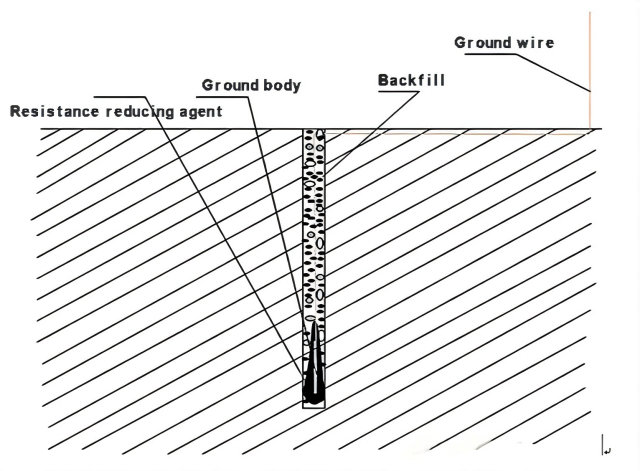
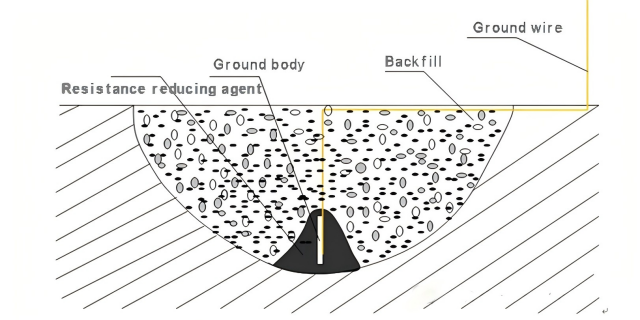
Grounding construction generally includes "deep well type" and "shallow pit type" methods (see Figures 1 and 2). Note that regardless of the method used, a distance of more than four meters should be maintained in a straight line from the grounding body to any underground metal to prevent interference.


Deep well-type construction instructions (for reference):


1. Drill a deep hole: with a diameter of about 50-100 millimeters and a depth of about 3-20 meters, reaching a damp soil layer is sufficient.


2. Grounding body: a copper pipe with a wall thickness of 2 millimeters (a copper rod can also be used) with a diameter of about 30 millimeters and a length of about 0.5 meters, welded to the grounding wire (at least three points) and led to the vicinity of the electron microscope.


3. Grounding wire: 4-10 square millimeters of rubber or plastic multi-strand copper core wire.


4. Conductivity improver: about 2-3 kilograms of salt and charcoal.


5. Construction process: Place the grounding body at the bottom of the hole, prepare a long and thin tool (rebar, water pipe, etc.), gradually fill the conductivity improver from the bottom up and compact it, then continue backfilling and compacting, paying special attention to compacting and tightening around the grounding body, and be careful not to break the grounding wire.


Figure 1. Deep well type diagram


Shallow pit type construction instructions (for reference):


1. Excavate a shallow pit with a depth of about 0.5-2 meters, reaching a damp soil layer is sufficient.


2. Grounding body: a copper plate of about 0.5×0.5 meters with a thickness of 2-3 millimeters, welded to the grounding wire (at least three points) and led to the vicinity of the electron microscope.


3. Grounding wire: 4-10 square millimeters of rubber or plastic multi-strand copper core wire.


4. Conductivity improver: about 2.5-5 kilograms of salt and charcoal.


5. Construction process: Place the copper plate vertically at the bottom of the pit, first cover it with the conductivity improver, compact and tighten it, then continue backfilling and compacting, being careful not to break the grounding wire.


Figure 2. Shallow pit diagram


The "deep well type" is suitable for places where it is difficult to excavate the ground or the groundwater level is deep. Generally speaking, the "shallow pit type" is the more common method.


Regardless of the "deep well type" or "shallow pit type," according to this construction process, the grounding resistance can be achieved between 4 and 10 ohms (for a single grounding body).


In places where the soil resistance is high, multiple grounding bodies can be connected to form a small grounding system to reduce the grounding impedance. In this case, the distance between each grounding body should be 0.3-0.5 meters (the same borehole can be used for the deep well type).


Through actual testing, the grounding resistance of a single grounding body is typically around 4 ohms, two grounding bodies are around 3 ohms, three grounding bodies are around 2 ohms, and six to ten grounding bodies can achieve a resistance of below 1 ohm (depending on the soil resistivity).


Since the danger of "step voltage" does not exist, there is no need to follow the practice of a lightning protection grid grounding system.


At the same time, to reduce the influence of other underground conductors nearby, this small grounding system should occupy as little underground area as possible.


To prevent accidental short circuits, the grounding wire should be directly connected to the grounding wire of the Electron Microscope (or the grounding bus inside the electron microscope), without using common grounding boxes or terminal boxes, not entering other equipotential terminal boxes or switch boxes, and not being connected to busbars.

In today's digital age, smart watches have evolved into more than just timekeeping devices. They are now powerful tools for monitoring our health on the go. Let's take a closer look at three remarkable features - ECG monitoring and HRV tracking function.


ECG Monitoring: A Guardian for Heart Health

Electrocardiogram (ECG) detection in smart watches is a game-changer. It acts as a heart abnormality paraphernalia, allowing users to conduct portable electrocardiogram tests at any time. Equipped with an ECG sensor chip, these watches collect heart electrocardiogram waveforms. This enables users to detect abnormalities promptly and assess the sudden risk of heart issues.


HRV Tracking: Unveiling the Secrets of Heart Rate Variability

HRV, or heart rate variability, refers to the change in the difference of each heartbeat cycle. It is a crucial indicator for judging the ability of neural activity to regulate the cardiovascular system. Smart watches with HRV tracking capabilities provide valuable insights into our heart's health. A high correlation with various cardiovascular diseases and sudden events makes HRV monitoring essential. By continuously tracking HRV, we can better understand our body's stress levels, recovery after exercise, and overall cardiovascular health. 


NORTH EDGE is a leading provider of multifunctional outdoor watches and smartwatches, dedicated to serving outdoor enthusiasts worldwide. With our commitment to innovation, style, and reliability, we have established ourselves as a trusted brand in the competitive landscape of outdoor timepieces.


In the world of outdoor adventure, every detail counts, and a reliable outdoor watch is an indispensable piece of equipment.

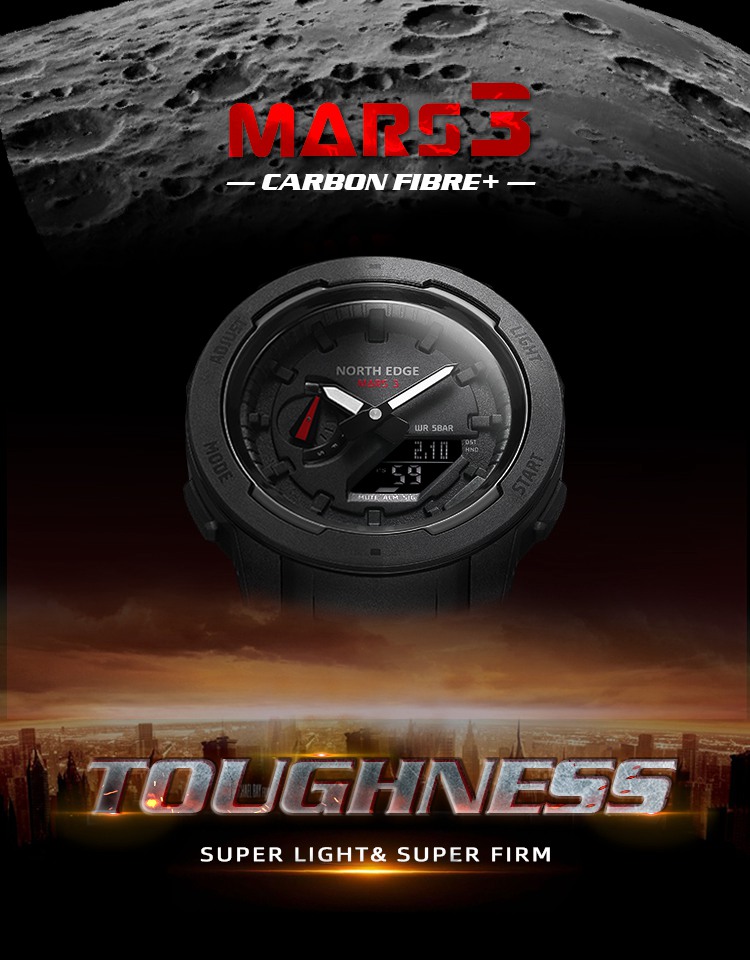
Nowadays, more and more outdoor watches are using carbon fiber composite materials as their shells, such as NORTH EDGE MARS, NORTH EDGE MARS PRO and NORTH EDGE ALPS. Because there are many interesting reasons behind this.


Outdoor Watch Wristwatch Mars

Firstly, they offer a high strength-to-weight ratio. This ensures the shell is robust and durable while reducing the watch's overall weight, allowing wearers to move freely and minimizing the burden during outdoor activities.


Secondly, these materials are highly resistant to wear and corrosion. They protect the movement and components from scratches, collisions, and sweat erosion, prolonging the watch's lifespan.


Impact resistance is another key factor. In outdoor adventures, accidental impacts are common, but carbon fiber composite materials can absorb and disperse the forces, safeguarding the watch.


Good temperature adaptability is also crucial. Whether in extreme hot or cold, the performance of these materials remains stable, ensuring the watch functions properly in all climates.


Finally, the unique texture and look of carbon fiber add a fashionable and high-end touch, meeting outdoor enthusiasts' desires for personalized and quality products.

-----------------------------

In conclusion, the numerous benefits of carbon fiber composite materials make them the perfect choice for outdoor watch shells, delivering reliable, durable, and aesthetically appealing timepieces to outdoor enthusiasts.


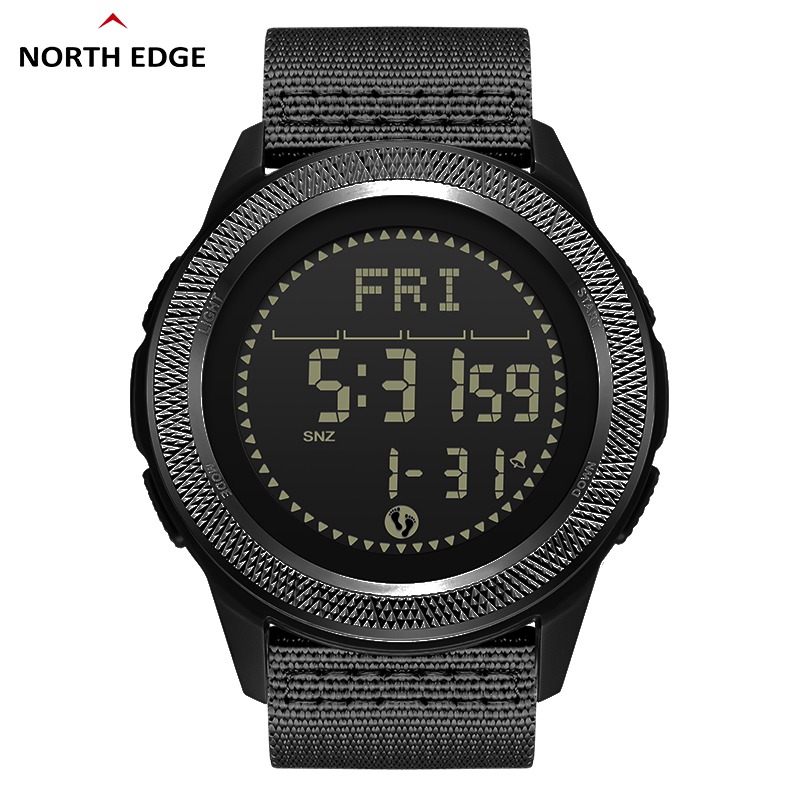
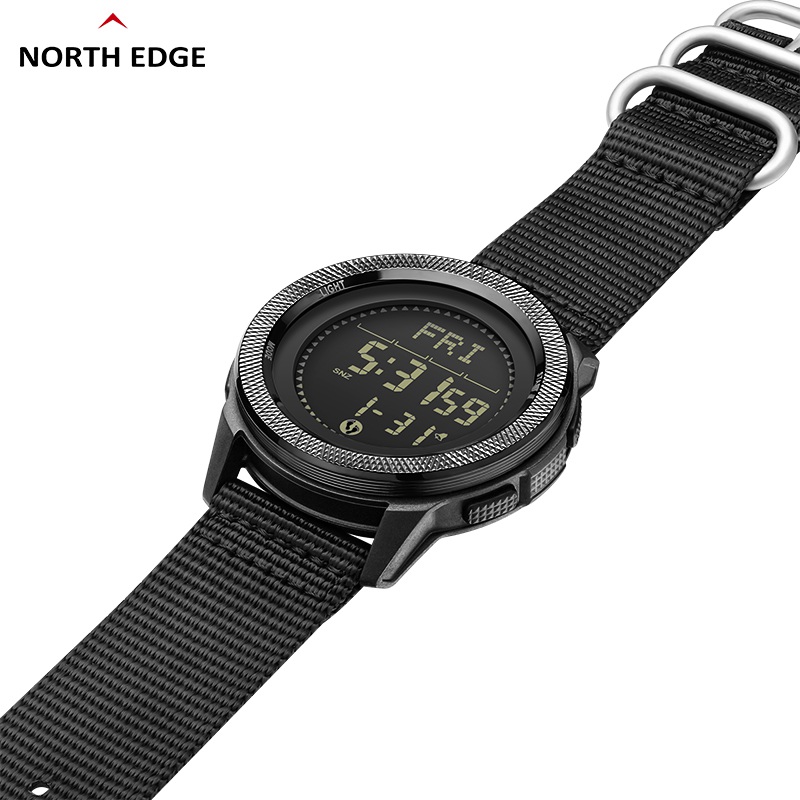
Dear outdoor enthusiasts, we are excited to present our latest creation, the C-NEXUS lightweight outdoor watch!


Crafted with a carbon fibre case, this watch is not only lightweight but also highly durable. It's designed to be your perfect companion on every adventure.


The C-NEXUS is packed with essential functions. The chronograph helps you keep track of time precisely during your activities. The pedometer and pacer ensure you stay on top of your fitness goals. The perpetual calendar and 12/24-hour display make timekeeping a breeze. The built-in compass keeps you oriented, and the EL light ensures visibility in low light conditions.


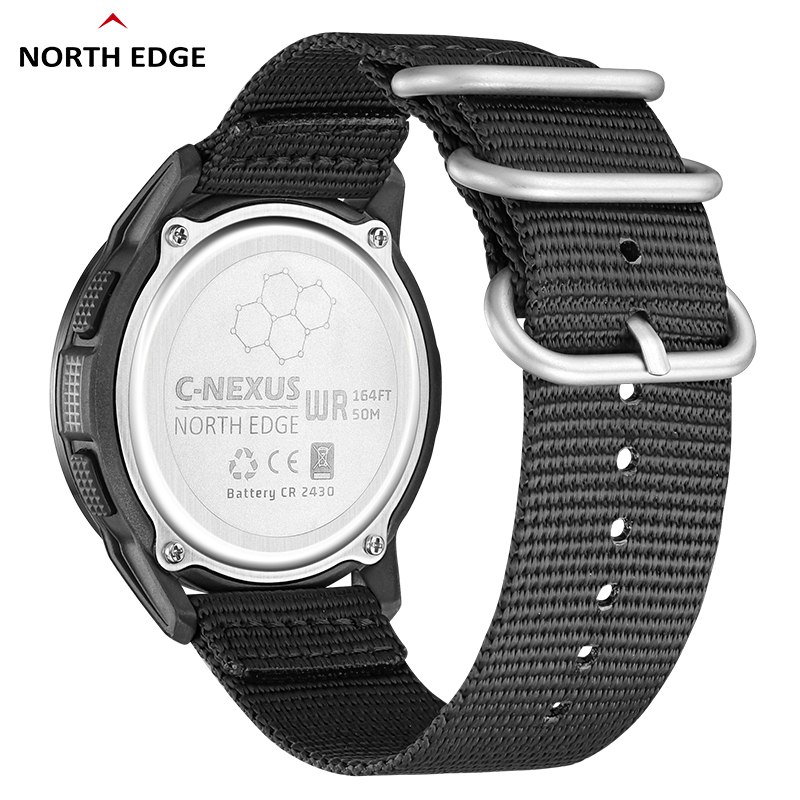
It also features a low battery reminder so you're never caught off guard. The countdown function is handy for various scenarios, and with 50m waterproofing, you don't have to worry about getting it wet.


Embrace your adventures with the C-NEXUS and let it be your reliable partner!
 
  • North Edge C-NEXUS
     
  • Outdoor Watch C-NEXUS
     
  • Adventure Watch C-NEXUS
     

-----------------------------


Automatic Mechanical Watch Anchor
 
 
When it comes to watches, mechanical and quartz timepieces each have their own unique charm.
Let's explore their differences.


1. Power Source: Mechanical watches rely on a spring that is wound either manually or automatically by a rotor that moves with the wrist's motion. Quartz watches, on the other hand, are powered by a battery that sends energy to a quartz crystal oscillator.
2. Accuracy: Quartz watches are highly accurate, with a daily error usually within ±0.5 seconds. Mechanical watches, however, have a relatively lower accuracy, with an average daily error of around ±30 seconds for regular ones and a narrower range for those certified by observatories.
3. Complexity: Mechanical watches are complex, filled with numerous precision parts like gears, springs, and escapements. Quartz watches are simpler in construction, mainly consisting of electronic components and a quartz crystal.
4. Price Range: Mechanical watches have a wide price span, from affordable entry-level models to extremely expensive luxury timepieces. Quartz watches are generally more budget-friendly.
5. Maintenance: Mechanical watches require regular maintenance every 3 to 5 years, which can be costly. Quartz watches only need a battery replacement when it runs out, which is relatively inexpensive.


Whether you prefer the classic elegance of a mechanical watch or the practicality of a quartz watch, both have their place in the world of timekeeping.
 
NORTH EDGE is a leading provider of multifunctional outdoor watches, smartwatches, solar watch, diving watch and digital watch, dedicated to serving outdoor enthusiasts worldwide.


Hey everyone!

Father's Day is coming up, and I want to share an amazing gift option - the Snow Leopard watch.

This watch is truly extraordinary. It not only tells time accurately with its hour, minute, second, year, month, and day display, but also has a 12/24H system. It offers a whole range of practical functions like atmospheric pressure measurement, altitude measurement, stopwatch, compass, alarm, thermometer, and a second time function. The backlight is handy, and the sleep function is a nice touch.

It's a combination of style and functionality that any father would love to have on his wrist. It's the ideal way to show our appreciation and love for our dads this Father's Day.

Don't miss out on this great gift choice!

  • Snow Leopard Watch
  • Wrist Watch Snow Leopard Steel

     
  • Quartz Wrist Watch Snow Leopard


First, let's discuss the causes of low-frequency vibrations.

Repeated tests have shown that low-frequency vibrations are primarily caused by the resonances of the building. The construction specifications for industrial and civil buildings are generally similar in terms of floor height, depth, span, beam and column sections, walls, floor beams, raft slabs, etc. Although there may be some differences, particularly regarding low-frequency resonances, common characteristics can be identified.

Here are some patterns observed in building vibrations:

1. Buildings with linear or point-shaped floor plans tend to exhibit larger low-frequency resonances, while those with other shapes such as T, H, L, S, or U have smaller resonances.

2. In buildings with linear floor plans, vibrations along the long axis are often more pronounced than those along the short axis.

3. In the same building, the first floor without a basement typically experiences the smallest vibrations. As the floor height increases, the vibrations worsen. The vibrations in the first floor of a building with a basement are similar to those in the second floor, and the lowest vibrations are typically observed in the lowest level of the basement.

4. Vertical vibrations are generally larger than horizontal vibrations and are independent of the floor level.

5. Thicker floor slabs result in smaller differences between vertical and horizontal vibrations. In the majority of cases, vertical vibrations are larger than horizontal vibrations.

6. Unless there is a significant vibration source, vibrations within the same floor of a building are generally consistent. This applies to locations in the middle of a room as well as those near walls, columns, or overhead beams. However, even if measurements are taken at the same location without any movement and with a few minutes interval, the values are likely to differ.

Now that we know the sources and characteristics of low-frequency vibrations, we can take targeted improvement measures and make advanced assessments of the vibration conditions in certain environments.

Improving low-frequency vibrations can be costly, and sometimes it is not feasible due to environmental constraints. Thus, in practical applications, it is often advantageous to choose or relocate to a better site for operating an electron microscope laboratory.

Next, let's discuss the impact of low-frequency vibrations and potential solutions.

Vibrations below 20 Hz have a significant disruptive effect on electron microscopes, as depicted in the following figures.


Image 1


Image 2

Image 1 and Image 2 were taken by the same Scanning Electron Microscope (both at 300kx magnification). However, due to the presence of vibration interference, Image 1 has noticeable jaggedness in the horizontal direction (in segments), and the clarity and resolution of the image are significantly reduced. Image 2 is the result obtained from the same sample after eliminating the vibration interference.

If the test results indicate that the location where the microscope is to be installed has excessive vibrations, appropriate measures must be taken; otherwise, the microscope manufacturer cannot guarantee that the performance of the microscope after installation can meet the optimal design standards. Generally, several methods can be chosen to improve or solve the issue, such as using an Anti-Vibration Foundation, Passive-Vibration Isolation Platform, or Active-Vibration Isolation Platform.

An Anti-Vibration Foundation requires on-site construction and special measures need to be taken (such as having an elastic cushion layer at the bottom and surrounding areas). Conventional construction methods may potentially increase low-frequency vibrations (below 20Hz). The construction process involving a large amount of construction materials coming in and out may inevitably affect the surrounding environment. A schematic diagram of an Anti-Vibration Foundation can be seen in Image3.


Image3 

A concrete vibration isolation platform with a mass of around 50 tons generally achieves a vibration reduction effect of -2 to -10dB at frequencies above 2Hz. The larger the mass of the concrete vibration isolation platform, the better the vibration reduction. If conditions permit, it should be made as large as possible.

Based on multiple tests conducted in different locations, vibration isolation platforms weighing less than 5 tons exhibit resonance in the low-frequency range of 1-10Hz, which increases vibration. Those weighing less than 20 tons are ineffective, and the effective range starts at over 30 tons. No data is available for 30-40 tons, so it is advisable to avoid weights below 50 tons. A university in Beijing has achieved good results with a vibration isolation platform weighing around 100-200 tons. In a research institute in Chongqing, the ground concrete was directly poured on massive rocks, resulting in minimal vibration.

Among passive vibration dampers, commonly used options like rubber, steel springs, and air springs (cylinders) provide poor performance in the low-frequency range below 20Hz. They often amplify vibrations due to resonance, so they are not considered suitable.

Only magnetic dampers show acceptable low-frequency performance, but their performance is still far inferior to active dampers (similar to the vibration reduction effect of concrete vibration isolation platforms). Figure 4 compares the effectiveness of several methods.


Figure 4

Upon careful observation of Figure 4, we can draw the following conclusions:

1. The resonance frequency (fh) of the carbon steel spring is approximately 50 Hz. It does not provide any damping effect below 70 Hz and, in fact, amplifies the vibration due to resonance. The rubber pad has an fh of approximately 25 Hz and does not provide any damping effect below 35 Hz, also amplifying the vibration due to resonance.

2. Concrete dampers with a capacity below 5 tons exhibit resonance below 10 Hz and are often less effective than not using a damper at all.

3. Air springs have an fh of approximately 15 Hz, providing good damping above 25 Hz and excellent damping above 40 Hz. They are widely used for vibration isolation in precision equipment such as optical platforms. However, they exhibit significant resonance below 20 Hz, making them unsuitable for damping electron microscopes (although some electron microscopes do use air springs as a last resort).

4. Magnetic dampers provide satisfactory low-frequency damping and can be used when strict requirements are not imposed.

5. Various active dampers achieve excellent damping effects. Their resonance frequencies can be below 1 Hz, and they can provide damping up to -10 to -22 dB in the 2-10 Hz range, making them ideal for applications requiring effective damping in the low-frequency range.

In general, vibrations below 20 Hz are considered to have a significant impact on electron microscopes and are difficult to mitigate. Since most people cannot perceive vibrations below 20 Hz, it often leads to a misconception that there is no vibration when significant low-frequency vibrations are present.

Passive dampers utilize the physical properties of damping devices, such as their mass and inherent vibration transmission characteristics, to isolate and attenuate external vibrations affecting the electron microscope. The working principle of passive dampers can be referenced in Figure 5.


Figure 5


The working principle of active dampers is significantly different from passive dampers. Various types of active dampers have similar working principles, which involve a three-dimensional sensor detecting external vibrations in three directions. The sensor sends the information to a PID (Proportional-Integral-Derivative) controller, which generates control signals with equal amplitude but opposite phase. These control signals are then used by an actuator to generate internal vibrations with equal amplitude and opposite phases to counteract or reduce the external vibrations. The working principle of active dampers can be referred to as shown in Figure 6.


Figure 6

Active dampers commonly used include piezoelectric ceramic dampers, pneumatic dampers, and electromagnetic dampers. Their differences mainly lie in the actuation mechanism, while 3D detectors and PID controllers are relatively similar.

Piezoelectric Ceramic Dampers:

They utilize the piezoelectric effect of the ceramic material to generate three-dimensional internal vibrations with equal amplitude and opposite phase.

Pneumatic Dampers:

Controlled by a PID controller, the inlet and outlet valves modulate the continuous compressed air in a special cylinder to generate three-dimensional internal vibrations with equal amplitude and opposite phase.

Electromagnetic Dampers:

The PID controller controls three sets of electromagnetic coils to generate three-dimensional internal vibrations with equal amplitude and opposite phase.

Active dampers can achieve vibration reduction effects of approximately -22 to -28 dB above 20 Hz (although there have been claims of achieving -38 dB, they are mostly unsubstantiated).

Different types of active dampers also have significant price differences. Generally, the dampers are prepared before the electron microscope is installed and are installed simultaneously with the microscope.

In addition, under specific conditions, a vibration isolation trench can also achieve good damping effects.

Figure 7 depicts a situation where the vibration isolation trench is.


Figure 7


Figure 8

Figure 8 represents an ineffective scenario for a vibration trench.

In general, the deeper the vibration trench, the better the damping effect (the width of the trench has little impact on the damping effect). Here is a comparison of several common damping methods:

Type


Carbon Steel

Spring


Rubber

Dampers


Anti-Vibration

Foundation

Magnetic

Dampers

Air Spring

(Cylinder)

Active 

Dampers

Price

Lowest 

Low

Medium

Low

High

Highest

Damping

Performance

1~5Hz

Poor

Poor

Medium

Poor

Poor

Excellent

5~20Hz

Poor

Poor

Medium

Medium

Poor

Excellent

20~50Hz

Poor

Medium

Medium

 Good  

Medium

Excellent

>50Hz

 Good 

Good 

Medium

 Good  

 Good  

 Good  

Installation and

Adjustment Difficulty

Easy

Easy

Difficult

Easy

Medium

Difficult

Energy Consumption

None

None

None

None

A small amount of compressed

gas

>300w

Routine Maintenance

None

None

None

None

Required

Required

Appearance

Integrated/

Separate

Integrated/

Separate

Concealed

underground

Separate

Separate +

Flat panel

Integrated/

Separate+

Flat panel


outdoor LCD digital signage


Currently, outdoor advertising signs have become an integral part of the city. These advertising signs make cities more lively and vibrant by attracting people's eyes. Among them, LCD advertising signs are one of the most popular types of outdoor advertising.


LCD advertising signs have many advantages. First of all, the display effect of this kind of advertising signs is very good. It uses an LCD screen to display advertising information, and this screen can produce a very clear and bright picture that is also clearly visible in the sunlight. This means that the LCD signage can show excellent visual effects during the day and night, even under adverse weather conditions.


Secondly, LCD signage allows advertisers to change the content of their ads at any time. For traditional signs, if an advertiser wants to change the content of the advertisement, he needs a special worker to replace the sign. However, LCD signage can change the content of the advertisement at any time by electronic means without changing the sign.


In addition, LCD advertising signs also have good durability. These advertising signs are usually made of high quality materials and are waterproof, windproof, and UV-proof. This allows them to work for long periods of time in outdoor environments and not be damaged.


All in all, LCD advertising signage is a very practical type of outdoor advertising. It allows advertisers to get better publicity effect through its comfortable visual effect, flexibility to change the advertisement content at any time and excellent durability, and also creates a more vivid and lively atmosphere for the city.

LCD advertising signage

1. Good display effect: Outdoor LCD digital advertising signage has very good display effect, bright colors, not easily affected by sunlight and rain, and can maintain a clear picture display in various environments.


2. High reliability: Outdoor LCD digital signage has high reliability and can adapt to the harsh environmental requirements such as wide temperature range, high humidity and atmospheric pressure changes to ensure long and stable operation.


3. Cost saving: Outdoor LCD digital signage does not require complex installation, maintenance and operation costs, and can be controlled remotely to improve operational efficiency and reduce operating costs.


4. Customizable: Outdoor LCD digital signage can be customized according to customer needs, including size, resolution, brightness, installation methods, etc., to adapt to different scenarios and needs.


5. Safe and reliable: Outdoor LCD digital advertising signage is designed with waterproof, dustproof and lightning-proof, which can ensure the safety and reliability of the equipment and avoid damage caused by natural disasters or other external factors.