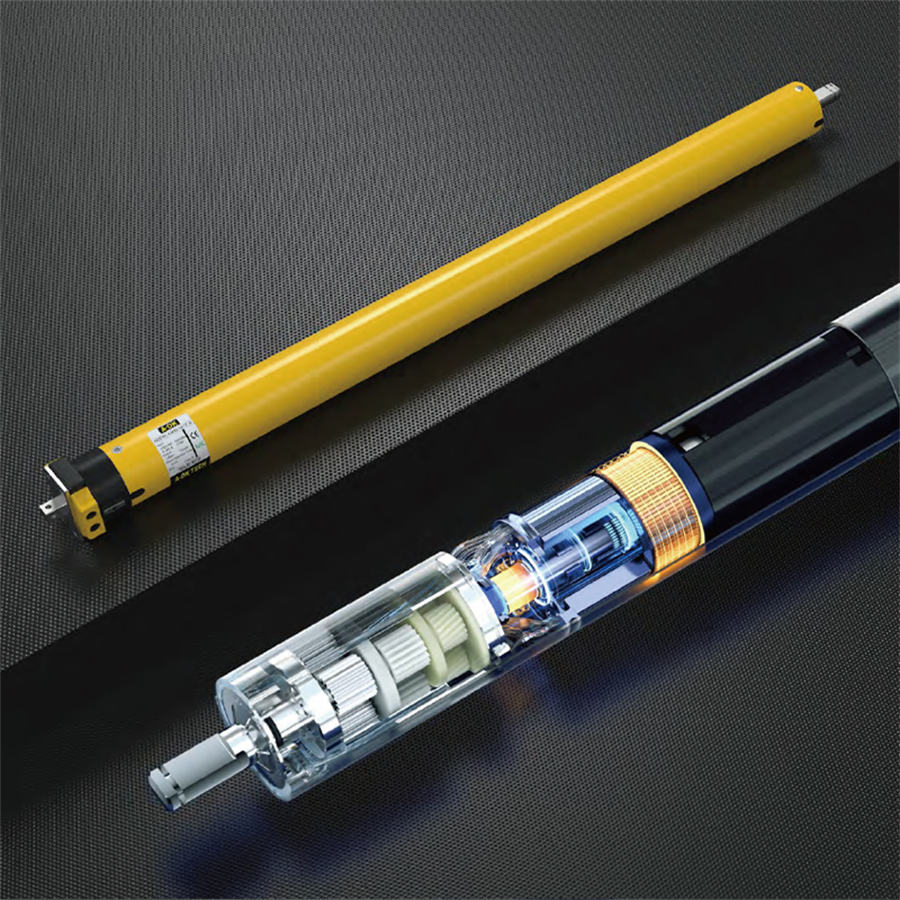
electric roller blind tubular motor

The electric roller blind tubular motor is a motor that can drive the roller blind fabric up and down. Its technical characteristics mainly include the following aspects:


1. Motor structure: The electric roller blind tubular motor adopts a cylindrical structure, and is equipped with components such as a motor, a reducer and a control circuit inside, which can realize precise control and roller blind operation.

2. Drive mode: The electric roller blind tubular motor is usually powered by DC power supply, which can realize forward and reverse rotation and speed adjustment through the control circuit, and can also support wireless remote control and APP remote control.

3. Low noise: The electric roller blind tubular motor adopts a precise reducer structure inside, which can effectively reduce noise and make the up and down of the roller blind fabric more stable and quiet.

4. Low power consumption: The electric roller blind tubular motor adopts high-efficiency motor and control circuit, which can achieve low power consumption, and can also achieve energy saving and environmental protection through functions such as sleep mode.

5. Safety: The electric roller blind tubular motor adopts a variety of safety protection measures, such as overload protection, temperature protection and prevention of curtain jamming, etc., which can ensure the safety and stability during use.

In general, the electric roller blind tubular motor has the characteristics of low noise, low power consumption, safety, reliability, and easy control, and is a relatively advanced curtain lifting device.

We’re thrilled to unveil our new demo lab at Loughborough University’s LMCC by SciMed, featuring the cutting-edge CIQTEK SEM3200 Scanning Electron Microscope.


The CIQTEK SEM3200 is a high-performance tungsten filament scanning electron microscope, designed for those who demand excellence in imaging. It delivers exceptional image quality with high-resolution visuals and an expansive depth of field, ensuring rich detail and dimension in every image.


SEM3200 also offers a low vacuum mode, allowing for the direct observation of non-conductive samples without the need for coating. Its extended scalability makes it compatible with various detectors and tools, including SE, BSE, EDS, and EBSD.


For scientists, the SEM3200 provides numerous benefits:

· High-resolution imaging: Achieve stunning clarity and detail.

· Versatility: Flexible sample positioning with a five-axis eucentric stage.

· Scalability: Seamlessly integrate additional detectors and analytical tools to extend functionality.

· User-friendly interface: Simplifies complex imaging tasks, enhancing productivity and research outcomes.


These features empower researchers to push the boundaries of their work, from material science to biological studies.

Abstract:

Titanium dioxide, widely known as titanium white, is an important white inorganic pigment extensively used in various industries such as coatings, plastics, rubber, papermaking, inks, and fibers. Studies have shown that the physical and chemical properties of titanium dioxide, such as photocatalytic performance, hiding power, and dispersibility, are closely related to its specific surface area and pore structure.


Using static gas adsorption techniques for precise characterization of parameters like specific surface area and pore size distribution of titanium dioxide can be employed to evaluate its quality and optimize its performance in specific applications, thereby further enhancing its effectiveness in various fields.


About Titanium Dioxide:

Titanium dioxide is a vital white inorganic pigment primarily composed of titanium dioxide. Parameters such as color, particle size, specific surface area, dispersibility, and weather resistance determine the performance of titanium dioxide in different applications, with specific surface area being one of the key parameters. Specific surface area and pore size characterization help understand the dispersibility of titanium dioxide, thereby optimizing its performance in applications such as coatings and plastics. Titanium dioxide with a high specific surface area typically exhibits stronger hiding power and tinting strength.


In addition, research has indicated that when titanium dioxide is used as catalyst support, a larger pore size can enhance the dispersion of active components and improve the overall catalytic activity, while a smaller pore size increases the density of active sites, aiding in improving reaction efficiency. Hence, by regulating the pore structure of titanium dioxide, its performance as a catalyst support can be improved.


In summary, the characterization of specific surface area and pore size distribution not only aids in evaluating and optimizing the performance of titanium dioxide in various applications but also serves as an important means of quality control in the production process. Precise characterization of titanium dioxide enables a better understanding and utilization of its unique properties to meet the requirements in different application fields.


Application Examples of Gas Adsorption Techniques in Titanium Dioxide Characterization:


1. Characterization of Specific Surface Area and Pore Size Distribution of Titanium Dioxide for DeNOx Catalysts


Selective catalytic reduction (SCR) is one of the commonly applied and researched flue gas denitrification technologies. Catalysts play a crucial role in SCR technology, as their performance directly affects the efficiency of nitrogen oxide removal. Titanium dioxide serves as the carrier material for DeNOx catalysts, primarily providing mechanical support and erosion resistance to active components and catalytic additives, along with increasing the reaction surface area and providing suitable pore structures.


Here is an example of the characterization of titanium dioxide used as a carrier material for DeNOx catalysts using the CIQTEK V-3220&3210 series BET Surface Area & Porosimetry Analyzer. As shown in Figure 1 (Left), the specific surface area of the titanium dioxide used in the DeNOx catalyst is 96.18 m2/g, indicating a larger surface area that provides more active sites as a carrier material, thus enhancing the efficiency of the DeNOx catalytic reactions. The N2 adsorption-desorption isotherm (Figure 1, right) reveals the predominant presence of a type IV isotherm.


Utilizing the BJH model for mesopore size distribution analysis (Figure 2, Left), a concentrated mesopore distribution at 9.50 nm is observed. The SF pore size distribution plot (Figure 2, Right) shows the most probable micropore width of the sample to be 0.44 nm. Studying the effect of specific surface area and pore size distribution on DeNOx catalysts allows the optimization of catalyst design and DeNOx processes, improving nitrogen oxides' removal efficiency.
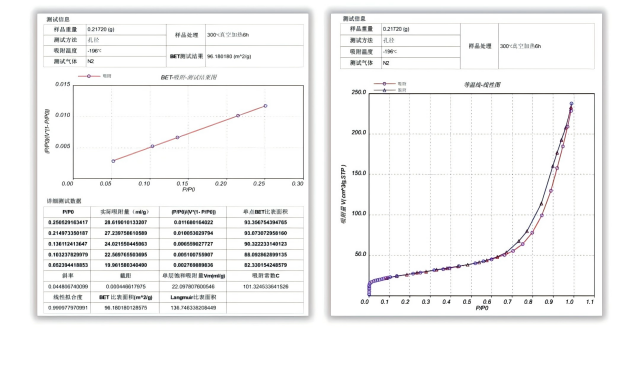
 Specific surface area test results (left) and N2 adsorption-desorption isotherm (right) of titanium dioxide used for DeNOx catalysts.

Figure 1. Specific surface area test results (Left) and

N2 adsorption-desorption isotherm (Right) of titanium dioxide used for DeNOx catalysts.
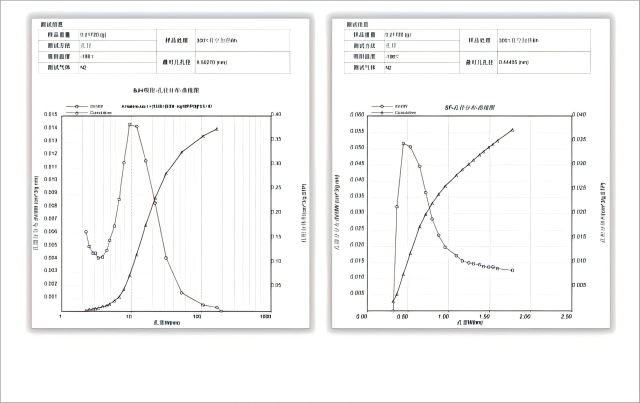
 

BJH pore size distribution plot (left) and SF pore size distribution plot (right) of titanium dioxide used for DeNOx catalysts.

Figure 2. BJH pore size distribution plot (Left) and

SF pore size distribution plot (Right) of titanium dioxide used for DeNOx catalysts.


2. Characterization of Specific Surface Area and Pore Size Distribution of General Titanium Dioxide


By adjusting and controlling the specific surface area and pore size distribution of titanium dioxide for different applications, the performance and effectiveness of titanium dioxide can be assessed and improved. For example, in the coatings and plastics industries, specific surface area and pore size analysis help optimize the dispersibility and light scattering ability of titanium dioxide, ensuring uniformity and durability of coatings and improving the mechanical properties and weather resistance of plastic products. Furthermore, it provides an important means of quality control in the production process to ensure product consistency.


The CIQTEK V-3220&3210 series BET Surface Area & Porosimetry Analyzer is utilized for the characterization of specific surface area and pore size distribution of titanium dioxide. As shown in Figure 3 (Left), the specific surface area of the titanium dioxide sample is determined to be 18.91 m2/g using the multi-point BET equation. Further analysis of the N2 adsorption-desorption isotherm (Figure 3, Right) reveals a type II isotherm.


By performing NLDFT total pore size distribution analysis (Figure 4), the total pore volume of the titanium dioxide is determined to be 0.066 cm3/g, with micropores accounting for 9.66% and mesopores accounting for 69.72%. In-depth studies on the specific surface area, pore size distribution, pore volume, and their influencing factors provide valuable references for applications and performance optimization of titanium dioxide, thereby meeting the demands for high-performance titanium dioxide in different industries.
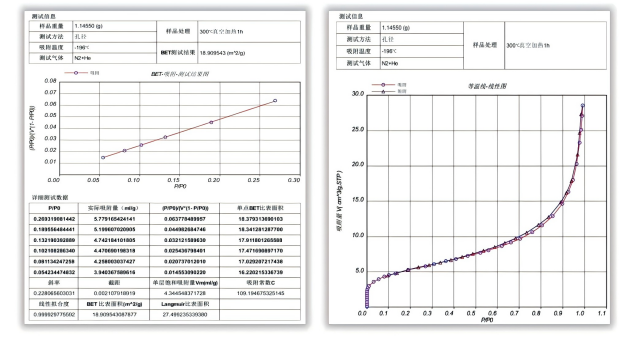
 Specific surface area test results (left) and N2 adsorption-desorption isotherm (right) of a titanium dioxide sample.

Figure 3. Specific surface area test results (Left) and N2 adsorption-desorption isotherm (Right) of a titanium dioxide sample.
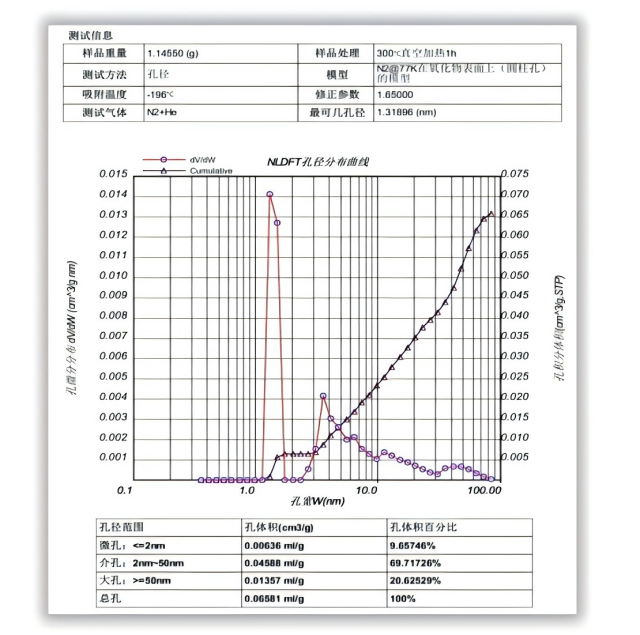
NLDFT pore size distribution plot of a titanium dioxide sample

Figure 4. NLDFT pore size distribution plot of a titanium dioxide sample
 

Introducing the Brand New In Stock

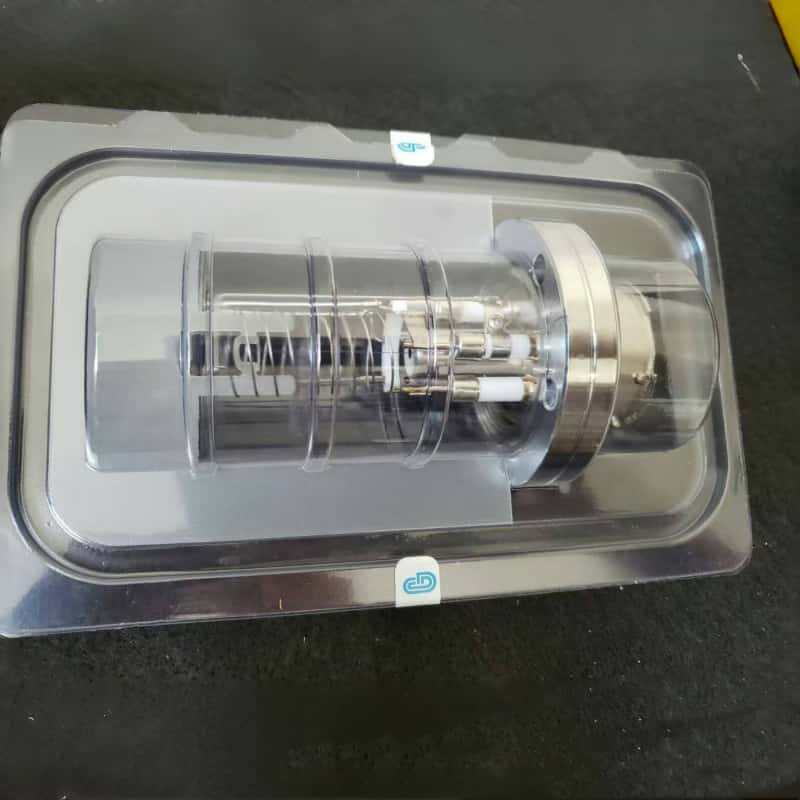
LAM 685-166841-001 MDL ELEC DETECTOR WF6 IREPD ALTUS CE


Discover the latest addition to our inventory - the brand new LAM 685-166841-001 MDL ELEC DETECTOR WF6 IREPD ALTUS CE. With the manufacturer warranty and a limited quantity available, secure your order today!

At SEMI LANXI, we are delighted to introduce the highly sought-after LAM 685-166841-001 MDL ELEC DETECTOR WF6 IREPD ALTUS CE, proudly manufactured by LAM RESEARCH. This exceptional device is in brand new condition and is backed by a 30-day warranty post-shipment. We are excited to offer this product, and we currently have one set in stock and ready to be shipped to your doorstep. If you have any queries or need further information, feel free to contact our expert team member, Alex, at alex@semilanxi.com


LAM 685-166841-001 IN STOCK

  • LAM RESEARCH: A Name Synonymous with Quality and Reliability:

As a leading name in the semiconductor industry, LAM RESEARCH has established its reputation as a trusted manufacturer of cutting-edge equipment. The LAM 685-166841-001 MDL ELEC DETECTOR WF6 IREPD ALTUS CE is a testament to the company's commitment to innovation, precision, and superior engineering. By choosing a LAM product, you're investing in a reliable solution that meets the highest industry standards.

  • Top Features of the LAM 685-166841-001 MDL ELEC DETECTOR WF6 IREPD ALTUS CE:
  1. Enhanced Precision: The LAM 685-166841-001 MDL ELEC DETECTOR WF6 IREPD ALTUS CE guarantees accurate detection of electronic signals, offering high precision in even the most demanding environments.
  2. Versatile Functionality: Designed with flexibility in mind, this product is capable of detecting WF6 gas in various semiconductor applications. Its adaptable nature ensures seamless integration into existing workflows.
  3. Quality Construction: Crafted with robust materials and built to withstand rigorous usage, the LAM 685-166841-001 MDL ELEC DETECTOR WF6 IREPD ALTUS CE is engineered to deliver uncompromising performance over an extended lifespan.
  4. Easy Integration: Designed to streamline processes, this device offers straightforward integration with existing systems, eliminating any potential compatibility concerns.


Order Now and Secure Your Investment:
Given the limited availability of the LAM 685-166841-001 MDL ELEC DETECTOR WF6 IREPD ALTUS CE, we encourage you to secure your order promptly. Our product is fully backed by a manufacturer's warranty for 30 days from the date of shipment, providing you peace of mind regarding its quality and performance.

To initiate your purchase or seek additional information, please don't hesitate to contact our dedicated team member, Alex, at alex@semilanxi.com. Alex is here to address any questions or concerns you may have, ensuring your buying experience is both seamless and satisfactory.


For those in search of a brand new LAM 685-166841-001 MDL ELEC DETECTOR WF6 IREPD ALTUS CE, this is an opportunity not to be missed. With its exceptional features and the renowned LAM RESEARCH name, this device promises to elevate your semiconductor processes to new levels of efficiency and accuracy. Don't miss out—reach out to our team member Alex today to secure your order and take advantage of this offering.


The Role of RFID Readers and Tags in Warehouse Goods Localization

As the logistics and warehousing industries rapidly develop, efficiently and accurately managing and locating goods in warehouses has become key to enhancing operational efficiency. Radio Frequency Identification (RFID) technology, as an advanced automatic identification and data collection technology, is increasingly being applied in warehouse management. This article will discuss the role of RFID readers and tags in warehouse goods localization, and illustrate the advantages and disadvantages of different frequency RFID systems through specific project examples.


Overview of RFID Technology

RFID technology transmits data through radio waves and mainly consists of RFID tags and RFID readers. Tags are attached to items and contain a small antenna and a chip to store information about the items, while readers are used to read and write data from and to the tags. Based on different operating frequencies, RFID systems can be divided into three categories: Low Frequency (LF), High Frequency (HF), and Ultra High Frequency (UHF).


Low Frequency (LF) RFID Systems

Advantages

  1. Strong Penetration Ability: LF RFID systems operate in the frequency range of 30 kHz to 300 kHz, and their signals can penetrate water and non-metallic materials, making them suitable for humid and obstacle-rich environments.
  2. Lower Cost: The production cost of LF RFID tags and readers is relatively low, suitable for cost-sensitive applications.

Disadvantages

  1. Short Reading Distance: LF RFID typically has a reading distance of only a few centimeters to tens of centimeters, limiting its application in wide-range goods localization.
  2. Low Data Transmission Rate: LF RFID has a low data transmission rate, unsuitable for scenarios requiring rapid reading of a large number of tags.

Application Example

In a food processing company's warehouse, due to the high humidity and the need to penetrate packaging materials to read information, an LF RFID system is used to track and manage goods. In this case, the LF RFID system can ensure stable performance in humid environments. However, due to its short reading distance, the company had to install more readers to cover the entire warehouse, increasing the system's complexity.


High Frequency (HF) RFID Systems

Advantages

  1. Moderate Reading Distance: HF RFID systems operate in the frequency range of 3 MHz to 30 MHz, with a reading distance generally between a few centimeters and one meter, suitable for medium-range item tracking.
  2. Strong Anti-interference Ability: HF RFID performs well in environments with metallic objects and has strong anti-interference capabilities.

Disadvantages

  1. Moderate Cost: Compared to LF systems, HF RFID is slightly more expensive but still within an acceptable range.
  2. Moderate Reading Speed: The reading speed of HF RFID is faster than LF RFID but not as fast as UHF RFID, suitable for medium-speed reading requirements.


Application Example

In a clothing retail company's warehouse, HF RFID systems are used to manage and locate goods. Clothing is usually made of different materials, and HF RFID tags can effectively read the information of tags wrapped in various materials, providing accurate goods localization. Despite its limited reading distance, it still operates effectively in a rela

tively concentrated warehouse environment.


Ultra High Frequency (UHF) RFID Systems

Advantages

  1. Long Reading Distance: UHF RFID systems operate in the frequency range of 300 MHz to 3 GHz, with reading distances reaching several meters to even tens of meters, ideal for wide-range goods tracking.
  2. Fast Reading Speed: UHF RFID has a high data transmission rate, capable of quickly reading large numbers of tags, enhancing warehouse operational efficiency.
  3. Large Tag Capacity: UHF RFID tags can store more information, facilitating complex inventory management.

Disadvantages

  1. Higher Cost: UHF RFID systems have higher tag and reader costs, suitable for companies with sufficient budgets.
  2. Susceptibility to Interference: UHF RFID systems are more prone to interference in environments with metal and water, which may affect reading performance.

Application Example

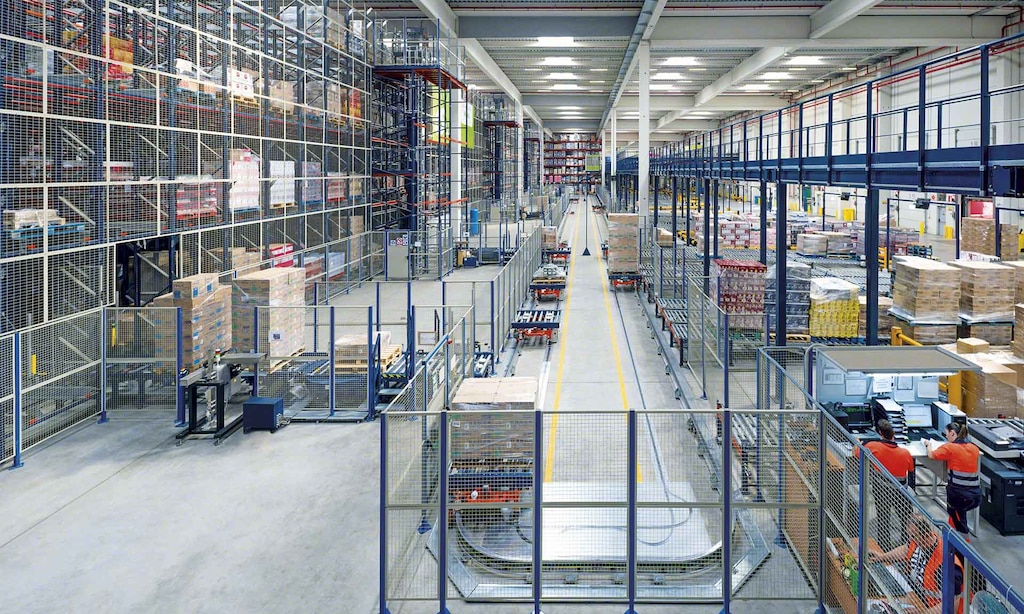
In a large e-commerce warehouse, a UHF RFID system is used to manage and locate a vast number of goods. The warehouse handles various types of goods in large quantities, and UHF RFID's long reading distance and fast reading capability can effectively handle the high frequency and large volume of goods entering and leaving the warehouse. Additionally, deploying a few high-performance readers can cover a large warehouse area, reducing system complexity and deployment costs.


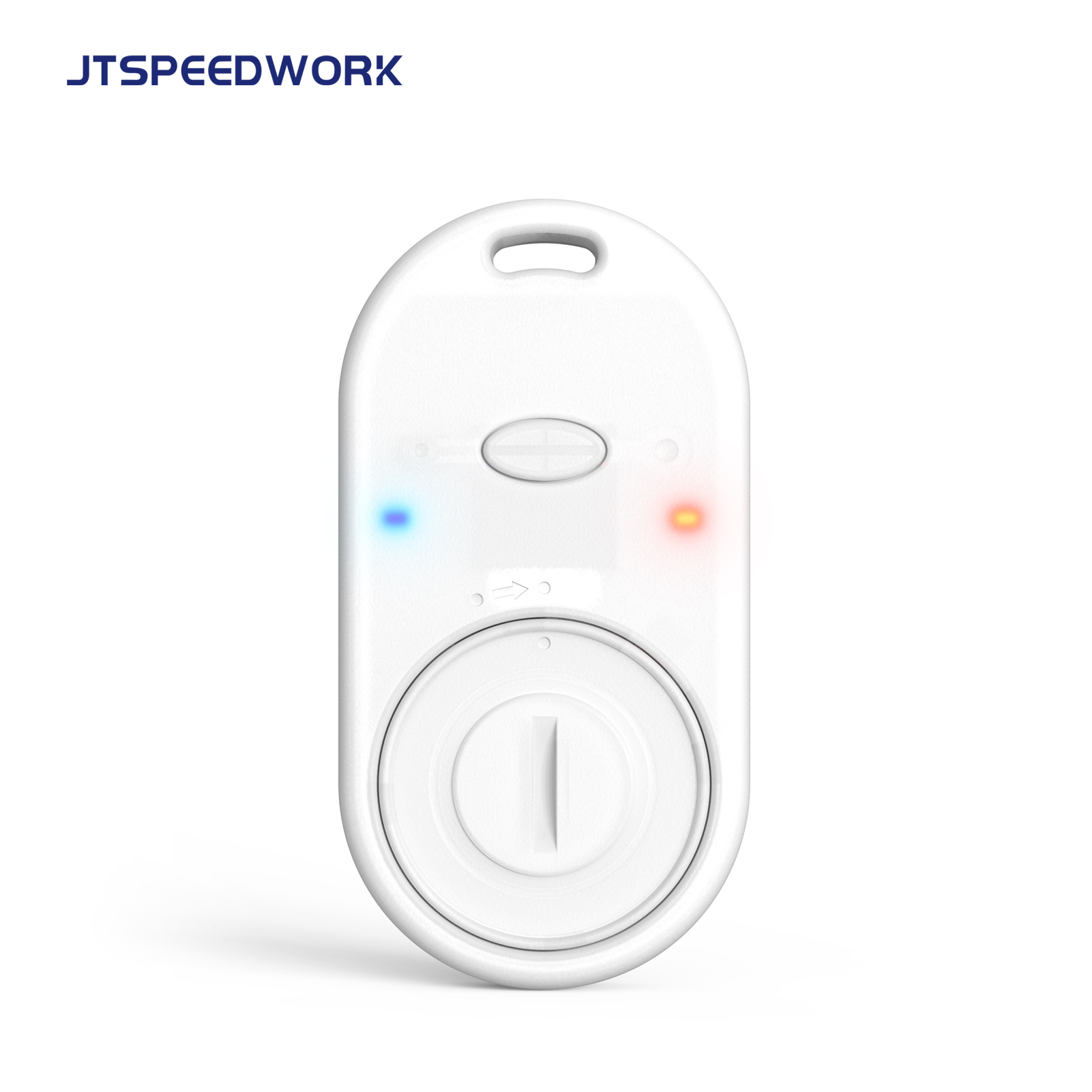
2.4G Active Tag


RFID (Radio Frequency Identification) technology is increasingly being applied in modern livestock farming, particularly in animal identification and tracking. By using RFID, farmers and ranch managers can efficiently manage large herds, improve management efficiency, and ensure animal health and safety.


RFID Readers and Tags Frequency Bands

In livestock farming, commonly used RFID tags and readers operate mainly in two frequency bands: Ultra-High Frequency (UHF, 860-960 MHz) and Low Frequency (LF, 125-134.2 kHz). Each frequency band has its specific advantages, disadvantages, and application scenarios:

  • Ultra-High Frequency (UHF): UHF RFID tags and readers have a longer reading range (typically between 1-12 meters), making them suitable for use in open pastures. This frequency band allows for remote identification and data collection without disturbing the animals, which is ideal for managing large herds.
  • Low Frequency (LF): LF RFID tags and readers have a shorter reading range (usually within 10 centimeters), but they are less sensitive to interference from metal and water. This makes them suitable for applications such as livestock ear tags, where close-range reading is required. LF tags are widely used in livestock management due to their stability in harsh environmental conditions.

Working Principle of RFID Systems

An RFID system consists of tags, readers, and a backend management system:

  1. RFID Tags: Each animal wears an RFID tag, usually in the form of an ear tag. The tag contains a small chip and an antenna, with the chip storing a unique identifier and other data.
  2. RFID Readers: Installed at various locations on the farm, readers emit radio signals. When an animal passes by, the tag receives the signal and responds with its ID information. The reader then receives and decodes this information, transmitting it to the backend system
  3. Backend Management System: The system stores and analyzes the data collected by the readers. Farmers can use software to view and manage information for each animal, such as birth date, health records, and vaccination history.

Advantages

The application of RFID technology in animal identification and tracking has numerous advantages:

  • Accuracy and Efficiency: Traditional manual record-keeping methods are prone to errors and time-consuming. RFID systems automate data collection and management, reducing human errors and improving management efficiency.
  • Real-time Monitoring: RFID readers can collect and update animal information in real-time, allowing farmers to promptly understand the status of each animal and take necessary actions, such as isolating and treating sick animals.
  • Convenience and Safety: With RFID technology, farmers can obtain information about each animal without close contact, reducing operational difficulty and safety risks.
  • Traceability: RFID systems record detailed information for each animal, enabling full traceability from birth to slaughter. This aids in quality control and market regulation, increasing consumer confidence in products.
  • Scalable Management: For large-scale farms, RFID technology makes managing large numbers of animals feasible. Farmers can easily track thousands of animals, ensuring each one receives appropriate attention and care.

In summary, the application of RFID technology in livestock farming not only enhances management efficiency but also ensures animal health and safety. It holds great promise and offers significant economic benefits.

UHF RFID Tags


Every year there are very many disasters and accidents around the world, which have a great impact on society, so how to ensure effective scientific protection in the event of a disaster, firefighting equipment is the umbrella of life, so the construction of firefighting facilities has a very great significance, RFID firefighting equipment management technology can be effectively managed. The management and maintenance of fire equipment are crucial. When a disaster occurs, the fire equipment becomes an effective guarantee of life, so each piece of equipment needs a complete record of information, and should be replaced as soon as it is found to be damaged. The use of advanced information technology, strengthen the information management capabilities, strengthen the supervision of the inspection process, improve the management level of the entire fire apparatus, to eliminate potential safety hazards has been a matter of urgency.


  • RFID fire apparatus management
How to carry out scientific management and purchase? Purchase of fire equipment, registration of fire equipment, the establishment of inspection and scrapping system to effectively ensure the availability of fire equipment. The core of the management of fire equipment is to establish a basic database, and in various key points of data collection and reading and writing, RFID identification technology can meet a variety of needs, so the RFID technology used in the management of fire equipment. Therefore, the use of RFID technology in the management of fire equipment. Avoid the manual operation and record the time consumption and error, for the fire equipment to implement security.

RIFD technology using wireless electromagnetic waves to achieve non-contact data acquisition and reading, can work in complex environments, and RFID also has the uniqueness, can not be imitated, so that all the effective security. The fire department can carry out all kinds of information prompts on RFID tags, through the development of the plan to carry out effective implementation. By installing RFID tags on the fire equipment, corresponding to the asset information storage, to accurately collect and read the detailed information. The RFID electronic tag can record the purchase information of fire equipment, installation time, responsible person, inspection time and other important information.

Establish complete fire electronic file, the management department arranges the inspection personnel to inspect the fire equipment inspection work, found and damaged fire equipment, check the equipment purchase time, use situation, timely replacement, and form an effective record, in order to prepare for the subsequent query. Can be set up in the basic information to determine the location of the fire equipment, as well as inspection records, real-time inspection of personnel operating information for effective supervision. In this way RFID fire equipment management technology effectively and scientifically manage each piece of equipment, timely detection of the use of equipment, comprehensive analysis of the system's various records for management.


  • RFID fire equipment management
Internet of Things RFID technology in the field of fire protection, including the application of fire alarm system, electrical fire monitoring system, fire hydrant monitoring system, fire emergency evacuation system, fire supervision and inspection of business applications, fire daily management applications, fire inspection applications. Fire IOT is based on radio frequency identification technology (RFID) and intelligent sensing technology. Each fire protection facility that needs to be monitored is affixed with RFID electronic tags, and the automatic identification of the target object and access to the object information is realized through RFID technology. The fire protection facilities that need to be monitored use intelligent sensing technology to realize on-line monitoring. The intelligent sensing technology uses the sensing technology, the microcontroller technology, the communication technology, through the miniature sensor realizes to the space environment and the monitoring object real-time perception and the detection, and accesses the network so that the firefighting personnel at all levels can real-time monitor the equipment's operation.

RFID technology will make the fire daily management become more effective and concise. Through the RFID intelligent sensors on the fire fighting facilities will fire fighting facilities work real-time transmission, timely understanding of the operation of fire fighting equipment, timely detection of fire hazards. Daily inspection, inspectors configure RFID radio frequency identification equipment terminal can patrol the point of data collection, real-time understanding of the operation of the fire apparatus.

Fire apparatus and facilities is the guardian of safety, to ensure that the maintenance and management of fire apparatus and facilities is of great significance. The use of advanced information technology to strengthen the ability of information management, the need to strengthen the supervision of the inspection process, thereby improving the management level of the entire fire apparatus, arrive at the elimination of hidden safety hazards. The establishment of information data on fire apparatus and equipment, and the collection of data and information at various key points. RFID technology is used in the management of fire equipment, so that the management of equipment becomes easy and simple, to avoid manual operation and recording of various data errors and time consuming, to solve the problems in the existing management mode, for the safe use of fire equipment to get a strong guarantee. rfid technology to make the management of fire equipment more efficient!


  • RFID fire extinguishers management

At present, the management of fire extinguishers are still manually checking, manual records, inspection records are filed in paper form, the inspection process found in the accident, such as fire extinguishers have been turned on, the weight is not enough, insufficient air pressure and other phenomena, are filled out a separate form to record, and after the record it is easy to confuse the extinguishers because the appearance of the extinguishers have a certain degree of similarity, it is not easy to identify. Encountered an emergency, or the need to view the specific information of a fire extinguisher, often can not get the relevant information of the fire extinguisher in a timely manner, to pursue the responsibility, there are often responsible for the phenomenon of unclear, etc., the loss of a fire extinguisher information will affect many of the management of fire extinguishers, and whenever it comes to the replacement of fire extinguishers, it is more of a problem. If the production date of fire extinguishers accumulated over time, ambiguous, it is difficult to have grasped whether the need to send repair or expiration date, fire management department inspections, even if you can barely see, but also to calculate the date of inspection supervision is inefficient.

Based on the RFID technology fire equipment management system through the fire equipment on the installation of RFID tags, in the background binding the corresponding assets information, in the key nodes and processes, through the collection of RFID tags information, to accurately obtain to the assets of the detailed information.


Demand for the use of electronic tags in the fire industry
The fire extinguisher from the factory, the daily check to the maintenance and the scrapping, the management mainly concentrates in the maintenance and the check two aspects, but these two aspects must be for each different fire extinguisher.

(1) Maintenance
Maintenance is mainly to check the storage environment of the fire extinguisher, such as should be avoided upside down, rain, exposure, strong radiation and contact with corrosive substances, fire extinguishers placed, should be kept dry and ventilated to prevent corrosion of the cylinder by moisture. Under normal climatic conditions, can maintain a good environment for fire extinguishers stored.

(2) inspection
Inspection is the most important work. Security Office of the fire extinguishers at least once a quarter to check the situation, the inspection includes: the responsible person to maintain the implementation of the duty, the fire extinguisher pressure value is in the normal pressure range, whether the safety pin and seal is intact, placed firmly, no buried pressure, fire extinguishers in the validity of the period, etc., to check the effective state of the fire extinguishers to be made into the "fire extinguisher inspection records ", archived for verification.

The core of the electronic tag is the RFID chip, each chip has its own "ID card": a globally unique digital code, and this digital code in the factory production has been solidified in the chip, can not be changed, based on this feature, each fire extinguisher can be labeled through the electronic tag or labeling the unique identification, binding the production date, manufacturer, send for repair, whether it should be sent for repair or scrapping information, etc., at a glance, in line with the Internet of Things. At a glance, in line with the background of the development of the Internet of things. Through the electronic label on the fire extinguisher to realize the computerized management, overcome the fire extinguisher quantity is numerous, need to be cumbersome backward manual maintenance, check the record work, the fire management department can through the system can real-time supervision and inspection should be sent to the repair, expiration date, scrapping of fire extinguishers, standardize the market management.

Fire protection enterprises to fire extinguishers and other fire equipment sealing the main purpose is to regulate the fire extinguisher market management, to prevent the sale of illegal, expired or unqualified fire extinguishers on the fire extinguisher, especially with a large number of fire extinguishers, schools, factories, etc. to achieve computerized management, and at the same time to facilitate the local fire department, fire safety throughout the city, as well as fire extinguishers, the inspection and supervision.

RFID function and practicality of more and more industries began to pay attention to, RFID non-contact identification, reading fast, recognition of multi-information, recognition of the distance and other characteristics of the use of RFID quickly expanded to various fields in the management of fixed assets, RFID plays a very important role. With the rapid construction of the city, the full utilization of resources, safety and security has become a major construction of the basic. Fire safety protection also increases with the management of fire apparatus will be a major line of defense for life safety guarding. The introduction of intelligent city, fire will also enter the intelligent construction. Intelligent firefighting is also thus put on a new agenda. Intelligent fire protection is to the Internet of Things, virtualization, geospatial services and other advanced technologies to achieve the dynamic collection of fire professional data, real-time monitoring and scheduling of firefighting and rescue forces such as firefighting equipment, emergency rescue equipment, real-time inspection of the key units of fire protection facilities, and real-time access to images of key locations and firefighting and rescue plans.


RFID (Radio Frequency Identification) technology has revolutionized various sectors, and its application in the aviation industry is particularly impactful. Two key areas where RFID technology has made significant strides are passenger identification and luggage tracking. This article explores the role of RFID in these areas and explains the working principles of RFID tags and readers in these processes.


RFID (Radio Frequency Identification)


Efficient and accurate passenger identification is crucial for maintaining security and operational efficiency at airports. RFID technology simplifies and accelerates this process, enhancing the overall passenger experience. RFID tags are embedded in passengers' boarding passes or passports, containing unique identification information that can be quickly read by RFID readers. At various checkpoints such as security, boarding gates, and immigration counters, RFID readers scan the RFID tag, instantly retrieving the stored information. This rapid and accurate verification process significantly reduces the time passengers spend in queues and enhances the airport's throughput. By using RFID technology, airports can ensure that only authorized passengers proceed through security checkpoints and board the aircraft, thereby improving overall security and efficiency.


Managing luggage is a complex and critical task in the aviation industry. RFID technology offers a robust solution for real-time luggage tracking, reducing instances of lost or misrouted baggage. Each piece of luggage is equipped with an RFID tag containing a unique identifier linked to the passenger's information. These tags can be attached during check-in or pre-tagged for frequent flyers. RFID readers are strategically placed along the luggage handling process, including check-in counters, sorting areas, conveyor belts, and loading/unloading zones. As the luggage moves through the handling process, RFID readers scan the tags, updating the system in real-time with the luggage's location and status. This continuous monitoring ensures that each piece of luggage is correctly routed and loaded onto the correct flight. In case of any discrepancies, the system can quickly alert the ground staff to rectify the issue, thus minimizing delays and ensuring passengers and their luggage arrive at the same destination simultaneously.

RFID (Radio Frequency Identification)

RFID tags consist of an antenna and a chip. They are categorized into passive and active tags. Passive tags do not have a built-in battery and rely on the electromagnetic waves emitted by the reader for power. When the reader's signal reaches the tag's antenna, it generates an induced current that powers the chip, which then transmits the stored information back to the reader. Active tags have a built-in battery and can actively send signals to the reader, with a longer reading distance suitable for scenarios requiring extended range monitoring. RFID readers comprise an antenna, transmitter, receiver, and processor. The antenna transmits and receives electromagnetic waves. The transmitter generates electromagnetic waves, providing energy to passive tags and sending interrogation signals. The receiver captures signals returned by the tags, while the processor processes and decodes the received signals, then transmits the data to the backend system. The antenna of the reader emits electromagnetic waves, powering nearby passive tags and activating the chip inside them. The tags then send back the stored data through backscatter technology. The reader receives the signal, decodes it, and transmits the data to the backend management system via a network.


RFID technology has greatly enhanced passenger identification and luggage tracking in the aviation industry. By enabling real-time tracking and efficient identification processes, RFID ensures a seamless and secure travel experience for passengers while improving the operational efficiency of airports. As RFID technology continues to evolve, its applications in the aviation sector are expected to expand, further revolutionizing the industry.