In today's digital age, NFC tags have become indispensable tools for a wide array of wireless applications, ranging from wireless pairing and programming settings to data logging, exchange, and even wireless charging. These dynamic tags offer a flexible, diverse, and uniquely innovative solution that enriches user experiences and opens up new avenues for connectivity.


The versatility of NFC tags lies in their ability to seamlessly adapt to a multitude of tasks, making them ideal for various applications. Whether it's simplifying the process of wireless pairing between devices, facilitating easy programming and configuration settings, capturing and storing data efficiently, enabling seamless data exchange between devices, or supporting wireless charging capabilities, NFC tags are at the forefront of driving innovation in the realm of wireless technology.


One of the key strengths of NFC tags is their capacity to provide users with a dynamic and interactive experience. By leveraging these tags, users can engage with devices in a more intuitive and efficient manner, enhancing productivity and convenience in their interactions with wireless technology.

Custom encoding NFC Tags


As a renowned RFID products manufacturer, UNIRFID is dedicated to offering customized NFC tag services and solutions to meet the evolving needs of businesses seeking to utilize NFC tags in their applications. With a steadfast commitment to quality, innovation, and customer satisfaction, UNIRFID provides a comprehensive range of services, including environmental simulation and sample testing, to ensure that NFC dynamic tags deliver optimal performance across a diverse range of scenarios.


By collaborating with UNIRFID, businesses can harness the full potential of NFC tags and explore the myriad possibilities they offer in wireless applications. Our team of experts collaborates closely with clients to develop tailored solutions that cater to specific requirements, whether it involves enhancing device functionality, streamlining data management, or facilitating seamless wireless interactions.

Customized NFC Tags


Experience the transformative power of NFC dynamic tags with UNIRFID and unlock a world of possibilities in wireless applications. Contact us today to discover how NFC  tags can revolutionize your business operations and enhance your wireless connectivity.


Related Products: Custom NFC Tags, Custom NFC Bubble Tags

In the age of advanced automotive technology, ensuring your vehicle is equipped with the best recording and monitoring systems is crucial for safety and documentation purposes. Car camcorder lenses and front view lenses play vital roles in capturing high-quality footage of your driving experience.


Car camcorder lens, commonly known as a dash cam lens, is designed to record video footage from the front (and sometimes rear) of your vehicle. These lenses are built to withstand various driving conditions, providing clear and reliable video recordings. The primary purpose of a car camcorder lens is to document your drive, which can be beneficial in accident investigations, insurance claims, and even in capturing unexpected events on the road.


What is a Front View Lens?

Front view lens, on the other hand, is specifically designed to provide a wide-angle view of the road ahead. This lens is often integrated into advanced driver assistance systems (ADAS) and is used for various functionalities such as lane departure warnings, collision detection, and parking assistance. The front view lens enhances the driver’s visibility and awareness, contributing to safer driving practices.


When to Use a Car Camcorder Lens

Daily Commuting: Recording your daily commute can be useful for insurance purposes and to have a record of your driving in case of incidents.

Road Trips: Capture scenic drives and memorable moments during long road trips.

Accident Documentation: In case of an accident, having a video record can provide critical evidence for insurance claims and legal matters.

Parking Surveillance: Some car camcorders offer parking mode, which records any activity around your vehicle when parked, deterring theft and vandalism.


When to Use a Front View Lens

Enhanced Safety: Front view lenses are crucial for ADAS systems that provide real-time alerts for potential collisions, lane departures, and other hazards.

Night Driving: High-quality front view lenses improve visibility during night driving, reducing the risk of accidents.

Parking Assistance: Front view lenses help in parking by providing a clear view of obstacles and guiding the driver for precise parking.

Fleet Management: For commercial vehicles, front view lenses aid in monitoring driver behavior and ensuring adherence to safety protocols.


Choosing the right car camcorder lens and front view lens is essential for enhancing your driving experience and ensuring safety on the road. By understanding the functionalities and benefits of each type of lens, you can make an informed decision that best suits your needs. Invest in high-quality lenses to capture every detail of your journey and to drive with confidence, knowing that you are well-equipped for any situation.

Mupi (Multipurpose Information Panel for Urban Environment) is an outdoor lcd display device used in public spaces. Initially designed for advertising, city maps, and public information, Mupi has evolved from a simple information display tool into an indispensable part of smart cities. CNLC's Mupi products, with features like aluminum casing, high brightness display, touch interaction, and IK10 glass, represent the forefront of innovation in smart and durable urban infrastructure. This article introduces the basic concept of Mupi, reviews its development history, and explores its evolution in digitalization, intelligence, and multifunctionality.
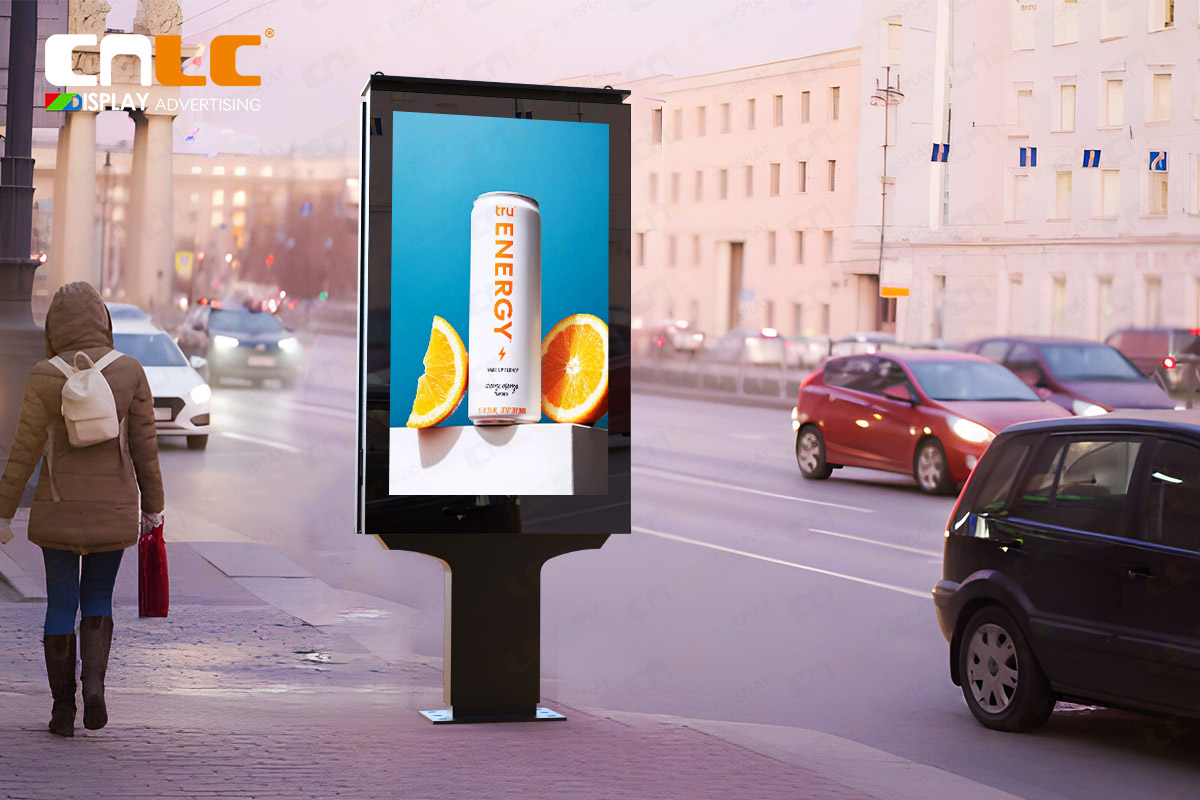
 

outdoor lcd display


What is Mupi?

Mupi, short for "Multipurpose Information Panel for Urban Environment," is typically installed in public spaces such as bus stops, subway stations, and city squares. Traditional Mupis appeared in the form of lightboxes and posters, used for advertising and public information dissemination. Modern Mupis, however, integrate digital display technology and smart interactive functions, serving not only as advertising tools but also providing various urban services, such as information queries and public transportation guidance. Mupis are usually 1.2 meters wide and 1.8 to 2 meters high, designed for durability and visibility to withstand various outdoor environments.

1. Origins and Early Development (1970s)

Mupi first appeared in Europe during the 1970s, initially aimed at providing static advertisements and information in urban public spaces. Early Mupis were simple structures, mainly consisting of lightboxes and paper posters. Due to their convenience and effectiveness, these devices quickly gained popularity across major European cities, becoming the primary tools for urban advertising and information dissemination.

2. Digital Transformation (1990s-2000s)

With advancements in digital display technology, Mupi began to undergo digitalization in the 1990s. The application of LCD and Outdoor LED screens enabled Mupi to display dynamic images, making advertisements richer and more engaging. Digitalization allowed advertisers to remotely control and update content via the internet, significantly enhancing the flexibility and timeliness of advertisements. During this period, Mupi transitioned from a static advertising tool to a dynamic information display platform, becoming an integral part of the modern urban landscape.

3. Smart Features and Interactive Functions (2010s)

Entering the 2010s, Mupi became increasingly smart, integrating high-tech equipment like touch screens, sensors, and cameras to enable interactive functions. CNLC's Mupi products not only feature touch screen functionality but also incorporate high brightness display technology, ensuring clear visibility under various lighting conditions. Moreover, CNLC's products are equipped with IK10-rated glass, further enhancing the durability and security of the devices. These smart features not only improve user experience but also expand the application scenarios of Mupi, making it a crucial tool in smart city management.

4. Multifunctionality and Eco-Friendly Design (2020s to Present)

Modern Mupis go beyond information display, combining various urban service functions such as Wi-Fi hotspots, phone charging stations, and air quality monitoring. With the growing awareness of environmental protection, many Mupis now utilize solar power and low-energy display technologies to reduce their environmental impact. CNLC's Mupi products adopt efficient cooling systems and aluminum casings to ensure stable performance during prolonged operation while reducing energy consumption. These features not only enhance the multifunctionality of the devices but also align with modern cities' green development goals.

5. Future Prospects

Looking ahead, Mupi is expected to continue evolving, integrating cutting-edge technologies such as AI, big data, and VR/AR to achieve higher levels of intelligence and personalization. For example, by analyzing urban data in real-time through AI, Mupi can automatically adjust advertisement content or provide precise urban services. CNLC's Mupi products have already laid a solid foundation for this evolution, with high brightness displays, sturdy aluminum casings, and IK10 glass ensuring the devices' continued importance in future smart cities. Additionally, the application of AR/VR technology will bring a more immersive interactive experience to Mupi users, further enhancing its role in smart cities.

 

LCD Advertising Display


Conclusion

The development of Mupi, from static information panels in the 1970s to modern devices integrating digital displays, smart interactions, and multifunctional services, illustrates significant advancements in outdoor advertising and urban information dissemination. With ongoing technological innovations, Mupi will continue to evolve, providing crucial support for smart city construction and becoming an essential component of urban informationization and intelligence. CNLC's Mupi products, through continuous innovation in smart features, durability, and multifunctionality, are leading the way in this field.

NFC FPC tags have emerged as a game-changer in the realm of enterprise innovation and development. Their versatile applications, such as integrating them into keys to transform them into smart keys, highlight the endless possibilities that NFC technology presents to businesses worldwide.


One of the standout services offered by UNIRFID is the provision of NFC FPC tags for enterprise applications. These tags, with their flexible printed circuit design, are ideal for embedding into various objects, such as keys, to enable smart functionalities. By partnering with UNIRFID, businesses can elevate their products to the next level, enhancing user experience and opening up new possibilities for interaction.


But UNIRFID's commitment to its clients goes beyond just providing products – it extends to comprehensive solutions that address specific business needs. Through environmental simulation and sample testing, UNIRFID ensures that NFC FPC tags perform optimally in any setting, meeting the highest standards of reliability and durability.


By choosing UNIRFID as their RFID partner, companies gain access to a wealth of expertise and support. Our team of dedicated professionals works closely with clients to understand their requirements and deliver solutions that exceed expectations. Whether it's developing a customized NFC FPC tag or implementing a full-scale RFID solution, UNIRFID is equipped to handle projects of any size and complexity.


In a rapidly evolving digital landscape, UNIRFID remains a beacon of reliability and innovation. With a track record of on-time delivery, superior quality, and a strong sense of responsibility towards its customers, UNIRFID is more than just a manufacturer – it's a partner in progress, helping businesses unlock their full potential through RFID technology.


Experience the difference with UNIRFID and discover a world where customization meets excellence. Contact us today to explore our range of RFID products and services, and take the first step towards a smarter, more connected future.


Related Products:  NFC FPC Tags, NFC PCB Tags

Infinity Mirror Signage have become a popular DIY project for those looking to add a touch of modern artistry and glamor to their home decor. With the mesmerizing illusion of infinite depth, infinity mirrors can transform any space into a captivating visual experience. Whether you're a seasoned DIYer or just getting started, making your own infinity mirror signage is a rewarding project that combines creativity with basic technical skills.


  • First Materials Needed:

Before you begin, gather the following materials:

Mirror: A standard mirror to serve as the base for the infinity mirror.

Bi-directional mirror film: This is essential for creating the illusion of depth. You can purchase pre-made two-way mirrors or you can apply film to the glass.

LED Light Strips: These will be used to create the illusion of endless light in the mirror. Choose a color that matches your aesthetic or opt for color-changing LED lights for a dynamic effect.

Wood or Metal Frame: The frame will hold the mirror and the double glazing. Make sure it is sturdy enough to withstand the weight.

LED Light Power Supply: Depending on the LED strip, you may need a specific power supply or adapter.

  • Step-by-step guide:

Prepare the mirror frame:

Begin by assembling or preparing the frame for the mirror and two-way glass. If you are using a wooden frame, cut it to the proper size and make sure the frame fits the mirror snugly. The frame should be deep enough to accommodate the thickness of the mirror and two-way glass as well as the LED lights.

Mounting the Mirror:

Attach the standard mirror to the back of the frame. This mirror will act as a base layer to reflect the light from the LED lamps.

Install the LED Lights:

Position the LED strips towards the mirror on the inside edge of the frame. Make sure the lights are evenly spaced for a uniform effect. Connect the lights to the power supply, but do not turn them on yet.

Install the two-way mirror:

If you are using a two-way mirror film, carefully apply it to the second piece of glass. Make sure there are no air bubbles or creases as these can ruin the illusion. If you are using a pre-made two-way mirror, simply place it on top of the frame with the reflective side facing the mirror.

Assemble the infinity mirror:

Place the two-way mirror on top of the frame and secure it in place. The two-way mirror should be positioned so that it reflects both the LED light and the standard mirror, creating the illusion of infinite light.

Activate and enjoy:

Once everything is in place, turn on the LED lights. The light will reflect between the two mirrors, creating the mesmerizing illusion of infinite depth. If your LED lights have the ability to adjust brightness and color settings, you can find the perfect look for your space.

Customization Tip:

Shapes and Sizes: Infinity mirrors aren't limited to traditional squares or rectangles. Consider using round or geometric frames for a more unique look.

LED Effects: Experiment with different LED effects such as fading, pulsing or color shifting to enhance visual appeal.

Mounting Options: Depending on size and design, Infinity mirrors can be mounted on a wall, framed as artwork, or even used as a tabletop display.


DIYing your own Infinity Mirror is not only a fun project, but also a way to personalize your space with a truly unique piece of art. Whether you're looking to enhance your home décor or create a conversation piece, infinity mirrors combine visual interest with modern elegance. With just a few basic materials and a little creativity, you can craft mesmerizing optical illusions that will make anyone swoon.

In The Pursuit Of Space Aesthetics And Practical Functions Today, Lighting Design Has Become An Indispensable Part Of Interior Decoration. With The Advancement Of Technology, Seenlamp Lighting Has Come Up With An Innovative Solution: Mini Embedded Downlights. These State-Of-The-Art Luminaires Offer Unique Features Including Mini Holes, Adjustable Design And Anti-Glare, Making Them Ideal For Commercial Applications Such As Museums, Art Galleries And Restaurants, As Well As Shopping Stores. The Following Is a Detailed Explanation Of The Advantages Of Mini Recessed Downlights For Seenlamp Lighting.

Adjustable Design

A Notable Feature Of The Mini Recessed Downlights Is Their Adjustable Design. These Lamps Have The Ability To Adjust The Light Direction Angle, Allowing The Flexibility To Direct The Light Exactly Where It Is Needed. This Versatility Allows For Targeted Lighting That Gives Emphasis To a Specific Artwork Or Merchandise In a Commercial Space. For Museums And Exhibition Halls, The Adjustable Design Of These Downlights Helps Create Sophisticated Lighting Effects That Highlight Exhibits And Emphasize Their Uniqueness. Similarly, In Stores, This Feature Ensures That Products Are Properly Displayed, Capturing The Attention Of Potential Customers And Enhancing The Overall Shopping Experience.

Energy Saving And Environmental Protectio

Mini Downlights Not Only Perform Well In Anti-Glare Eye Protection, But Also Have Significant Energy Saving And Environmental Protection Advantages. Led As Its Core Light Source, Has The Characteristics Of Low Energy Consumption, Less Heat, Compared With Traditional Lighting Products, Can Greatly Reduce Energy Consumption And Carbon Emissions. In Addition, The Led Light Source Also Has a Long Service Life, Reducing The Need For Frequent Replacement Of Lamps, Further Reducing The Cost Of Use And Environmental Burden.

Anti-Glare Eye Protection

The Mini Embedded Downlight Of Seenlamp Lighting Adopts The Structural Design Of Deep Buried Light Source And Can Add Honeycomb Network, So That It Effectively Avoids Direct Light Into People's Eyes, Reduces The Occurrence Of Blinding Phenomenon, So As To Protect People's Eyes. In Scenes That Require Partial Lighting, Such As Reading Areas, Work Areas Or Art Displays, Mini Recessed Downlights Provide Soft And Focused Light That Meets Lighting Needs While Protecting The User's Visual Health.

Very Integrated

The Compact Design And Small Size Of The Mini Recessed Downlights For Seenlamp Lighting Make Them Extremely Flexible During Installation. The Design Of Its Mini Opening And Extremely Narrow Frame Is Easier To Integrate Into The Ceiling And Integrate With The Ceiling To Create a More Refined And Advanced Sense Of Space. At The Same Time, Its Rich Color Choices Also Provide Users With More Personalized Choice Space, So That Lighting Becomes a Part Of The Space Decoration.

Conclusion

To Sum Up, Seenlamp's Mini Embedded Downlight Has Become a Bright Pearl In The Modern Lighting Market With Its Advantages Of Energy Saving, Environmental Protection, Small And Delicate, Anti-Glare Eye Protection, And Flexible Pendulum. It Not Only Brings Convenience And Comfort To Our Life, But Also Provides Strong Support For Our Pursuit Of a High-Quality Lifestyle.

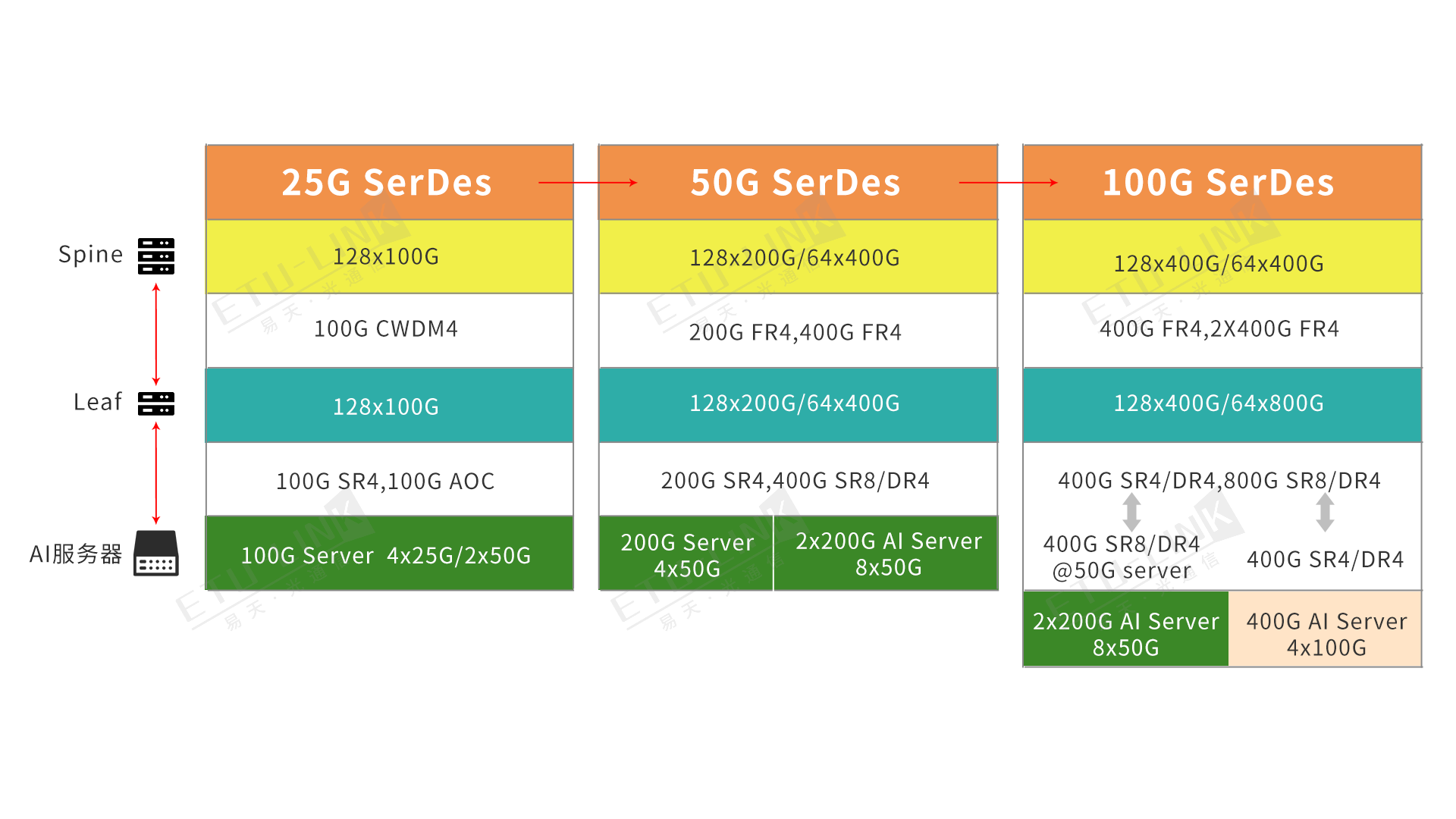
With the rapid development of Artificial Intelligence (AI) technology, the computing power and data transmission needs of AI clusters are increasing. To meet this demand, optical module technology is also advancing. High-rate optical modules, as a new generation of high-speed optical communication solutions, are being gradually applied to AI clusters to provide them with more efficient and stable data transmission capabilities. The port rate of optical modules interconnected in the computer room of the Smart Computing Center has reached 800G, and continues to evolve to high speed (1.6T/3.2T).

400G SR4 and 800G SR8 Optical Module


I.The next five years in the AI cluster Ethernet optical module demand forecasts


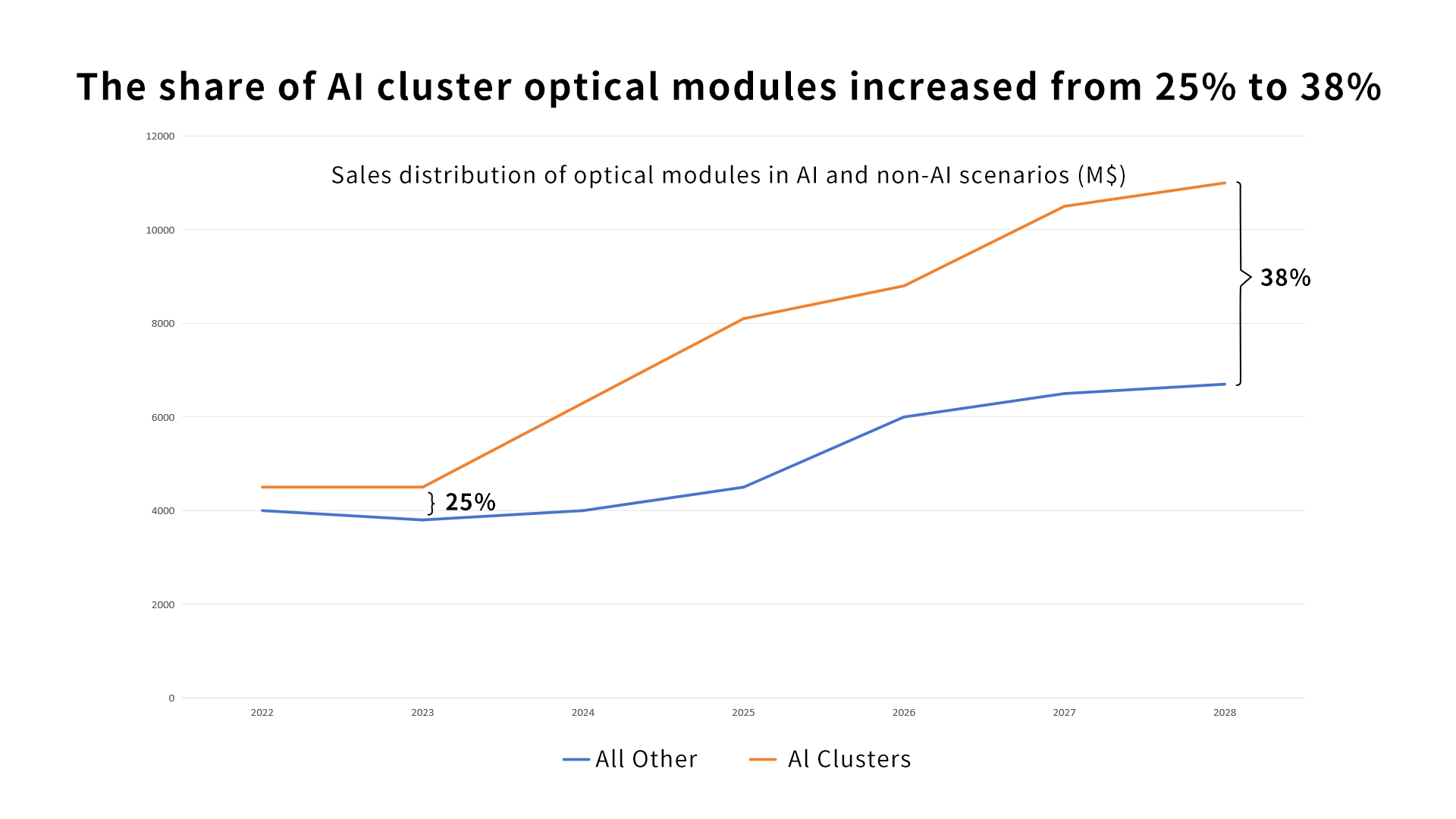
As early as July 23, LightCounting (hereinafter referred to as LC), a research institute within the optical communications industry, released the "Super Data Center Optics Report", which indicated that the total sales of Ethernet optical modules for AI clusters in the next five years will reach $17.6 billion, accounting for 38% of all Ethernet optical modules market. The report forecasts the global Ethernet optical module market size to be around $5.2 billion, $6.5 billion, and $8.3 billion in 2023, 2024, and 2025, respectively, upwardly revised by around 8%, 25%, and 43% from last year's Q1 report, respectively, and it can be seen that the vast majority of incremental growth is coming from the demand for AI clusters, and the organization believes that the application of AI clusters will set off a whole new wave of demand for optical products.


At the same time, LC also said that the new design of large enterprise AI systems will require more optics, and the deployment of head enterprise networks in the next two years may require 2 million 400G SR4 optical modules and 6 million 800G SR8 optical modules. In response, LC significantly raised its 2024 & 2025 Ethernet optical module market forecast, and if combined with the new demand from head enterprises, the digital pass optical module market is highly resilient. Super Ethernet Alliance was established to target high-performance AI cluster networks, Ethernet AI optical modules and application front-end network upgrades will constitute a market driver beyond the head enterprises in the optical communications industry.


II.Development and Application of High-Speed Optical Module in AI Cluster


In AI applications, the surge in data volume puts higher requirements on the bandwidth of optical interconnection technology. Currently, many short-distance links constructed with 400G SR4 and 800G SR8 optical modules use VCSEL lasers with an operating rate of 106Gb/s. The next step in the evolution of the technology is to increase the single-lane rate of the optical channel to 200G/lane, in conjunction with the number of 4-channel optical channels, to further reduce the cost and power consumption of the 800G module; and to synchronously evolve to a single-module bandwidth to 1.6T (8-channel optical path).


In AI clusters, 400G SR4 optical modules are commonly used for the connection between servers and switches. Since AI training and inference processes require large amounts of data transmission, high-speed and stable network connectivity is critical. 400G SR4 optical modules can provide sufficient bandwidth and low-latency transmission environments to ensure that AI model training and data processing are carried out efficiently. 800G SR8 optical modules are mainly used for core network connectivity in mega-scale AI clusters and data centers. As the complexity of AI models and the amount of data increase, 800G SR8 optical modules can provide the required high bandwidth and low latency connections to support the rapid transmission and processing of massive data.


III.Optical interconnect technology innovation in AI scenarios


Low power consumption and low latency are indispensable features of optical interconnect technology. Low power consumption means less energy consumption and lower operating costs, while low latency means faster response time and higher data processing efficiency. To meet these demands, optical interconnect technology needs to be optimized in design to reduce energy loss and improve transmission efficiency.


AI requires high system stability, so optical interconnect technology must be highly reliable. This requires us to optimize the end-to-end design of the system to ensure the stability and reliability of data transmission. At the same time, we also need to focus on the evolvability and interconnectivity of LPOs to adapt to the evolving needs of AI technology.


In addition, intelligent operation and maintenance of optical interconnection technology is becoming increasingly important. Intelligent O&M can not only help enterprises monitor the operation status of the system in real time, but also carry out predictive maintenance based on data analysis to improve the availability and stability of the system. In addition, intelligent O&M can help us optimize resource allocation and improve the overall performance of the system.


Silicon optical technology is expected to see high growth as the rate increases and single-mode downlink accelerates. With its advantages of high speed, low power consumption and miniaturization, silicon optical technology plays an increasingly important role in optical interconnection technology in AI scenarios. We have reason to believe that silicon optical technology will play an even more important role in future AI applications.


Partial source: LightCounting

We all know that the traditional 100G optical module uses 4x25G optical channels parallel or wavelength division multiplexing for transmission, and the mainstream optical modules on the market are mainly 100G SR4/CWDM4/PSM4/LR4/ZR4 and so on. The 100G single-wave optical module we introduce to you today uses single-wavelength 100G PAM4 modulation technology, which can better reduce production costs and obtain higher transmission efficiency.


I.the difference between the traditional 100G optical module and 100G single-wave optical module


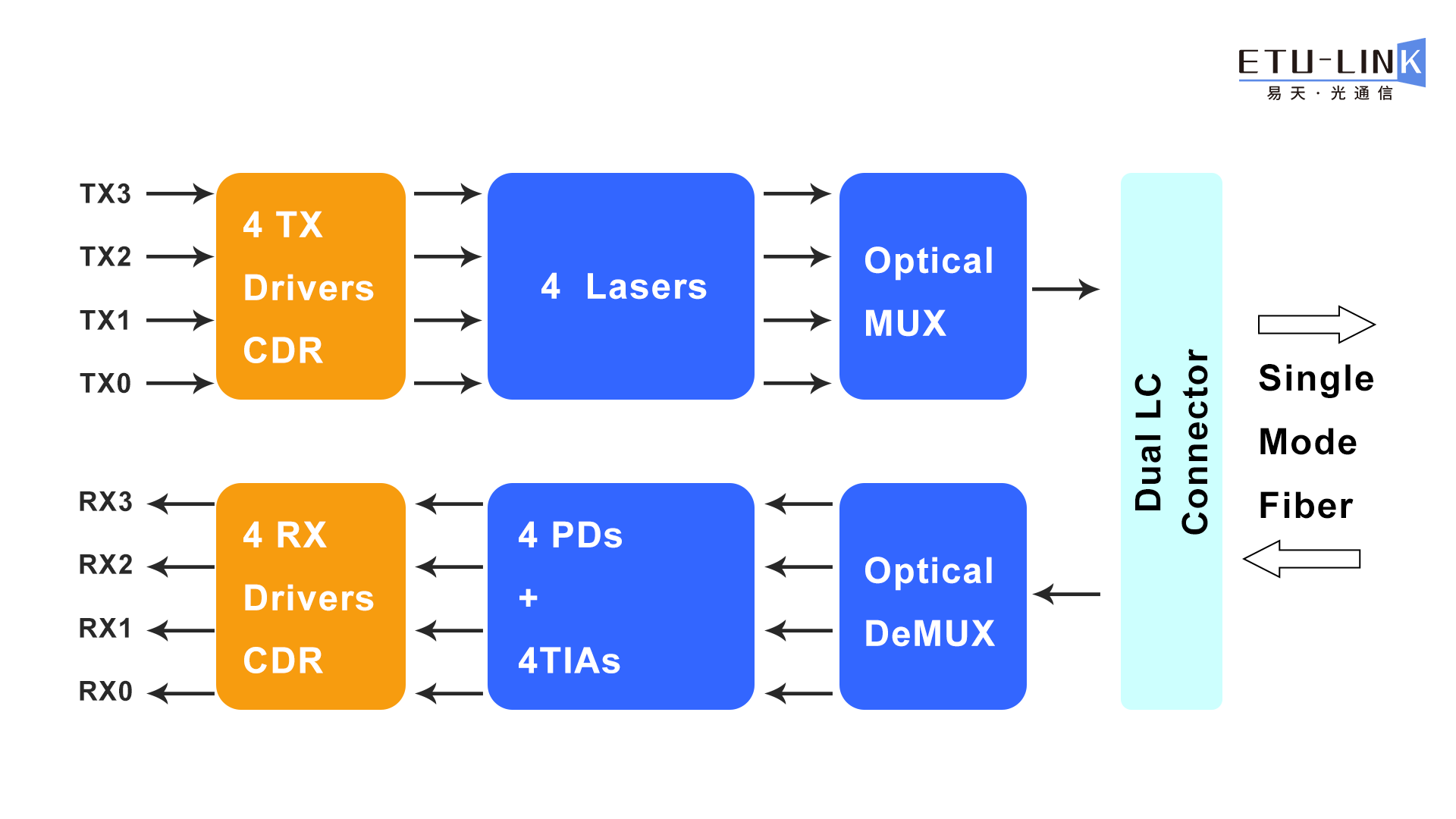
The traditional 100G optical module uses 4x25G NRZ technology. Using four separate transmit and receive channels, four 25Gb/s electrical data can be converted into four LAN WDM optical signals, which can then be multiplexed into one 100Gb/s optical transmission. At the receiving end, the 100Gb/s optical input is demultiplexed into a 4-channel LAN WDM optical signal, which is then converted into a 4-channel electrical data output.

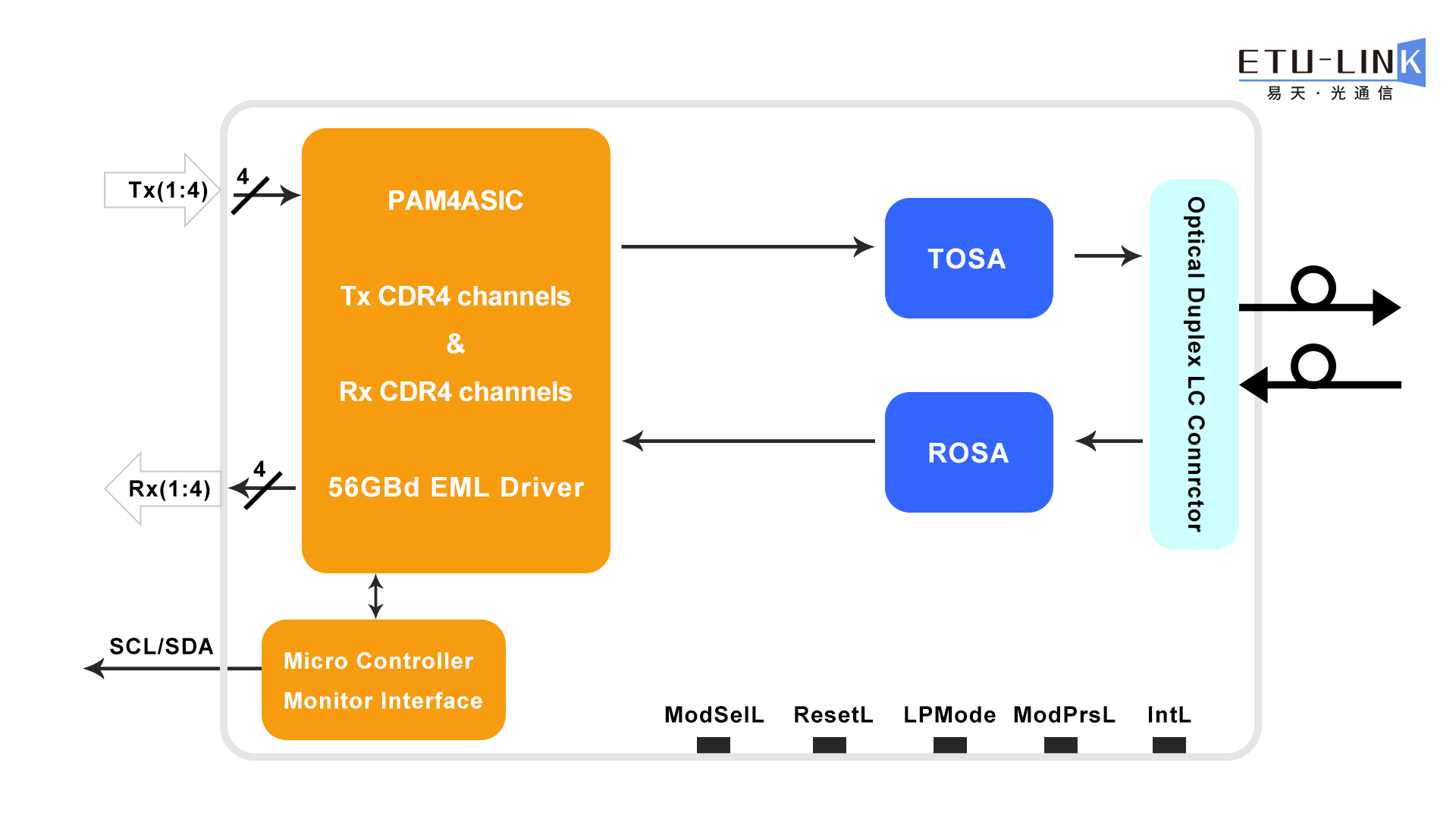
In addition, the traditional 100G optical module requires separate transmitting and receiving devices on each channel, which not only increases the power consumption and space occupation of the optical module, but also increases the cost. The 100G single-wave optical module converts four 25Gbps NRZ signals at the end of the circuit into a single 53Gbps signal through DSP processing of PAM chip by driving the cooled electric absorption modulated DFB laser (EML). This technology significantly increases the signal transmission rate and effectively reduces the number of signal channels required compared to traditional NRZ modulation technology.

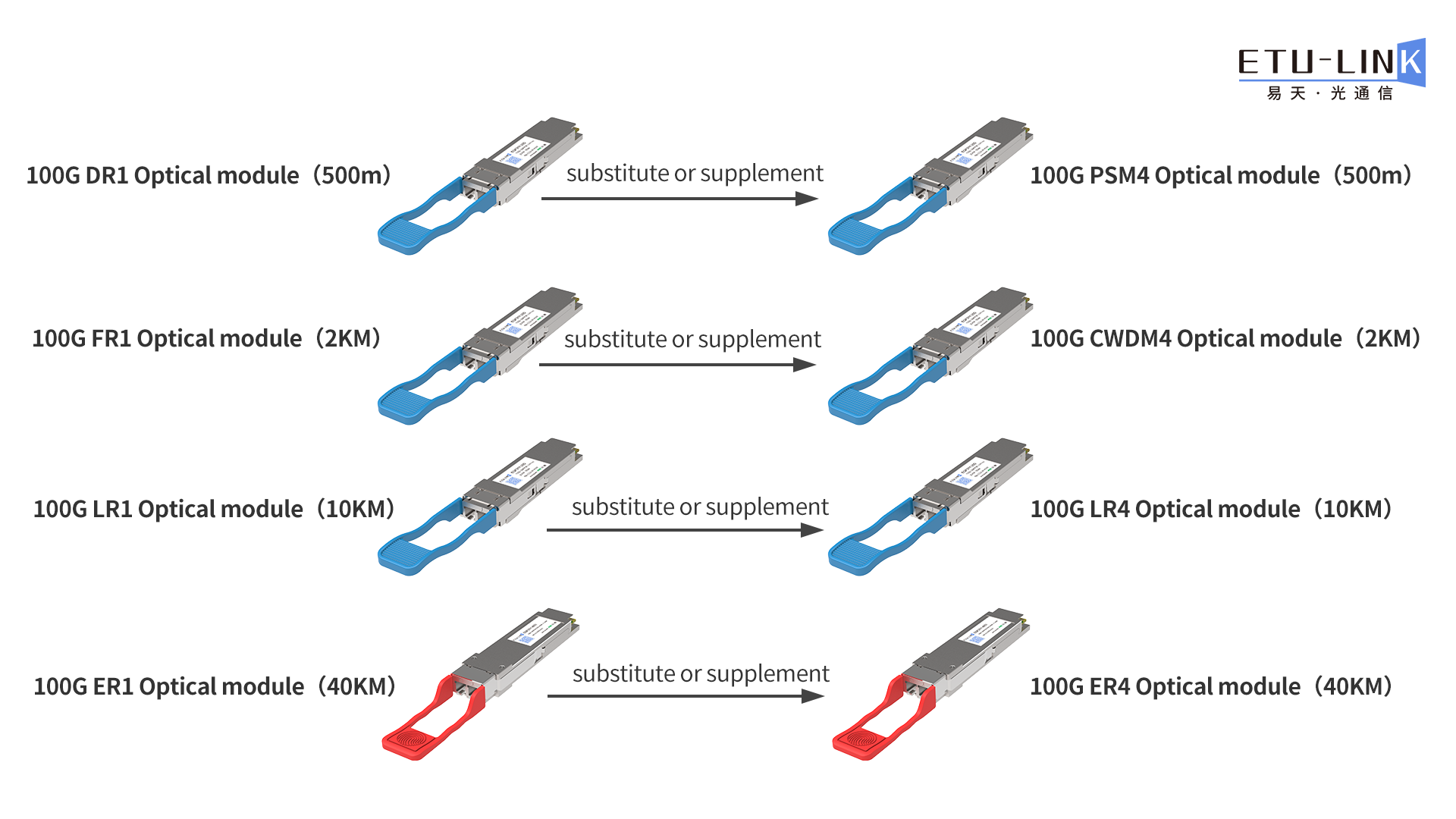
The 100G single-wave optical module uses the more advanced PSM4 parallel transmission technology, reducing the number of light transmitting and receiving units from 4 to 1, which can reduce the cost by more than 40%. Because 100G single-wave technology uses single-channel PAM4 technology, this innovation makes it feasible to smoothly upgrade 100G to 4x100G (400G optical module).


II.ETU-LINK 100G single wave series products


ETU-LINK 100G single-wave optical module currently has four models: 100G QSFP28 DR1/FR1/LR1/ER1. They are suitable for services that use single-mode fiber for high-speed data communication of 100Gb/s, operating at 1310nm, and the optical signal is multiplexed to the single-mode fiber using a duplex LC connector. The series is designed according to QSFP28 multi-source Protocol (MSA) with form factor, optical/electrical connection and digital diagnostic interface. The 100G QSFP28 optical module has a maximum transmission link of 40km in single-mode OS2 optical fiber, and is usually used in data center interconnection, 100G Ethernet, enterprise networks and other fields.


100G optical module

As a professional platform for a full range of optical networking products and services, ETU-LINK provides you with a reliable and cost-effective, cost-saving single-wave 100G QSFP28 optical module in an airtight package (or non-airtight) solution. The content of this article is over here, if you want to know more product information, you can leave a message or private message below the article, more content we see next time!

With the rapid development of information technology and the increasing demand for network, the demand for high-speed and high-bandwidth data transmission equipment is becoming increasingly urgent. As a high-speed optical module, 800G is becoming the "new darling" of data centers. In this issue, we will take a look at the technical principle of 800G OSFP 2xSR4 optical module products and its application prospects.


I.800G OSFP 2xSR4 Optical module Overview


The ETU-LINK 800G OSFP 2xSR4 optical module is a fiber optic transceiver module designed for 100m optical communication applications and is designed for data center 800G SR8 Ethernet links. The module converts 8 channels of 100Gb/s(PAM4) electrical input data into 8 parallel optical signals of 100Gb/s each for a total data rate of 800Gb/s. At the receiving end, the module converts 8 channels of parallel optical signals (100Gb/s each, with a total data rate of 800Gb/s) into 8 channels of 100Gb/s(PAM4) electrical output data.

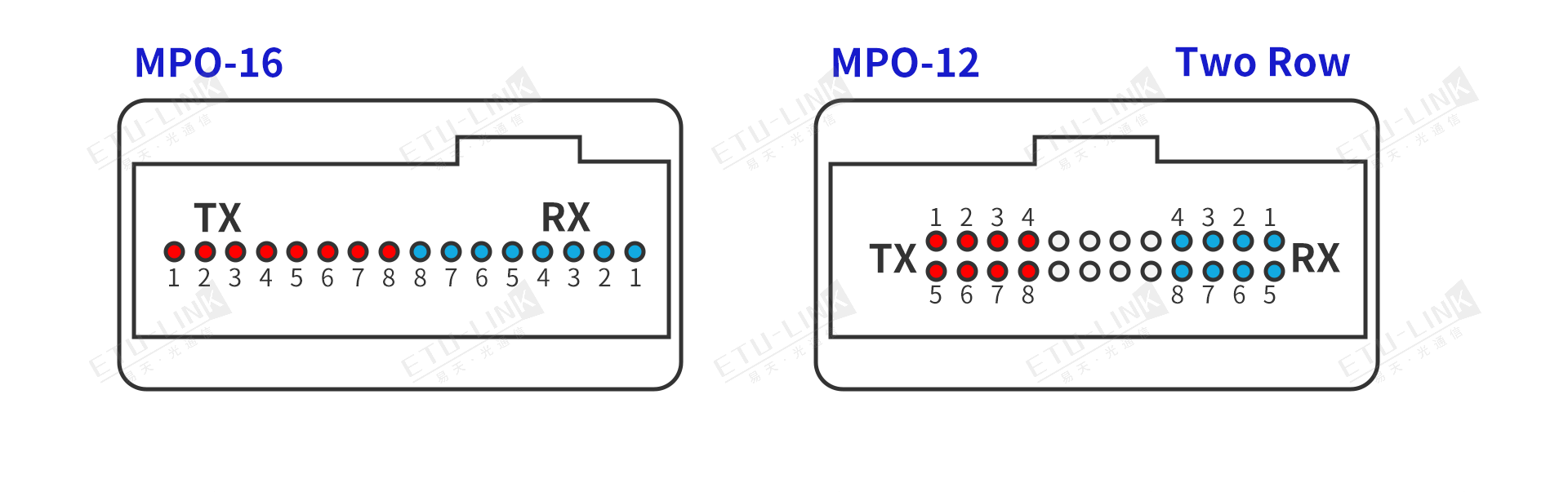
The fiber optical patch cord with dual MPO-12 connectors can be plugged into the 800G OSFP SR8 module socket, enabling 800G data interconnection up to 100m.

II. Application prospect of 800G OSFP 2xSR4 optical module


With the booming development of cloud computing, big data, artificial intelligence and other fields, the demand for high-performance network equipment continues to increase. As the representative of current technology level, 800G OSFP 2xSR4 optical module has broad application prospects.


Data centers and cloud networks: As the core of information processing and storage, data centers have extremely high requirements for high-speed, high-bandwidth network connections. The high-density design and high-speed transmission rate of the 800G OSFP 2xSR4 optical module make it an ideal choice for data center network upgrades to meet the needs of large-scale data transmission.


5G communication network: With the commercial advancement of 5G technology, the demand for optical communication technology is also increasing. The 800G OSFP 2xSR4 optical transceiver module has the advantages in transmission rate and stability, and can be used as an optical fiber transmission channel to achieve high-speed data transmission between different nodes, making it an important part of the 5G communication network to support high-speed and large-capacity data transmission.


Artificial intelligence supercomputing: The development of big data, AI technology, and intelligent supercomputing technology requires the support and matching of high-speed optical modules, so the demand for 800G optical modules will gradually increase.


This article ends here, 800G OSFP 2xSR4 optical module as a low power consumption, high reliability, economical and energy-saving pluggable optical transceiver module, its emergence for the development of modern communication technology provides a huge support power.


About ETU-LINK


ETU-LINK has been a leading manufacturer of optical modules, Dacs and AOC for nearly a decade. We are proud of not only the honor of being a high-tech enterprise, but also the rich experience we have accumulated in the field of optical modules. Whether in technological innovation or product quality, we always adhere to the pursuit of excellence, to provide customers with high-quality optical communication solutions. If you want to know more about ETU-LINK DAC products, you can send us a private message or leave a message, we will get back to you as soon as possible after receiving relevant inquiries!

With the rapid development of data centers, enterprises, vendors and users of higher, faster network demand is growing, ETU-LINK launched the 400G QSFP-DD DR4 optical module solution can better help users to solve a series of problems, the following follow the small easy to take a look at the product has what aspects of the characteristics and advantages of it!


I.400G QSFP-DD DR4 Optical Module Product Analysis


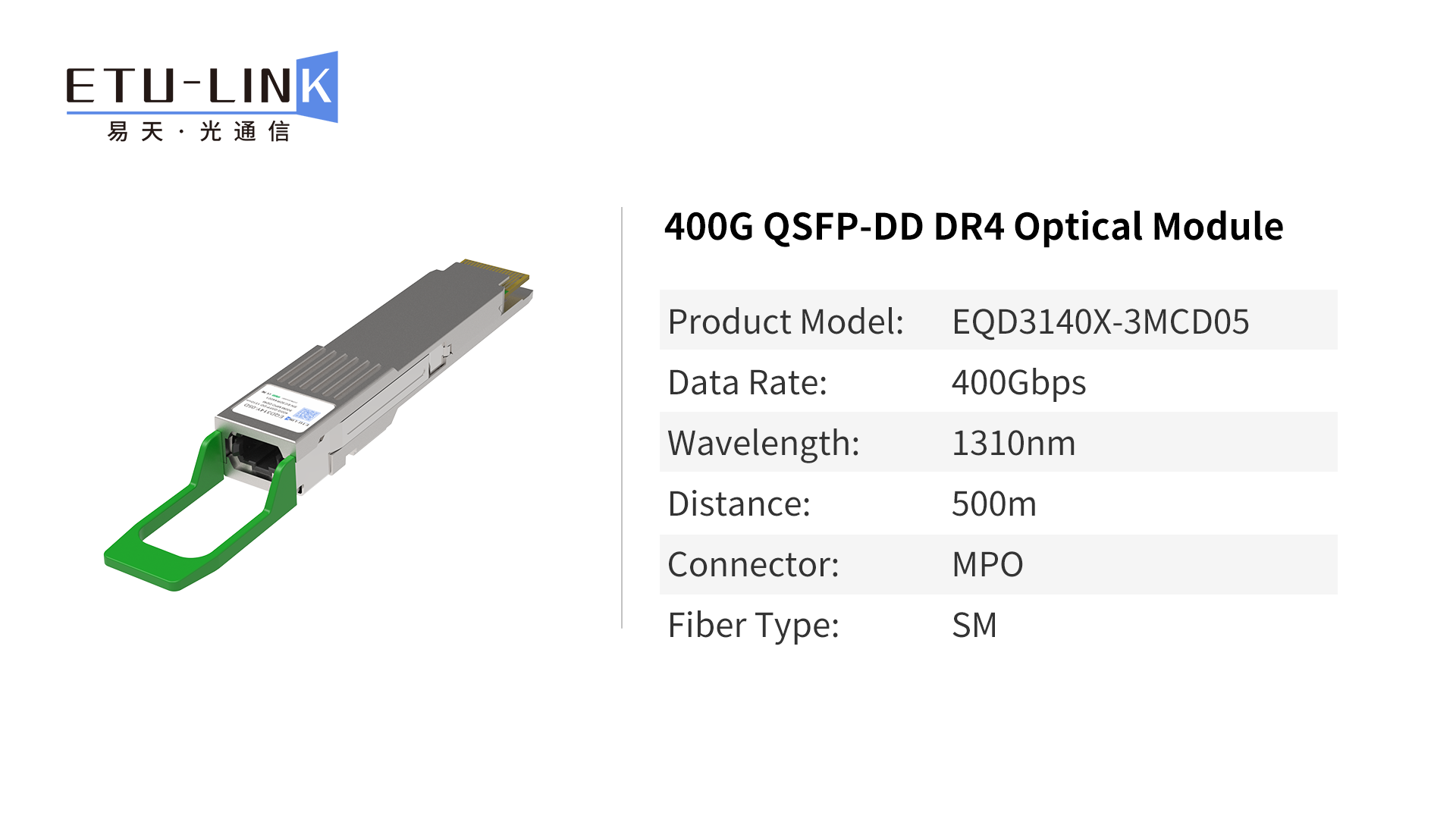
400G DR4 QSFP-DD optical module is designed to meet the needs of data center interconnections in the 400G Ethernet module, using the QSFP-DD packaging standards and PAM4 modulation technology to support up to 400Gbps data transmission rate.


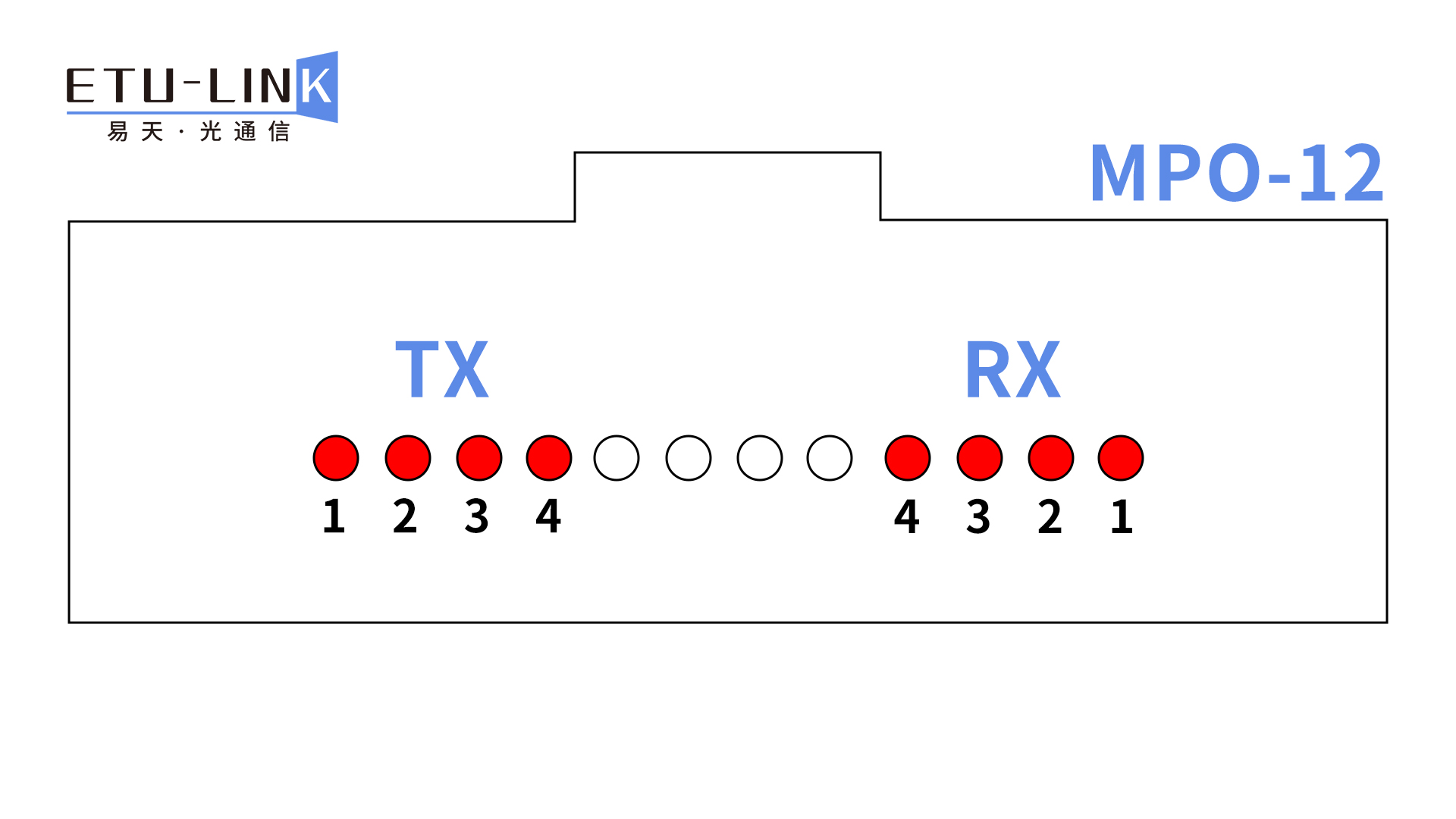
The module uses 4 channels to transmit data, is IEEE802.3bs compliant, QSFP-DD CMIS Rev 4.0 compliant, and RoHS compliant, with a maximum power consumption of 12W, and it can achieve up to 500m transmission distance over Single Mode Fiber (SMF) via MPO-12 connector. Compared with other 400G optical modules, 400G QSFP-DD DR4 optical modules have lower power consumption and better heat dissipation.

II.ETU-LINK 400G QSFP-DD DR4 Optical Module Advantage Introduction


Compact package: The QSFP-DD package achieves a more compact design and smaller package size, which helps to increase the port density of the data center and reduce the size and footprint of the equipment.


Low Power Consumption: In order to meet the demand for green energy, ETU-LINK 400G QSFP-DD DR4 optical modules are designed with low power consumption features, with a maximum power of no more than 12W, which reduces heat generation and helps to lower the overall energy consumption in data centers.


High Reliability: By adopting advanced optical and electronic technologies, this optical module is highly stable and reliable, ensuring the stability and security of data transmission.


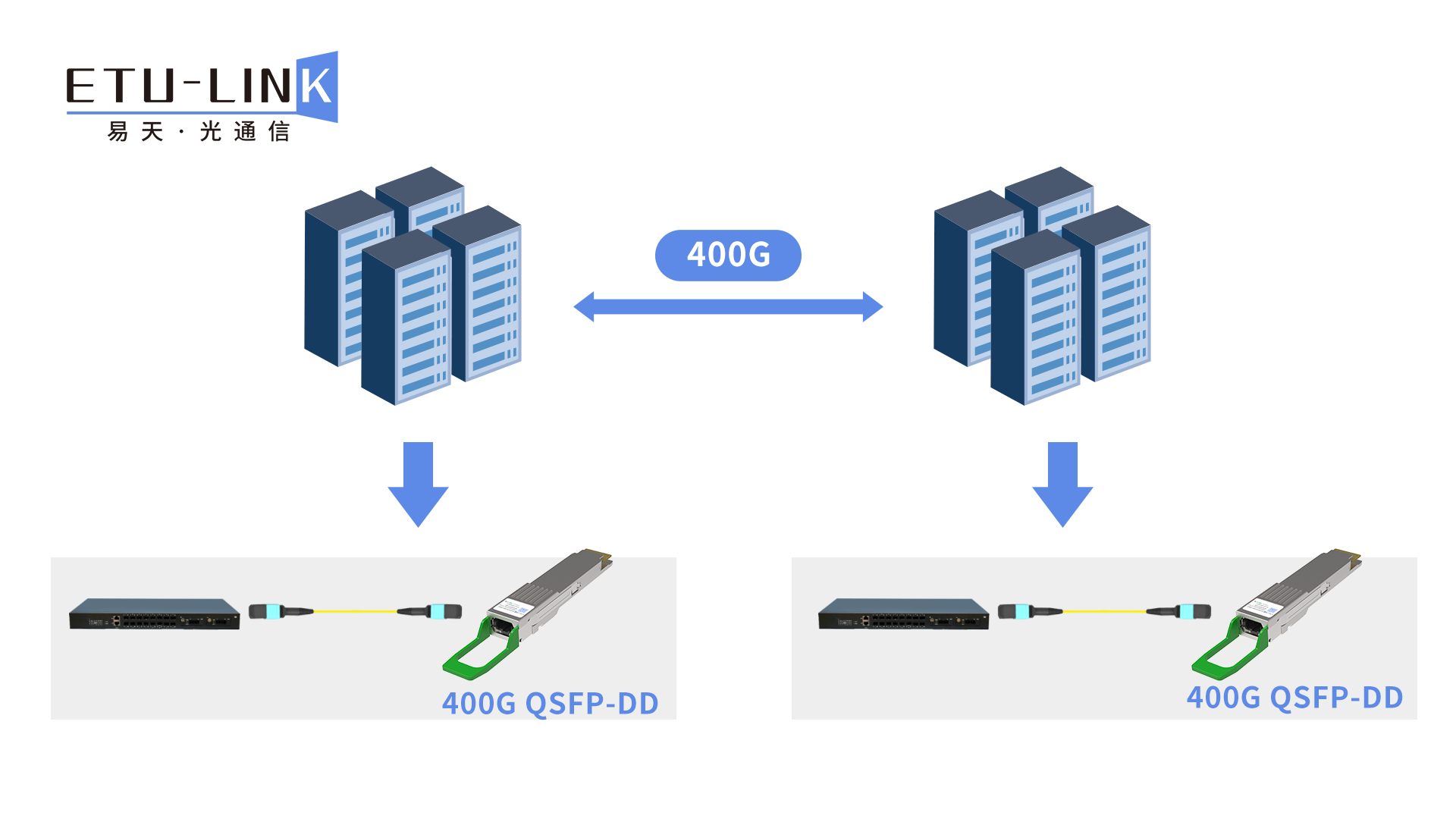
In the big data environment, large-scale data transmission has become the norm. In the data center network architecture, the connection between servers, between switches, and between servers and switches requires the use of optical modules, fiber optic patch cords or other communication devices to achieve network data interconnections. 400G QSFP-DD DR4 optical modules provide a more efficient data communication solution through their high-speed transmission and compact packaging characteristics. The figure below shows the direct connection of 400G QSFP-DD optical modules in a data center application scenario.


ETU-LINK, as a professional platform for a full range of optical network products and services, can provide you with stable, reliable and cost-effective, cost-saving 400G DR4 QSFP-DD optical modules and total network transmission solutions, and our goal is to win your moving!