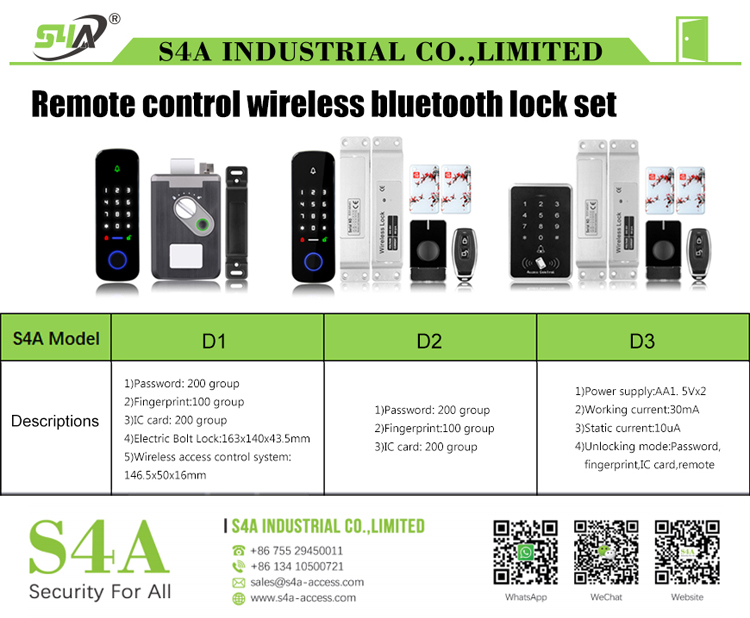
Generally speaking, solar charge controllers are divided into MPPT solar charge controller and PWM solar charge controller. The size of solar charge controller mainly depends on two factors: the current flowing from the solar cell and the voltage connected to the system. Sizing a solar charge controller requires the following steps:


Step 1: Determine solar cell specifications First, you need to determine the wattage, voltage, and current of each solar panel.


Step 2: Match battery voltage Make sure the charge controller voltage matches the battery. If they do not match, it is easy to damage the battery and pose a safety hazard.


Step 3: Calculate maximum current output Calculate the maximum current output in parallel: With a parallel connection, the voltage remains constant as the current accumulates, adding current from each panel. When solar panels are connected in series, the current remains the same but the voltage increases. So if you have solar panels in series, you need to add voltage.


Step 4: Add security scope The safety margin is added to account for increased current due to strong sunlight conditions or other circumstances. A common practice is to add 25%.


Step 5: Consider future expansion We often choose a larger charger than the system we are currently using. This avoids the need to replace a larger charger when the system is expanded, adding a lot of convenience for future expansion.

Cost-Effective:

PWM (Pulse Width Modulation) solar charge controllers are generally less expensive compared to MPPT (Maximum Power Point Tracking) controllers. This makes them an attractive option for smaller or budget-conscious solar power systems .


Simplicity:

These controllers are straightforward in design and operation. Their simplicity makes them easier to install and use, requiring less technical expertise and fewer adjustments than MPPT controllers .


Reliability:

With fewer complex components, PWM controllers tend to have a longer lifespan and are less prone to failure. Their robust design ensures consistent performance over time with minimal maintenance .


Three-Stage Charging:

Many PWM controllers offer a three-stage charging process (bulk, absorption, and float), which optimizes the battery charging process and prolongs battery life by preventing overcharging .


Temperature Compensation:

PWM controllers often include temperature compensation, which adjusts the charging voltage based on battery temperature. This feature helps to optimize battery charging efficiency and extends battery life in various environmental conditions .


Cons

Lower Efficiency:

PWM controllers are less efficient than MPPT controllers, especially in systems where the solar panel voltage is significantly higher than the battery voltage. They do not convert excess voltage into additional current, which can lead to wasted energy ​.


Limited Application:

They are not ideal for larger solar systems or situations where the solar array voltage greatly exceeds the battery voltage. In such cases, MPPT controllers are more effective in harnessing the maximum power from the solar panels .


Performance in Cold Weather:

In cold weather conditions, solar panels typically produce higher voltages. PWM controllers cannot fully utilize these higher voltages, leading to lower overall system efficiency compared to MPPT controllers, which can adapt to these conditions more effectively .


Less Optimal for High Voltage Panels:

When using high voltage solar panels, PWM controllers are not as effective. They are better suited for low voltage solar panels and battery systems, which limits their flexibility in various solar power setups.


No Maximum Power Point Tracking:

Unlike MPPT controllers, PWM controllers do not track the maximum power point of the solar panels. This means they cannot always ensure the most efficient energy harvest, leading to potential energy losses, particularly in systems with varying sunlight conditions.


KOHAN is a professional PWMhttps://www.keyuesolar.comMPPT solar charge controller factory. Specializing in providing customized photovoltaic charge controllers to customers around the world. Three-year warranty, feel free to consult!


RFID (Radio Frequency Identification) electronic tag technology and NFCNear Field Communication) technologies are both wireless communication technologies, but they have some differences in working principles, communication ranges and application fields. Let’s find out next.

In terms of working principle, RFID technology uses radio frequencies to transmit data from electronic tags to RFID tag readers. The electronic tag contains a chip and an antenna, through which it receives and sends wireless signals and communicates with the reader. NFC technology is based on RFID technology, but has richer functions. It supports point-to-point communication and is compatible with existing RFID infrastructure. NFC devices can operate as RFID readers or tags, while also enabling direct communication between two NFC devices.

In terms of communication range, the communication range between RFID tags and readers is relatively large, usually up to several meters to tens of meters or even hundreds of meters, and can achieve long-distance identification and tracking. The communication range between NFC devices is usually short, generally within a few centimeters, and the devices need to be close to each other to communicate. This limitation of near-field communication makes NFC more advantageous in terms of security and is suitable for some payment and authentication scenarios.

In terms of application scope, RFID is widely used in supply chain management, inventory control, logistics tracking, asset management and other fields. It can identify and track a large number of items and improve logistics efficiency. NFC is mainly used in mobile payment, access control, smart tags, transportation cards on smartphones, ID cards and other fields. NFC technology allows smartphones to interact with NFC tags or readers, making it convenient for users to perform payment and authorization operations. It is worth mentioning that in many scenarios where NFC is used, RFID can also be used.

Marktrace provides you with many types of RFID tags and raeders to choose from. We are very happy to provide you with perfect RFID solutions, and we have a professional foreign trade team to give you the best purchasing experience.

DAH Solar Full-Screen Colored PV Module, The Most Beautiful Choice of BIPV


Color retention for 30 years! DAH Solar recently introduced its new product of Full-Screen series: the Full-Screen Colored PV Module, meet the requirements of BIPV for the appearance and efficient power generation of PV modules. The new Full-Screen Colored PV Module inherits DAH Solar Full-Screen’s feature, has no frame on all four sides on the front, no water and no dust on the surface of the module, not only can it maintain the beauty of the buildings by avoiding dust accumulation, but also leads to a power generation increase of 6%-15%. With high-tech coatings, the color can keep for 30 years, making it the most beautiful choice of BIPV.


Full-Screen Colored PV Module


According to customer personalized needs, the color of Full-Screen Colored Colored PV Modules can be customized production, including bright red, light gray, brown, green, blue-green, orange, ocean blue and so on,to choose from in order to match the appearance characteristics of the building itself and fit various BIPV scenarios: roof, curtain wall, balcony, garden, corridor and other scenes.


As a leading company in innovative technology, DAH Solar has been committed to finding optimal solutions for photovoltaic scenario applications through innovation and providing customers with trust-worthy products.


DAH Solar, the founder and master of the Full-Screen PV Module.


In the fast-paced digital era, where communication relies heavily on data transmission through optical fiber networks, maintaining the integrity and efficiency of these networks is paramount. Optical Time Domain Reflectometer (OTDR) is a crucial tool used in the maintenance and troubleshooting of these networks. This article explores the significance of OTDR in ensuring seamless communication and discusses its functions, advantages, and common applications.

OTDR, short for Optical Time Domain Reflectometer, is a specialized instrument used to characterize and troubleshoot optical fiber networks. It works on the principle of sending optical pulses into the fiber and analyzing the reflected light to determine various parameters such as loss, attenuation, and distance.
Key Functions of OTDR:
1 Optical Fiber Fault Detection: OTDR helps in locating and identifying faults, such as fiber breaks, bends, or excessive losses along the fiber optic cable. By analyzing the time and intensity of the reflected light, it accurately pinpoints the exact location of the fault.
2 Fiber Length Measurement: OTDR measures the length of the fiber optic cable accurately. This information is crucial for estimating the overall distance covered by the cable and ensuring proper network planning.
3 Fiber Attenuation Measurement: By analyzing the strength of the reflected light, OTDR can determine the amount of signal loss (attenuation) experienced by the optical fiber. It helps in assessing the overall health and performance of the network.
4 Fiber Characterization: OTDR provides a comprehensive analysis of the optical fiber characteristics, including the splice loss, connector loss, and nonlinear effects. This information enables technicians to optimize the network's performance and identify potential issues.
Advantages of OTDR:
1 Precision and Accuracy: OTDR offers high precision and accuracy in measuring parameters such as loss and distance, providing reliable data for network analysis.
2 Time Efficiency: By combining multiple functions in a single instrument, OTDR saves time and effort in network troubleshooting and maintenance.
3 Non-Destructive Testing: OTDR performs non-destructive testing, meaning it does not interfere with normal network operations when examining the optical fiber cable.
Common Applications of OTDR:
1 Network Installation and Maintenance: OTDR plays a crucial role in network deployment, verifying proper installation and ensuring the fiber's integrity and performance.
2 Fiber Optic Link Characterization: OTDR helps in characterizing optical fiber links by measuring the fiber length, attenuation, and identifying potential issues such as high splice or connector losses.
3 Fault Location and Troubleshooting: OTDR assists technicians in locating and diagnosing fiber optic faults, reducing downtime and improving network reliability.
4 Fiber Network Upgrade and Expansion: OTDR is used to assess the viability of installing additional network equipment and expanding the existing fiber infrastructure.

In today's interconnected world, where optical fiber networks form the backbone of communication systems, the role of OTDR in network maintenance cannot be understated. By accurately detecting faults, measuring distances, and characterizing fiber links, OTDR ensures the smooth operation and optimal performance of these networks. Its precision, efficiency, and versatile applications make it an indispensable tool for technicians involved in optical fiber network maintenance.

sr

LCD (Liquid Crystal Display) Monitor and Touch Monitor are two different types of displays, and they differ primarily in functionality and usage. Here are the main differences:


1. Display Technology:

  • LCD Monitor: LCD monitors use liquid crystal technology to display images. Liquid crystals are optical materials that control the passage of light by changing the arrangement of their molecules to create images.
  • Touch Monitor: Touch monitors are based on LCD display technology but also feature touchscreen capabilities, allowing users to interact directly with the computer by touching the screen.

2. Interaction Method:

  • LCD Monitor: Typically, LCD monitors are used solely for displaying images, and users interact with the computer using external devices such as a mouse or keyboard.
  • Touch Monitor: Touch monitors have touchscreen functionality, enabling users to interact directly with the screen using their fingers or a stylus for actions like tapping, dragging, and zooming.

3. Applications:

  • LCD Monitor: Primarily used for displaying images, text, and videos. Commonly found in offices, homes, and professional applications.
  • Touch Monitor: In addition to displaying content, touch monitors allow for direct interaction through touch. They are widely used in retail, education, entertainment, and special applications like self-service kiosks.

4. Price:

  • LCD Monitor: Typically, LCD monitors are less expensive than touch monitors since they do not include touchscreen technology.
  • Touch Monitor: Due to the additional touchscreen technology, touch monitors tend to be more expensive.


5. Accuracy and Sensitivity:

  • LCD Monitor: LCD monitors are primarily designed for display purposes, and their sensitivity and precision may be lower compared to touch monitors.
  • Touch Monitor: Touch monitors require higher sensitivity and precision to ensure accurate responses to touch inputs.


In summary, LCD monitors and touch monitors differ in terms of interaction method, applications, price, and sensitivity. Users can choose between them based on their specific needs and preferences.


china ip67 cctv camera car lens factory

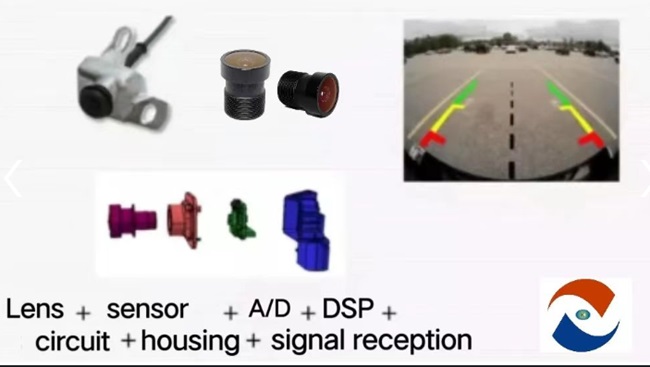
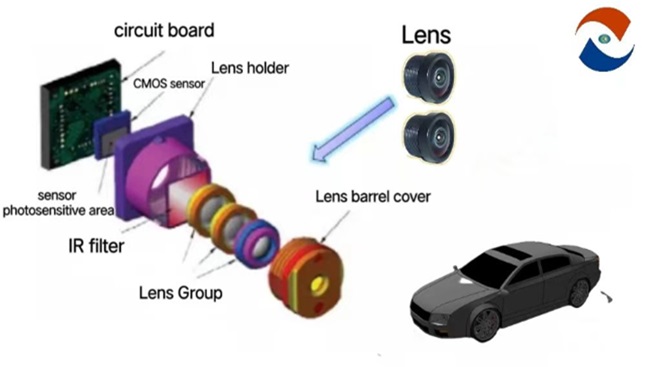
✒ Lens: Gathers light and projects the scene onto the surface of the imaging medium. Some are single lenses, and some require multi-layer glass lenses for better imaging effects.

✒ Filter: The scenery seen by the human eye is in the visible light band, and the light band that the image sensor can discern is larger than the human eye. Therefore, a color filter is added to filter out the excess light band, so that the image sensor can capture what many people see. actual scenery.

✒ Circuit board substrate (PCB board): transmits the electrical signal of the image sensor to the back end. For vehicle cameras, the circuit substrate here will have more circuits. It is necessary to convert the parallel camera signals into serial transmission, so that the anti-interference ability is stronger Some.

✒ The basic working principle is that the target object collects light through the lens, and then filters out the unnecessary infrared light through an IR filter. Finally, the generated optical image is projected onto the image sensor. The optical signal is converted into an electrical signal, and after passing through the A/D (analog-to-digital conversion), it becomes a digital image signal, and is finally sent to a DSP (digital signal processing sensor) for processing. The DSP processes the signal into an image in a specific format and transmits it to the display screen for display.

✒ Generally speaking, the lens group and CIS (CMOS Image Sensor) will be packaged into a module. After becoming the lens module, it will be packaged with DSP and other image signal processing chips to form a complete camera system.

The above is basically the structure of the car camera. In addition, you need to pay attention to the placement outside the car body, because to take into account the occurrence of various harsh external weather and other conditions, you need to form a complete camera. If it is in the car The built-in camera, such as a DVR, does not need to be waterproof and can be assembled into a camera module.
fisheye camera anti-reflection car lens suppliers


I. Introduction


The existence of self-discharge phenomenon of lithium battery has become an important factor restricting its performance and life. In this paper, the principle, influencing factors and countermeasures of lithium battery self-discharge are discussed.


Second, the principle of lithium battery self-discharge

Self-discharge refers to the phenomenon that the battery capacity automatically loses when it is not charged and discharged. For lithium batteries, self-discharge is mainly manifested as the oxidation reaction of negative lithium ions, resulting in the irreversible embedding of lithium ions into the positive material. This process is accompanied by the transfer of electrons, which reduces the potential of the battery and ultimately leads to a reduction in the battery capacity.


Third, the factors affecting the self-discharge of lithium batteries

1. Positive and negative electrode materials: The choice of positive electrode materials has a significant impact on the self-discharge of lithium batteries. In general, the presence of transition metal elements in positive materials increases the rate of self-discharge. The structure and properties of the anode material also affect the self-discharge performance, such as graphite layer spacing and particle size.
2. Electrolyte composition: The composition of electrolyte has an important impact on the self-discharge behavior of lithium batteries. The decomposition reaction of the electrolyte and the passivation on the electrode surface can lead to self-discharge. In addition, the electrochemical stability and flash point of the electrolyte also affect the self-discharge performance.
3. Temperature: Temperature is an important factor affecting the self-discharge of lithium batteries. At high temperature, the reactivity of electrode material increases and the self-discharge reaction is accelerated. At the same time, high temperature will also affect the physical and chemical properties of the electrolyte, and further affect the self-discharge performance.
4. Storage time and state of charge: The self-discharge rate of lithium battery accelerates with the increase of storage time, and the state of charge will also have an impact on self-discharge. In general, the higher the state of charge of the lithium battery, the faster its self-discharge rate.
Battery self-discharge is a complex physical and chemical process, which involves many factors, including battery manufacturing process, material type, environmental conditions and so on. In the actual production, the self-discharge of the battery shows a certain regularity of time. The following is the regularity of the self-discharge of the battery in actual production. Different systems of battery shelving time is different, low voltage detection of bad peak value is different


Fourth, reduce the self-discharge strategy of lithium batteries

1. Positive electrode material modification: By adjusting the composition and structure of the positive electrode material, the self-discharge rate of the lithium battery can be reduced. For example, by adding certain elements to stabilize the structure of the positive electrode material, or by adopting a high-capacity positive electrode material to reduce the amount of lithium ion embedding.
2. Anode material optimization: Improving the structure and properties of anode materials can effectively reduce the self-discharge of lithium batteries. For example, the choice of graphite materials with large layer spacing, or the use of nanostructured anode materials to improve the storage capacity of lithium ions.
3. Electrolyte selection and modification: Choosing an electrolyte with high electrochemical stability and low reactivity is an effective way to reduce the self-discharge of lithium batteries. In addition, the electrolyte can be modified by adding electrolyte salts or other additives to reduce its decomposition and passivation on the electrode surface.
4. Battery management system: The use of advanced battery management system (BMS) can effectively monitor and manage the working state and charge state of lithium batteries, thereby reducing the self-discharge rate. BMS can monitor the battery's voltage, current, temperature and other parameters in real time, and adjust the working state and charge state of the battery according to these parameters to extend the service life of the battery.
5. Storage condition control: Proper storage conditions are very important to reduce the self-discharge of lithium batteries. Storing the battery under the right temperature and humidity conditions can slow down the progress of the electrode reaction, thus reducing the self-discharge rate. In addition, regular charging and discharging cycles of the battery can also effectively alleviate the phenomenon of self-discharge.
6. New structures and materials: With the continuous development of science and technology, new battery structures and materials continue to emerge. For example, solid-state lithium batteries have higher safety, energy density and cycle life because they use solid-state electrolytes instead of traditional liquid electrolytes. In addition, new battery systems such as lithium-sulfur batteries and lithium-air batteries also have great development potential, which is expected to solve the self-discharge problem of lithium batteries in the future.
7. Recycling and recycling: For used lithium batteries, the self-discharge rate can be reduced by recycling and recycling. By recycling useful materials in old batteries, after treatment and then used in the production of new lithium batteries, it can not only reduce resource waste, but also reduce production costs and environmental pollution.


Fifth. Conclusion

In general, the self-discharge of lithium batteries is a complex problem that involves several factors. In order to reduce the self-discharge rate of lithium batteries, material selection, electrolyte modification, storage condition control, battery management system and other aspects can be started. At the same time, attention to the development of new battery structures and materials is also the key to solving this problem. With the continuous progress of technology and the expansion of application fields, we have reason to believe that the future can better control and solve the problem of lithium battery self-discharge, so as to better meet people's needs for energy and the pursuit of environmental protection.
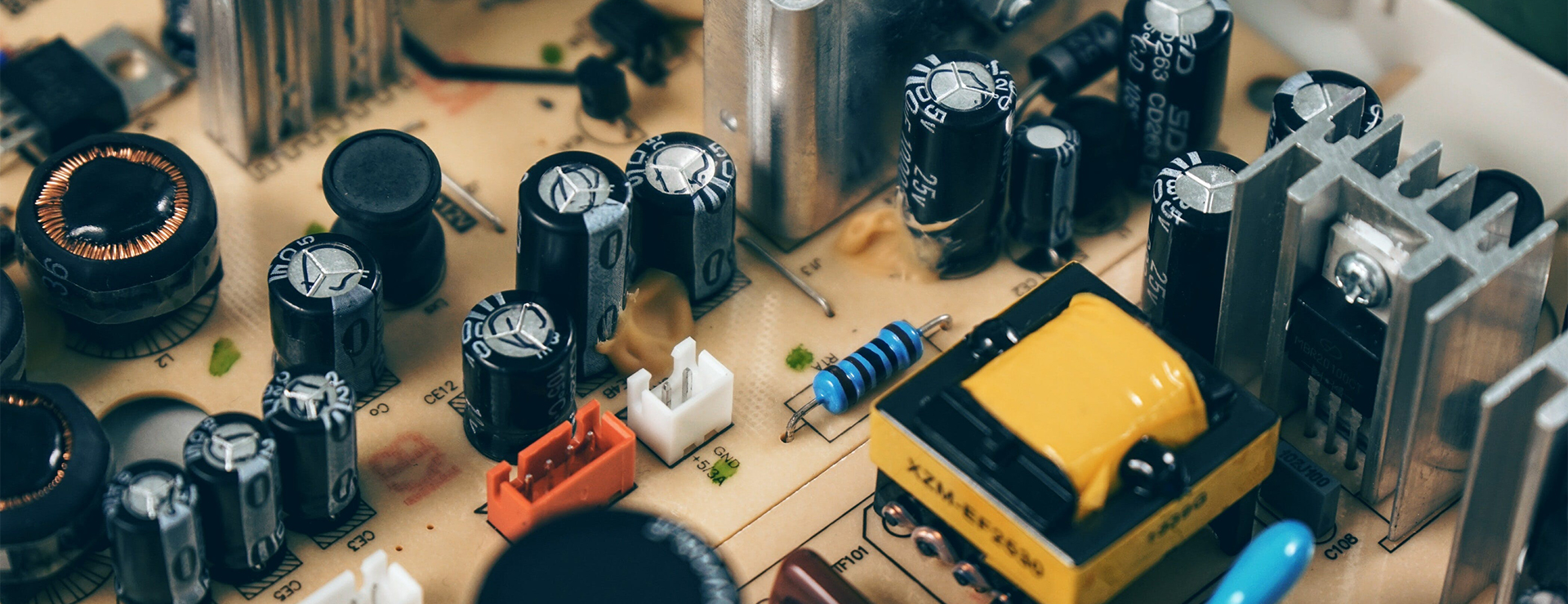
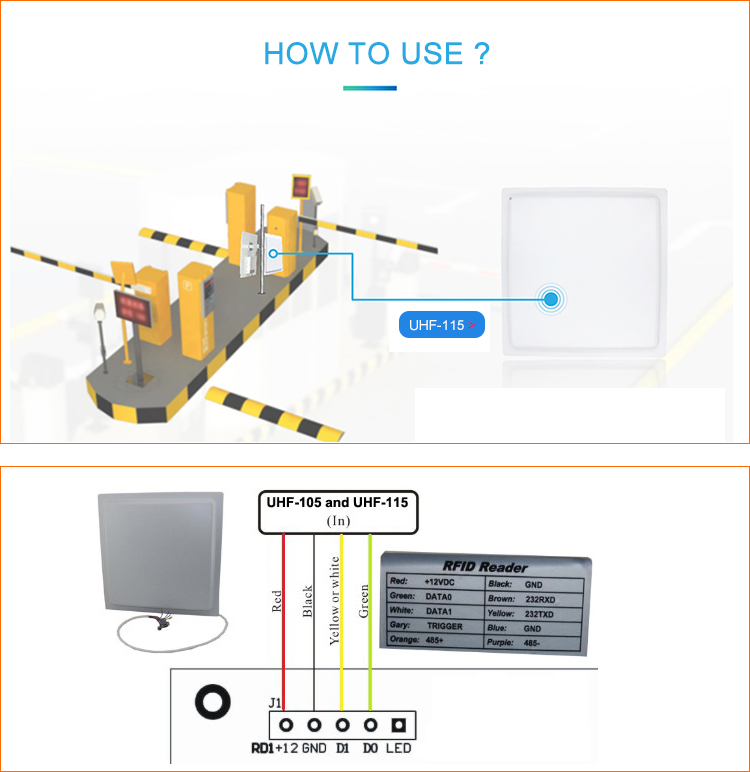
The 25 meters UHF rfid reader range and working performance of UHF parking card readers can vary depending on the specific model and manufacturer. These characteristics are key factors in determining the effectiveness of the access control system. Here are general considerations related to UHF card read range and working 


Performance:

Read Range:

10dbi UHF RFID antenna typically offer a read range that can extend from a few feet to several meters. The exact range depends on factors such as the reader's design, antenna configuration, and environmental conditions.

Adjustability:

Some RFID card UHF provide adjustable read ranges, allowing system administrators to customize the distance at which the card is detected. This flexibility is useful for tailoring the system to the specific requirements of a parking facility.

Environment and Interference:

The working performance of UHF card readers can be influenced by the environment. Quality readers are designed to function reliably in various conditions, including outdoor settings and locations with potential electronic interference.

Consistency:

Customers seek UHF card readers that deliver consistent performance across different situations. Consistency is crucial for ensuring that access control operations, such as gate opening or barrier lifting, occur reliably and without delays.


RFID Card UHF


Speed of Reading:

The speed at which UHF card readers can process and authenticate card information is an important aspect of working performance. Faster reading speeds contribute to the efficiency of access control processes.

Reliability:

Reliable working performance is a fundamental expectation. Users want assurance that UHF card readers consistently and accurately read card information, minimizing instances of false positives or failures to authenticate.

Compatibility with Card Technology:

UHF card readers should be compatible with the UHF RFID technology used in parking cards. This ensures seamless communication between the card and the reader, optimizing the overall working performance of the access control system.


For precise information on the UHF card read range and working performance of a specific model, it is recommended to refer to the product documentation provided by the manufacturer. This documentation typically includes technical specifications, performance metrics, and guidelines for optimal use.


Author: Written by Ms.Anna Zhang from S4A INDUSTRIAL CO., LIMITED


S4A can provide you with a generalized list of potential benefits that users might seek in an RFID Wireless Door Lock Kit.  That said, here are five potential benefits:


Secure and Convenient Access Control:

RFID technology enhances security by providing a contactless and secure means of access control. Authorized users can gain entry using RFID cards or tokens, reducing the risk associated with traditional keys. The wireless nature of the system allows for convenient access management.

Easy Installation and Scalability:

Biometric Access Control typically offer easy installation, eliminating the need for complex wiring. This not only reduces installation time but also makes the system more scalable. Users can easily add or modify access points without extensive rewiring.

Remote Access Management:

Many RFID wireless door lock kits come with remote access management capabilities. This allows administrators to control and monitor access points from a central location, enhancing overall security management. Remote access is especially valuable for businesses with multiple locations.

Audit Trail and Activity Monitoring:

RFID door lock kits often include features like audit trails, providing a record of who accessed a door and when. Activity monitoring enhances security by allowing administrators to review access logs and identify any unusual or unauthorized access attempts.

Integration with Other Systems:

Some wireless door lock are designed to integrate seamlessly with other security systems or building management systems. This interoperability can enhance overall security measures and streamline operations by consolidating various aspects of security infrastructure.


RFID Wireless Door Lock Kit


When considering the benefits of a specific product like the S4A RFID Wireless Door Lock kit, it's essential to refer to the product documentation, specifications, and customer reviews for detailed and accurate information on its features and advantages.


Author: Written by Ms.Anna Zhang from S4A INDUSTRIAL CO., LIMITED