What RoHS Compliance Means for Your TFT LCD Display LCD Screen

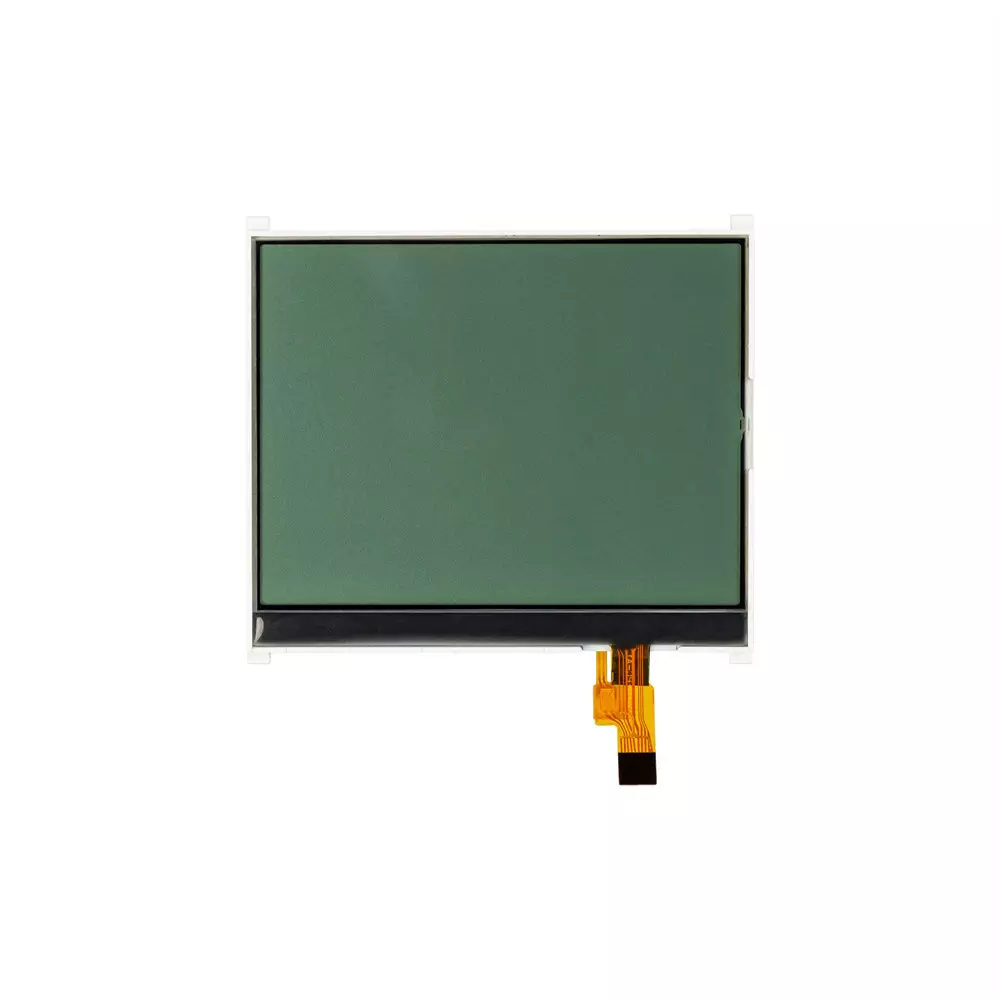
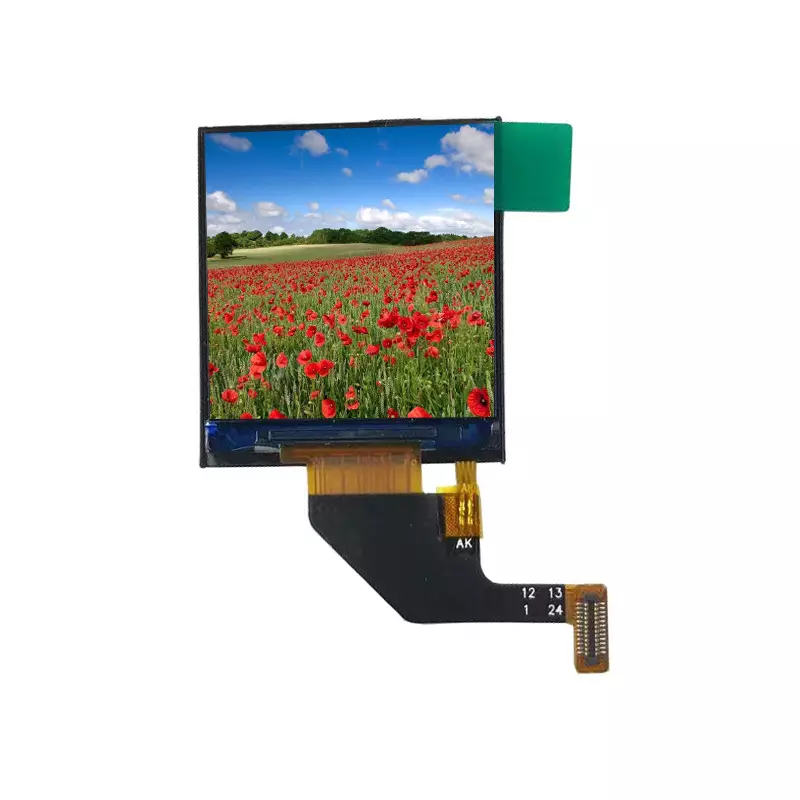
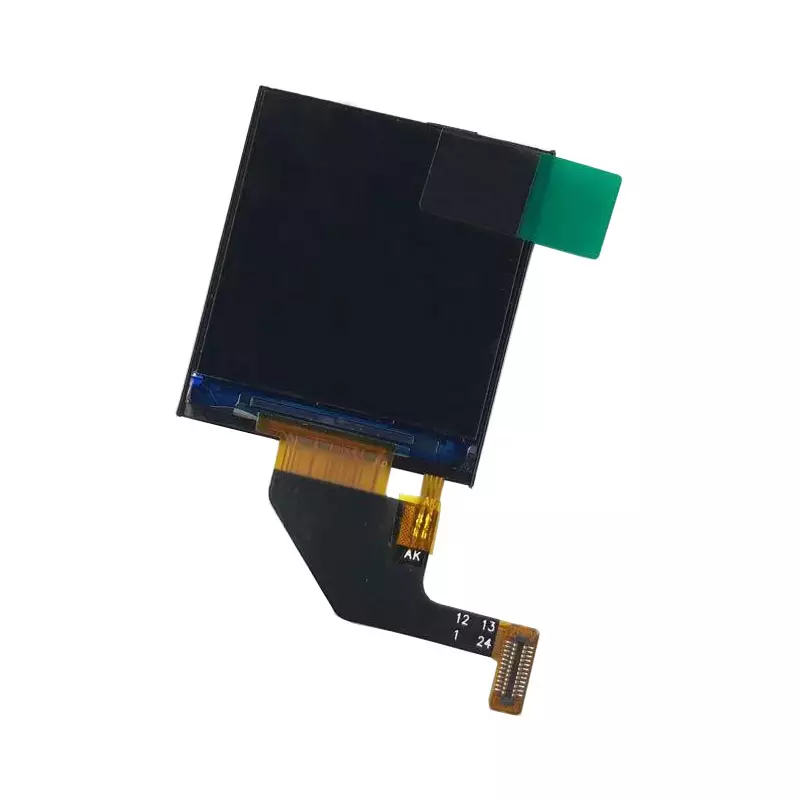
When you choose a tft lcd display lcd screen with rohs compliance, you invest in a product that excludes hazardous substances. This commitment protects your health and supports a safer environment. Products like the Golden Vision 1.40 Inch module stand as proof of quality and responsibility. You ensure your devices meet strict standards and reflect your dedication to safety and environmental care.


Key Takeaways

  • RoHS compliance means your TFT LCD display is free from hazardous substances, ensuring safety for you and the environment.

  • Choosing RoHS-compliant displays helps reduce electronic waste and supports sustainable manufacturing practices.

  • Look for the RoHS mark and request certificates to verify that your display meets safety standards.

  • RoHS-compliant products often perform better, with lower power consumption and longer lifespans.

  • Regularly check compliance and documentation to maintain safety and quality in your electronic devices.


RoHS Compliance and TFT LCD Display LCD Screen

What RoHS Compliance Means

You need to understand what rohs compliance means for your tft lcd display lcd screen. RoHS stands for Restriction of Hazardous Substances. The eu introduced this directive to limit the use of certain dangerous chemicals in electronic products. When you see a display marked as rohs compliant, you know it meets strict requirements for safety and environmental protection. The rohs directive sets clear limits on the presence of hazardous substances, ensuring your tft lcd display lcd screen does not contain unsafe levels of toxic materials.


Regulatory bodies define rohs compliance for electronic display products by restricting specific chemicals. The table below shows the main hazardous substances and when they were first regulated:

Hazardous Substance

Year Introduced

Additional Notes

Lead

2003

Commonly found in solder and electronics

Cadmium

2003

Used in batteries and pigments

Mercury

2003

Found in some electrical switches

Hexavalent chromium

2003

Used in metal coatings

Polybrominated biphenyls (PBB)

2003

Flame retardant in plastics

Polybrominated diphenyl ethers (PBDE)

2003

Flame retardant in textiles and plastics

Bis(2-ethylhexyl) phthalate (DEHP)

2015

Plasticizer in PVC

Benzyl butyl phthalate (BBP)

2015

Plasticizer in various products

Dibutyl phthalate (DBP)

2015

Used in plastics and adhesives

Diisobutyl phthalate (DIBP)

2015

Plasticizer in various applications

1.40 Inch tft lcd display lcd screen

Restricted Substances in TFT LCD Screens

You should know which hazardous substances are restricted under rohs regulations for your tft lcd display lcd screen. These substances can harm both users and the environment if not properly controlled. The following list outlines the main chemicals and their maximum allowable concentrations:


  • Lead (Pb): shall not exceed 0.1%

  • Mercury (Hg): shall not exceed 0.1%

  • Cadmium (Cd): shall not exceed 0.01%

  • Hexavalent chromium (Cr6+): not more than 0.1%

  • Polybrominated biphenyls (PBBs): not to exceed 0.1%

  • Polybrominated diphenyl ethers (PBDEs): not to exceed 0.1%

  • Tetrabromobisphenol A (TBBPA): not more than 0.1%

  • Alkyl benzene sulfonate (LAS): not more than 0.1%

  • Tris pyrophosphate (TPP): not more than 0.1%

  • Diphenyl Silicon Oxide (DSO): specific content limits may change due to updates to the standard


The rohs directive classifies lcds as high-risk because they can contain these hazardous substances. You must ensure your display meets these standards to avoid risks from toxic metals like arsenic, lead, cadmium, chromium, and mercury.


Why RoHS Matters for Users

You benefit directly from rohs compliance in your tft lcd display lcd screen. When manufacturers follow these regulations, you get a safer product. Chemicals in non-compliant screens can release toxins during use or disposal. These substances may cause health problems or harm the environment. Some liquid crystal monomers in non-compliant tft screens can disrupt organ function, even if no direct effects have been observed in humans yet.


By choosing a rohs compliant display, you protect yourself and contribute to a cleaner environment. You also show that you value products that meet international standards and requirements. This commitment to safety and responsibility reflects positively on your choices as a consumer.


RoHS-Compliant TFT Display Features

Safety and Environmental Benefits

You gain significant advantages when you choose a rohs-compliant tft display for your device. RoHS compliance ensures your tft lcd display lcd screen meets strict eu standards for environmental protection and user safety. This commitment reduces the risk of hazardous substances entering your workspace or home. You help create a safer environment for workers and consumers by supporting products that follow these requirements.


  • Reduces electronic waste toxicity and enhances safety for everyone involved in the product lifecycle.

  • Facilitates easier recycling of end-of-life devices, which supports a circular economy.

  • Limits the use of toxic materials in production, leading to a cleaner environment.

  • Supports sustainable manufacturing practices by restricting hazardous substances.


The Golden Vision 1.40 Inch tft lcd display lcd screen stands out with its vibrant IPS technology, 240x240 resolution, and 350 cd/m² brightness. You can use this display in medical devices, consumer electronics, and industrial equipment. Its compact size and customizable features make it ideal for applications where clarity and visibility matter most.


Product Quality and Reliability

You expect your display to perform reliably under various conditions. RoHS-compliant tft displays deliver consistent quality because manufacturers use advanced testing and strict compliance protocols. The Golden Vision module features an industrial-grade backlight system and supports both capacitive and resistive touch panels. You benefit from lower power consumption and longer product lifespan.


Feature

RoHS-Compliant TFT LCD Displays

Non-Compliant Alternatives

Designed for Harsh Environments

Yes

No

Lifespan

Over 50,000 hours

Shorter lifespan

Backlight System

Industrial-grade direct LED

Consumer edge-lit

Thermal Stability

Optical bonding, thermal sensors

Standard components

Power Efficiency

15-25% reduction in consumption

Higher consumption

Optical Bonding

Yes

No


You see the difference in durability, power consumption, and overall performance. RoHS-compliant tft displays meet international standards and pass rigorous testing, giving you confidence in your investment.


Achieving and Maintaining RoHS Compliance

Manufacturing and Certification Process

You play a crucial role in ensuring your display meets the requirements of the RoHS directive. The manufacturing process begins with careful selection of raw materials that comply with strict regulations. You must verify that every component, from the backlight to the driver IC, meets the compliance requirements set by the EU. The RoHS certification process involves several steps:


  1. Material assessment: You check all materials for restricted substances.

  2. Documentation: You gather evidence and maintain records for each component.

  3. Testing: Accredited laboratories perform testing to confirm the absence of hazardous substances.

  4. Certification: You receive a certificate after passing all tests and submitting documentation.


The significance of RoHS certification extends beyond legal obligations. You demonstrate your commitment to human health and environmental safety. By following the RoHS certification process, you ensure your display aligns with international standards and supports responsible consumption.

Note: The RoHS directive requires ongoing monitoring and documentation to maintain certification. You must stay updated on any changes to regulations or standards.


Ongoing Compliance Obligations

You cannot treat RoHS compliance as a one-time achievement. Ongoing compliance means you regularly review your supply chain and manufacturing processes. You must update your documentation and certificates whenever you change suppliers or materials. Regular testing helps you confirm that your display continues to meet the requirements of the RoHS directive.


You should also monitor power consumption and other performance metrics to ensure your product remains efficient and safe. By maintaining ongoing compliance, you protect your brand reputation and guarantee that your display meets the expectations of both regulators and consumers.

Tip: Establish a routine for reviewing compliance requirements and updating your certification. This proactive approach helps you avoid costly recalls and ensures your products always meet the highest standards.


Making Informed Choices: RoHS and Purchasing Decisions

Impact on Performance and Reliability

You want your tft display to deliver consistent performance and reliability. RoHS compliance ensures that your device meets strict standards for safety and quality. When you select a display that follows these requirements, you reduce the risk of failures caused by hazardous substances. RoHS-compliant products often show lower power consumption, which helps you save energy and extend device life. You also benefit from environmentally friendly design, which supports a cleaner environment and safer workplace. Reliable displays help you avoid costly downtime and repairs.

 TFT LCD display LCD screens

How to Identify RoHS-Compliant Products

You can identify RoHS-compliant products by checking for clear labeling and documentation. Manufacturers usually provide a certificate that confirms compliance with eu regulations. You should look for the RoHS mark on the product or packaging. This mark shows that the display meets all compliance requirements. You may also request testing reports from the supplier. These reports prove that the product passed laboratory analysis for restricted substances. A trustworthy supplier will always provide up-to-date certificates and detailed information about their compliance process.

Tip: Always verify the authenticity of certificates and ask for recent testing results before making a purchase.


Common Buyer Concerns

You may worry about the authenticity of RoHS claims or the impact on device performance. Manufacturers address these concerns in several ways:


  • They use eco-friendly materials in the production process.

  • They replace lead-based solder with safer tin-silver-copper alloys.

  • They align their practices with global standards and respond to consumer demand for sustainable electronics.

You can trust that a RoHS-compliant display supports both your health and the environment. Manufacturers who follow these practices show a commitment to responsible production and long-term reliability.


You gain real value when you choose TFT LCD display LCD screens with rohs compliance. This certification means your display uses non-hazardous materials and meets strict safety standards. The market shows rising demand for advanced, customizable, and eco-friendly displays.

Certification

Description

RoHS Compliant

Manufactured using non-hazardous electronic materials.

Impact Area

Description

Environmental Sustainability

Regulations emphasize eco-friendly materials and processes.

Market Access

Compliance ensures access to global markets and builds consumer trust.


Recycling and reuse of TFT-LCDs help reduce electronic waste and support sustainability.

You make a responsible choice for your health, the environment, and product quality when you select RoHS-compliant displays like the Golden Vision module.


FAQ

What does RoHS compliance mean for my TFT LCD display?

RoHS compliance means your display contains no hazardous substances above regulated limits. You get a safer product that meets international standards. Manufacturers follow strict guidelines to protect your health and the environment.


How can I verify if a TFT LCD screen is RoHS compliant?

You should check for the RoHS mark on the product or packaging. Request a certificate or recent testing report from your supplier. Reliable manufacturers provide clear documentation and up-to-date compliance information.


Does RoHS compliance affect display performance?

RoHS compliance does not reduce performance. You receive a display with high reliability and quality. Manufacturers use advanced materials and processes to ensure your device works efficiently and lasts longer.


Why should I choose a RoHS-compliant TFT LCD display?

You protect your health and support environmental sustainability. RoHS-compliant displays help reduce electronic waste toxicity. You also gain access to global markets and build trust with consumers.


Can RoHS-compliant displays be recycled?

Yes, you can recycle RoHS-compliant displays more easily. The absence of hazardous substances simplifies recycling and supports a circular economy. You contribute to responsible disposal and resource conservation.

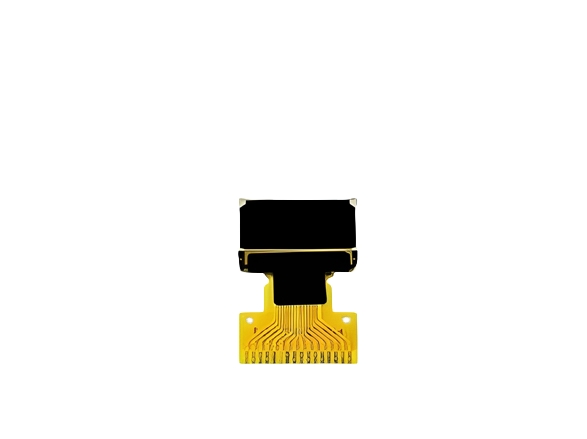
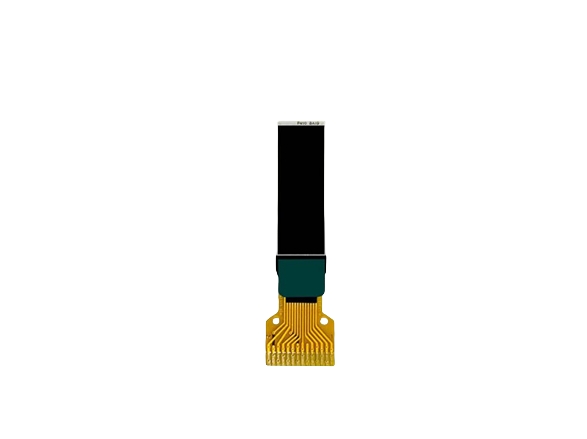
In today's pursuit of the ultimate user experience, the OLED display screen is no longer merely a screen; it serves as the physical boundary of high-end hardware design and the sole visual language that defines a sense of "futurism." 0.42 Inch 72*40 White/Blue light PMOLED Display Screen

1. Physical Structure: The "Subtraction" Principle—Achieving Ultimate Thinness and Industrial Aesthetics

Traditional TFT-LCD modules feature a complex "sandwich" structure comprising a backlight unit (BLU), diffuser sheets, brightness enhancement films, a liquid crystal layer, and color filters. This layered structure inherently limits a device's thickness and bezel width. In contrast, OLED screen utilize self-emissive technology, eliminating the need for a bulky backlight system. The 1–2 mm in thickness saved by this design is invaluable for space-constrained devices—such as smartphones, ultra-thin laptops, and high-end wearables—allowing for larger-capacity batteries or enabling stunning, ultra-narrow-bezel designs. This physical streamlining serves as the fundamental basis for high-end hardware’s pursuit of a "bezel-less" visual experience.

0.63 Inch 120*28 White Light PMOLED Display Screen

2. Visual Experience: The "Addition" Principle—True Blacks and Infinite Contrast 

No matter how extensively LCD technology optimizes local dimming, its backlight inevitably suffers from "light leakage," causing blacks to appear as varying shades of dark gray rather than true black. With an OLED display screen, every single pixel functions as an independently controlled light-emitting diode. When displaying black, these pixels switch off completely, resulting in zero power consumption. This "pure black" delivers a nearly infinite contrast ratio, endowing images with profound depth and an intensely immersive quality. For applications ranging from HDR video playback and professional-grade photography monitoring to high-fidelity gaming, the color fidelity and expressive power offered by OLED panels are simply irreplaceable.


3. Response Speed: A Generational Leap—Bidding Farewell to Motion Blur and Latency

In the realm of esports-grade displays and high-speed interactive interfaces, response time is the ultimate determinant of fluidity. LCDs rely on the physical reorientation of liquid crystal molecules, resulting in inherent latency measured in milliseconds (ms). OLED displays, however, boast response times measured in microseconds (μs)—rendering them virtually instantaneous. This lightning-fast response eliminates motion blur during dynamic scenes. When paired with today's mainstream refresh rates of 120Hz or higher, it delivers a silky-smooth interactive experience—a technical imperative that explains why OLED displays have become the standard configuration for high-end gaming terminals and professional interactive devices.


4. Flexibility and Form Factors: Infinite Possibilities

 Another key concept in high-end design is "innovation in form factor." Thanks to flexible substrate technology, OLED displays can take on curved, foldable, and even rollable forms. From smart home devices with wraparound screens to foldable smartphones, and even medical wearables designed to contour to the human body—only OLED display screens can break free from the constraints of rigid, rectangular shapes, granting industrial designers boundless creative freedom.

How Does RT/duroid 6010.2LM’s High Dk Enable Circuit Miniaturization in 4-Layer PCBs?


In the world of high-frequency RF and microwave engineering, the mantra is often "smaller, faster, cheaper." However, achieving miniaturization without compromising signal integrity is a significant challenge. As operating frequencies push into the X-band and beyond, the physical dimensions of passive structures—transmission lines, impedance matching networks, and antennas—become critically small.


For designers and procurement specialists looking for a competitive edge, the choice of laminate material is the deciding factor. RT/duroid 6010.2LM by Rogers Corporation is a cornerstone material for size reduction. But how exactly does its high dielectric constant (Dk) facilitate miniaturization in a complex 4-layer PCB?


As a supplier specializing in precise, high-frequency PCB fabrication, we regularly manufacture boards utilizing this specific material. Let’s break down the physics and the practical application, using a recent 4-layer project as a case study.


The Physics of Miniaturization: Wavelength and Dk

To understand miniaturization, we look at the wavelength of a signal traveling through a medium. The guided wavelength (λ) is inversely proportional to the square root of the effective dielectric constant (Dk) of the substrate.


λ=λ₀/√Dk


Whereλ₀is the wavelength in a vacuum. In simple terms: the higher the Dk, the shorter the wavelength. Shorter wavelengths mean that resonant structures—like patch antennas or impedance transformers—can be physically smaller while maintaining the same electrical length (e.g.,λ/4 orλ/2).


RT/duroid 6010.2LM boasts a dielectric constant of 10.2 +/- 0.25. This is significantly higher than standard FR-4 (typically 4.5) or even standard RF materials like RT/duroid 5880 (Dk 2.2). By embedding circuits in a material with a Dk of 10.2, engineers can shrink the physical footprint of their circuits by approximately 40-60% compared to lower Dk alternatives.


Beyond the Material: A 4-Layer Miniaturization Case Study

While theory is compelling, real-world application requires precise engineering. High Dk PCB materials are notoriously difficult to process due to their ceramic content, which makes them brittle. Furthermore, integrating them into a multilayer stackup requires careful thermal mechanical management.


Consider the specifications of a recent 4-layer board we manufactured:

  • Layer Count: 4
  • Core Material: RT/duroid 6010.2LM (x2)
  • Board Thickness: 2.8mm


Stackup:

  • Layer 1 (Signal/Antenna) - 35μm Copper
  • Core: RT/duroid 6010.2LM (1.27mm)
  • Layer 2 (Ground) - 35μm Copper
  • Prepreg (0.102mm)
  • Layer 3 (Power/Heat Management) - 35μm Copper
  • Core: RT/duroid 6010.2LM (1.27mm)
  • Layer 4 (Signal/Control) - 35μm Copper


This stackup illustrates exactly how miniaturization is achieved in a practical sense.


1. The "Thick Copper Sandwich" for Power and Ground

The 1.27mm (50mil) cores provide a robust dielectric between Layer 1 and Layer 2, and Layer 3 and Layer 4. Because the Dk is so high, the 50mil thickness does not negatively impact the trace width requirements for 50-ohm lines. In fact, it allows for wider, more forgiving traces on the outer layers than a thinner, lower Dk material would require. This improves yield during manufacturing while keeping the board surface compact.


2. CTE Matching for Reliability

One of the hidden enablers of miniaturization is reliability. As components get smaller, the mechanical stress on vias and plated through-holes increases.


The RT/duroid 6010.2LM material features a Coefficient of Thermal Expansion (CTE) matched to copper (24 ppm/°C in the X and Y axes). In a 4-layer board with 28 vias and 16 thru-hole pads, this is critical. If the material expanded significantly more than the copper plating (20μm via plating thickness) during thermal cycling, the vias would crack, killing the miniature circuit. The matched CTE ensures that the "miniature" board survives real-world conditions.


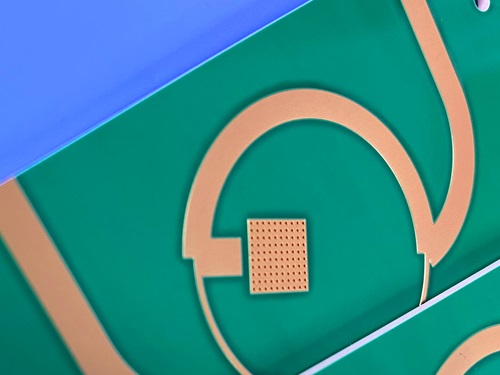
RT duroid 6010.2LM PCB 


The Design Advantages of High Dk in Multilayer RF Boards

Our specific PCB data sheet highlights several points that are direct benefits of using Rogers 6010.2LM in a miniaturized format:


Tight Dk Control for Impedance Accuracy: The specification of Dk 10.2 +/- 0.25 is extremely tight. For the designer, this means that the simulated impedance of a 5/7 mil trace will match the actual impedance of the fabricated board. This consistency allows designers to push the limits of trace spacing without fear of impedance mismatch, which is vital for the 21 high-frequency components mounted on this board.


Low Loss at High Frequency: Miniaturization is useless if the signal is attenuated. With a dissipation factor of 0.0023 at 10 GHz, the 6010.2LM ensures that while the circuit geometry shrinks, the signal strength remains robust. This makes it ideal for the "Typical Applications" listed, such as Satellite Communications and Aircraft Collision Avoidance Systems, where every dB of signal strength matters.


Simplified Fabrication: The product features specify "Reliable plated through-holes in multi-layer boards." For this 4-layer design, we utilized standard thru-hole vias rather than expensive blind vias (as noted: "No Blind vias"). The material's stability allows us to drill and plate the 0.5mm holes without the resin smear or barrel cracking often seen with softer materials. This keeps the manufacturing cost-effective while maintaining the IPC-Class-2 quality standard required for the application.


Thermal Management in a Small Package

One of the trade-offs of miniaturization is heat density. When you shrink the board, the heat generated by power amplifiers has less surface area to spread across.


RT/duroid 6010.2LM addresses this with a thermal conductivity of 0.86 W/mK. While this might not seem high compared to aluminum-backed substrates, it is excellent for a ceramic-PTFE composite. Combined with the finished copper weight of 1oz (1.4 mils) on the outer layers, the board can effectively wick heat away from active components and into the ground planes (Layer 2) or heat sinks attached to the ENIG-finished pads.


Conclusion: Size Reduction Without Compromise

RT/duroid 6010.2LM is more than just a high Dk material; it is an enabler of modern RF system architecture. By allowing the physical length of a wave to shrink, it allows engineers to pack more functionality—like Patch Antennas and Power Amplifiers—into a smaller volume.


In a 4-layer configuration, the material provides the mechanical stability to support a thick board (2.8mm) with a dense via field (28 vias) and tight trace geometries (5/7 mils). It bridges the gap between the need for extreme electrical performance and the practical demand for durable, manufacturable hardware.


As a supplier, our role is to take your Gerber RS-274-X files and the promise of this material and turn it into a reality. With 100% electrical testing and strict adherence to the Rogers processing guidelines, we ensure that the miniaturization you designed on screen performs perfectly in the field.


How the Low DK and DF of TLX-7 Improve RF Signal Integrity in High-Frequency PCBs?


In the world of RF (Radio Frequency) and microwave engineering, the PCB is not just a holder for components; it is a critical component of the circuit itself. As we push into higher frequencies (into the mmWave range), the margin for error shrinks dramatically. Every material property, every trace width, and every via introduces the potential for signal loss and distortion.


At Bicheng, we specialize inproviding high-precision PCBs that meet these exacting standards. A prime example of this capability is our 2-layer rigid PCB featuring the advanced Taconic TLX-7 laminate. Measuring 102mm x 86mm with a finished thickness of 0.8mm, this board is engineered specifically for demanding RF applications.


But what makes this specific material choice so critical? The answer lies in two key material properties: DK (Dielectric Constant) and DF (Dissipation Factor) . Let’s dive deep into how the low and stable DK (2.6) and ultra-low DF of Taconic TLX-7 directly improve signal integrity.


Understanding the Loss: DK and DF in RF Circuits

To understand the "how," we must first understand the "what."


DK (Dielectric Constant orεr): This measures a material's ability to store electrical energy in an electric field. In practical PCB terms, it determines the speed at which an RF signal travels through the medium. A lower DK allows for faster signal propagation. More importantly, for RF design, the DK dictates the physical width of a trace required to achieve a specific characteristic impedance (usually 50Ωor 75Ω).


DF (Dissipation Factor or Loss Tangent): This measures the inherent inefficiency of the dielectric. It quantifies how much of the high-frequency AC signal is lost as heat within the board material. A lower DF means less energy is absorbed by the substrate, resulting in a stronger signal arriving at the destination.


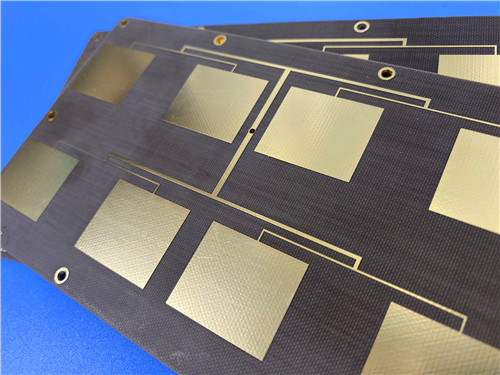
TLX-7 PCB


The Taconic TLX-7 Advantage: A Closer Look at the Core

Our PCB stack-up is simple yet highly effective: Copper (35μm) /Taconic TLX-7 Core(0.762mm) / Copper (35μm) . While the stack-up is a standard 2-layer construction, the core is anything but standard.


Taconic TLX-7 Taconic PCB is a PTFE (polytetrafluoroethylene) based composite reinforced with woven fiberglass and filled with ceramic. This specific composition yields the exceptional properties listed in your product introduction. Here is how these properties translate to real-world signal integrity improvements:


1. Minimal Signal Attenuation with Ultra-Low DF

The most direct impact on signal integrity is loss. The dissipation factor (DF) of Taconic TLX-7 is exceptionally low. In RF engineering, total loss is a combination of conductor loss (copper roughness/skin effect) and dielectric loss (DF).


The Mechanism: As frequency increases, the electric field interacts more with the dielectric. In standard materials like FR-4, the DF can rise sharply with frequency, turning your signal into heat.


TLX-7 Impact: With its ultra-low DF, TLX-7 minimizes this dielectric absorption. For the applications listed—such as phased array antennas and microwave test equipment—this means lower insertion loss. The signal maintains its amplitude integrity across the 102mm length of the board, ensuring that the power reaching the antenna elements or the receiver is as intended by the design.


2. Stable Impedance Control with Low and Consistent DK

Impedance control is the backbone of RF signal integrity. Any deviation from the target impedance (e.g., 50Ω) causes reflections, which manifest as signal degradation and standing waves.


The Mechanism: Impedance is directly related to the DK of the material and the physical geometry of the trace. With a standard DK of 2.6, TLX-7 is considered a "low" DK material. This is advantageous because it allows for wider trace widths for a given impedance compared to higher DK materials. For your PCB specifications, which feature a minimum trace/space of 4/6 mils, designing 50Ωtraces on a 0.762mm thick core is highly feasible and manufacturable.


TLX-7 Impact: More importantly, the DK is "tightly controlled" and stable across frequency. Inconsistent DK leads to unpredictable impedance. By using TLX-7, we ensure that the impedance calculated during the design phase (using Gerber RS-274-X files) is the impedance you get on the physical board. This stability is critical for radar systems where phase consistency is paramount.


3. Reliable Performance in Variable Environments

Signal integrity isn't just about performance on the test bench; it's about performance in the field. RF PCBs often face temperature fluctuations and humidity.


The Mechanism: Standard materials can absorb moisture, which drastically changes the DK (water has a DK of ~80). Similarly, thermal expansion can warp the board and change the physical dimensions of the circuit.


TLX-7 Impact: TLX-7 boasts low moisture absorption and excellent thermal properties. The DK remains stable regardless of environmental conditions. For mobile communication systems and outdoor microwave transmission devices, this guarantees that the link budget calculated on a sunny day remains valid during a rainstorm. The UL 94 V-0 rating also ensures safety without compromising RF performance.


Manufacturing Precision: Bringing TLX-7 to Life

A great material is nothing without the precision to manufacture it. PTFE materials like TLX-7 are notoriously soft and require specialized handling compared to standard FR-4. This is where our expertise as your PCB supplier comes into play.


We combine the advanced material with precise fabrication techniques:


Controlled Impedance Etching: To achieve the 4/6 mil traces required for impedance control on TLX-7 high frequency PCB, we utilize precise etching processes. The finished 1oz copper weight (1.4 mils) on the outer layers is maintained with tight tolerances to control conductor loss.


Plated Through-Holes (PTH): The board features 29 vias and 32 thru-hole pads with a via plating thickness of 20μm. In RF designs, vias act as inductive elements. By maintaining a consistent plating thickness and a minimum hole size of 0.5mm, we ensure that the transition between Layer 1 and Layer 2 is as seamless as possible, minimizing parasitic inductance.


Surface Finish: The Immersion Gold finish provides a flat, corrosion-resistant surface ideal for soldering the 31 components (24 Top SMT Pads) while maintaining excellent surface conductivity for RF signals.


Quality Assurance: Every board undergoes a 100% Electrical Test prior to shipment. For RF boards, this often includes not just netlist continuity but also impedance testing (TDR) to validate that the signal integrity designed into the Gerber files is realized in the physical hardware.


Conclusion: The Perfect Match for Microwave Designs

For low-layer count microwave designs, the combination of a superior laminate like Taconic TLX-7 and precise manufacturing is non-negotiable. The low DK (2.6) allows for practical, manufacturable trace geometries, while the low DF ensures that your signal power is used for transmission, not wasted as heat.


Whether you are designing a sophisticated phased array antenna or a sensitive RF component, the material properties of TLX-7 provide the foundation for excellent signal integrity. AtBicheng, we are equipped to take your Gerber files and deliver a finished board that meets IPC-Class-2 standards, leveraging the full potential ofTaconic materials for your high-frequency success.


Looking to prototype your next RF design? Contact us today to discuss your TLX-7 requirements and experience the difference in signal integrity.


As an RFID system integrator or software solutions provider, you know that the success of a linen tracking project rarely comes down to the software dashboard alone. You can build the most intuitive, feature-rich, cloud-based linen management platform in the world, complete with real-time analytics and beautiful predictive maintenance charts. But if the physical data collection fails at the source, your software is effectively blind.

In the commercial laundry and hospitality sectors, the hardware environment is notoriously unforgiving. When your clients—whether they are mega-hotels, regional hospital networks, or centralized commercial industrial laundries—invest in an automated tracking system, they expect 99.9% read rates. They expect seamless inventory management. What they do not expect are support tickets caused by hardware degradation.

The foundation of any successful linen tracking architecture is the physical transponder attached to the textile. Selecting the correct baseline RFID laundry tag is not just a hardware purchasing decision; it is a critical risk-mitigation strategy for your entire project. Let’s dive deep into the technical and commercial realities of specifying the right hardware for your next major deployment.

The Harsh Reality of the Commercial Wash Cycle

To understand why standard RFID tags fail in this industry, you have to understand the brutal journey a hotel towel or hospital bedsheet takes during a commercial wash cycle. This is not a gentle tumble in a residential washing machine. Commercial laundering is an extreme industrial process designed to strip biological contaminants and heavy stains from thousands of pounds of textiles daily.

Chemical and Mechanical Stress

Linens are subjected to highly concentrated alkaline detergents, bleaches, and souring agents. Beyond the chemical bath, the mechanical stress is immense. After washing, textiles are often moved into heavy-duty centrifugal extractors or hydraulic presses. These machines squeeze water out of the fabric using dozens of bars of pressure. If an RFID tag’s internal antenna is not bonded securely to the IC (Integrated Circuit), or if its encapsulation is brittle, this pressure will instantly snap the internal connections, rendering the tag dead.

Thermal Shock and Ironing

The final, and often most destructive, stage of the process is drying and ironing. Flatwork ironers press linens between massive heated rollers that can reach temperatures exceeding 200°C (392°F). A standard transponder will melt, warp, or suffer permanent chip degradation under these conditions.

For integrators, specifying a robust High Temperature Laundry Rfid Tag is absolutely non-negotiable. These specialized tags are typically encapsulated in industrial-grade silicone, woven fabric, or specialized epoxy resins that act as a thermal shield. They are engineered to endure the thermal shock of going from a cold wash to a boiling iron, surviving well over 200 industrial wash cycles. If you specify a tag that fails at cycle 50, your client will have to bear the massive labor cost of locating the dead tag, unstitching it, and sewing a new one in—a surefire way to lose a contract renewal.

The Physics of Bulk Reading in Wet Environments

Surviving the wash is only half the battle. The tag must also perform flawlessly during the logistical data-capture phases: sorting, dispatch, and receiving. This is where the laws of physics heavily impact RFID performance.

Water vs. UHF RF Signals

UHF (Ultra-High Frequency) RFID systems, which typically operate in the 860-960 MHz range (ISO 18000-6C / EPC Class 1 Gen 2), are highly sensitive to water. Water acts as a dielectric that absorbs RF energy. When a cart full of damp, tightly packed hospital gowns passes through an RFID portal, the water content severely attenuates the signal from the reader antennas. If the tags inside the center of that cart have weak antenna designs or older, power-hungry chips, they simply will not receive enough energy to backscatter their EPC data to the reader.

The Need for High-Sensitivity Chips

To achieve the "bulk reading" capability that your clients are paying for, the system must capture hundreds of tags simultaneously as a laundry cart rolls through a tunnel or cabin reader at normal walking speed.

This requires deploying a highly sensitive Long Range RFID Laundry Tag. Modern tags built with advanced ICs—such as the NXP UCODE 8 or UCODE 9 series—feature incredibly low read/write power requirements and high backscatter efficiency. They also utilize advanced anti-collision algorithms.

When a cart containing 500 linens passes a reader, all 500 tags wake up and try to "talk" at once. A tag optimized for long-range, dense-population reading will efficiently resolve these collisions, allowing your middleware to register every single item in seconds, even if the tag is buried deep inside a pile of damp fabric. This speed and accuracy are what allow commercial laundries to slash their labor costs and eliminate manual counting bottlenecks.

Hardware Reliability Equals Software Success

From a system integrator’s perspective, hardware failures are toxic to profitability. When a hospital administrator complains that their inventory dashboard is showing a 5% loss rate, they don't immediately blame the tags; they blame your system.

Every time a tag fails to read because its antenna was broken in a water press, or its chip fried in an ironer, it registers as a "lost" item in your database. This phantom data corruption forces your support team to spend hours troubleshooting. Is the reader antenna misaligned? Is the middleware dropping packets? Is the network lagging? Often, after hours of expensive diagnostic labor, the root cause is simply low-quality tags.

By anchoring your software platform to premium, rigorously tested OEM hardware, you protect your software's reputation. Your dashboards remain accurate, your predictive analytics function correctly, and your clients experience the true ROI of automated inventory management.

Winning Bids with Strategic Hardware Sourcing

While technical specifications are paramount, the reality of the B2B landscape is that projects are often won or lost on price. When an integrator bids on a massive deployment—say, outfitting a regional hotel chain with 500,000 pieces of linen—the initial Capital Expenditure (CAPEX) for the tags is the single largest line item on the proposal.

If you source your tags from third-party domestic distributors or brand-name European resellers, the compounded markups will inflate your total bid price, making you uncompetitive. Conversely, if you try to cut costs by buying the absolute cheapest tags from unverified suppliers, you guarantee a catastrophic system failure within the first year of operation.

The winning strategy for top-tier integrators is to shorten the supply chain. By partnering directly with an established, specialized manufacturer in China, you can secure a Wholesale Price RFID UHF Laundry Tag without compromising on the IC quality or the encapsulation integrity.

A direct OEM factory partnership provides several strategic advantages beyond just cost-per-unit savings:

  1. Custom Encoding and Printing: Factories can pre-encode EPC memory banks according to your specific software architecture and laser-print human-readable QR codes or serial numbers directly onto the tags before shipping.

  2. Form Factor Customization: Depending on whether your client sews the tags into hems, heat-seals them, or puts them in pouches, the factory can adjust the physical dimensions and materials to ensure a perfect fit.

  3. Predictable Supply Chain: By locking in bulk wholesale pricing and scheduled production runs, you protect your project timelines from sudden inventory shortages.

Building a Resilient Architecture

In the high-stakes world of commercial linen tracking, your software is only as good as the physical data it receives. By deeply understanding the extreme environmental challenges of industrial laundering and the RF physics of bulk reading, you can specify hardware that actually survives the journey.

Don't let inferior tags drag down your software's performance or inflate your project bids. Secure your supply chain, demand high-temperature resilience, insist on long-range sensitivity, and optimize your wholesale costs.


In today’s connected world, RFID (Radio Frequency Identification) and NFC (Radio Frequency IdentificationRadio Frequency Identification technologies are playing increasingly important roles across business, daily life and even gaming. From helping companies customize products and automate processes, to making routine tasks like laundry easier, and providing valuable items inside popular video games, RFID/NFC systems offer diverse benefits. This article explores how these smart tagging technologies create value across different applications.


1. Boosting Business Customization with NFC Sticker Labels
One of the most flexible applications of wireless tagging technology is NFC sticker labels, which enable businesses to create highly personalized and interactive experiences. Thanks to their customizable size, shape and material, NFC stickers can be tailored for various products and branding needs.


Key advantages include:

  • Design flexibility: Choose round or square shapes, paper, PVC or PET materials, and glossy or matte finishes. These options allow NFC stickers to match virtually any product surface.
  • Brand identity & tracking: Custom printing with logos, artwork and barcodes enhances branding and supports inventory tracking.
  • Programmable functionality: NFC chips like N‑tag213 can store web links, messages or automation triggers. With a simple phone tap, customers can access menus, promotions, payment pages or product info.

This blend of physical and digital interaction helps companies simplify processes, enhance customer experience, and stand out in competitive markets.


2. Making Everyday Tasks Easier with RFID Laundry Tags
Beyond business customization, RFID tags are also transforming everyday routines like laundry management. Traditional laundry methods often involve manual sorting and tracking, which can be time‑consuming and error‑prone. Modern RFID laundry tag solutions automate these tasks, making the entire process quicker and less stressful.


How RFID improves laundry workflows:

  • Quick tracking: RFID tags embedded in laundry items help sort and monitor garments automatically.
  • Efficient management: Large quantities of laundry can be scanned and logged instantly, reducing human error and saving labor costs.
  • Cost‑effective solutions: Wholesale smart laundry tags are available for both commercial and institutional laundry operations, making RFID adoption practical at scale.

In short, RFID laundry tags provide a smarter alternative to traditional processes, helping facilities and households alike handle laundry with speed and accuracy.


3. Understanding Blank RFID Cards in Gaming Culture
RFID technology even shows up in digital entertainment. For example, in the popular video game Escape from Tarkov, players encounter a “Blank RFID Card” — a rare in‑game item with strategic importance.

In this context, the blank RFID card:

  • Serves as a quest item: It’s required to complete a specific mission called “The Ticket”.
  • Has in‑game value: Due to its rarity, players can sell the card for significant in‑game currency if they don’t need it for the mission.
  • Adds depth to gameplay: The blank RFID card’s scarcity and quest linkage make it a sought‑after item, enhancing player engagement and community discussion.

While this use case differs from real‑world RFID applications, it reflects how RFID concepts have permeated popular culture and game design.


From business customization with NFC stickers, to improving laundry efficiency, and even to becoming a valuable game item, RFID and NFC technologies demonstrate versatility across different domains. Their ability to link physical objects with digital data unlocks new levels of automation, personalization and user engagement — both in professional settings and everyday life.


You check in after a long trip, but your hotel key cards refuse to open the door. Frustration grows. Most hotel key cards fail for simple reasons. You can prevent problems with easy habits. SHENZHEN ZHIJIE Hotel Key Cards stand out for their strong resistance to failure.


Main Reasons Hotel Key Cards Fail

Hotel key cards let you get into your room easily. Most hotels use two main kinds of cards. Magnetic stripe cards have your room info on a black strip. RFID cards have a chip and antenna to send data. Both types can stop working for many reasons.


Demagnetization and Physical Damage

Your card might stop working after being in your pocket or wallet. Demagnetization happens when the magnetic stripe loses its data. This can happen if your card is near strong magnets or electronics. RFID cards do not demagnetize, but they can still break if scratched or bent.


Physical damage is a big reason hotel key cards fail. You might drop your card, sit on it, or let it rub against keys. These things can scratch, crack, or bend the card. Reports say about 38% of hotel key card failures are from physical damage. Do not fold, punch holes, or use tape on your cards. Trying to fix your card with heat or tape can make it worse.


Electromagnetic Interference Sources

Electromagnetic interference can stop your card from working. Many people do not know that keeping cards near phones or chargers can cause problems. These devices make electromagnetic fields that can erase or mix up your card’s data. Metallic wallets and magnetic mounts can also cause interference.


Keep your card away from electronics and magnets. Put your card in a different pocket or a paper sleeve. This simple step protects both magnetic stripe and RFID cards from interference. If you use RFID key cards, you still need to watch out for strong electromagnetic sources. Hotel door readers may not read your card if it gets too much interference.


Hotel System and Security Issues

Sometimes, the problem is not your card. Hotel system mistakes can make your card stop working. The front desk might give you the wrong room number or expiration date. Power outages or software problems can also affect hotel door readers.


Security is another reason cards fail. If you lose your card or forget to check out, your card might stay active until it expires. This can let someone else get into your room. Security checks warn that unvoided cards can be used by others. Always return your card to the front desk and ask them to void it. Staff can reprogram locks and turn off lost cards to keep you safe.


Tip: If your card stops working, do not try to fix it yourself. Go to the front desk for help. Staff can check your card and give you a new one if needed.


SHENZHEN ZHIJIE Hotel Key Cards are made to resist failure. Their special design helps stop demagnetization, physical damage, and interference. You can trust these cards for a safe and easy hotel stay.


Hyatt Hotel Master Keycard


Preventing Hotel Key Card Problems

Card Care Do’s and Don’ts

You can keep hotel key cards working with a few simple habits. Store cards away from phones, chargers, and magnetic items. Use a cloth pouch or a rigid card sleeve. Avoid metallic or rfid-blocking wallets. These steps protect cards from electromagnetic interference. Do not bend, flex, or punch holes in cards. Keep cards dry and clean. Moisture can damage both magnetic stripes and rfid cards. Wipe cards with a dry, lint-free cloth if they get dirty. Never use alcohol wipes or harsh cleaners.


Tip: Always remove hotel key cards from your wallet or phone case right after check-in. This prevents interference and keeps cards safe.


Quick Do’s and Don’ts Table:

Do’s

Don’ts

Store cards in a separate sleeve

Place cards near electronics

Keep cards dry and clean

Use cards as tools or bookmarks

Hold rfid cards flat to the reader

Bend, fold, or punch holes in cards

Swipe magnetic cards smoothly

Use tape or heat to fix cards


Troubleshooting Steps

If your card does not work, try these solutions before asking for help:

Check if you stored the card near a phone or charger. Move it away from all electronics.

Wipe the card gently with a dry cloth.

For magnetic stripe cards, swipe slowly and fully. For rfid cards, hold the card flat against the reader for two seconds.

Try another door reader if available.

If the card still fails, do not try to fix it yourself. DIY fixes can cause more damage. Hotel staff receive training to solve key card problems quickly and safely.


When to Get Help from the Front Desk

You should ask for help if your card does not work after basic steps. Staff can check for system errors, reprogram cards, or replace them. They know how to handle electromagnetic interference and security issues. Hotels train staff in lock operation, emergency protocols, and guest support. You can find help at any time, day or night.


Note: Returning your card at checkout helps hotels recycle cards and reduce waste. Many hotels now use eco-friendly cards to lower environmental impact.


SHENZHEN ZHIJIE Hotel Key Cards offer extra resistance to failure. Their design protects against electromagnetic interference, physical damage, and moisture. You can trust these cards for a smooth hotel stay.

  • Keep your card away from electronics.
  • Store it in a safe place.
  • Handle it gently.


You can avoid most hotel key card problems with these steps. Staff will always help if you need support. SHENZHEN ZHIJIE Hotel Key Cards give you extra peace of mind with their strong resistance to failure.


FAQ

What should you do if your hotel key card stops working?

Go to the front desk. Staff can check your card and give you a new one. Do not try to fix the card yourself.


Can your phone really damage your hotel key card?

Yes. Phones can cause electromagnetic interference. Keep your card in a separate pocket or sleeve to protect it.


Why choose SHENZHEN ZHIJIE Hotel Key Cards?

Feature

Benefit

Strong design

Less chance of card failure

Extra shielding

Better protection from damage

You get peace of mind with SHENZHEN ZHIJIE Hotel Key Cards because they resist failure better than most cards.

In today’s fast-paced world, having a reliable companion on your wrist is no longer a luxury, it’s a necessity. The Y3 Smart Watch combines style, technology, and health monitoring into a sleek, 1.88-inch high-definition large screen. Its vibrant dynamic dials, 3D UI interface, and three-ring display dial ensure every glance at your wrist is engaging and informative.


Health and fitness tracking are at the core of Y3. Continuous heart rate monitoring, blood oxygen detection, and full-day sleep tracking provide real-time insights into your well-being. The four-mode breathing relaxation guide helps manage stress, while professional sports algorithms accurately track your performance across running, cycling, and mountain climbing. Your wrist becomes a personal trainer, motivating and guiding you throughout the day.


Connectivity has never been easier. With Bluetooth call functionality, you can answer calls, end calls, and quickly access call records directly from your watch. Notifications for messages and other apps keep you updated without reaching for your phone. Built-in intelligent features like weather updates, alarms, stopwatch, and calculator make everyday life simpler and more organized.


The Y3 Smart Watch is designed for durability and convenience. IP67 waterproofing ensures reliability in any environment, while touch-free charging and long battery life keep you powered throughout the day. Lightweight and integrated, it provides comfort without compromising style.


Whether you are a fitness enthusiast, a busy professional, or simply someone who values convenience, the Y3 Smart Watch elevates your wristwear experience. It’s more than a watch—it’s your all-in-one assistant.


Wearable technology is evolving beyond watches and bracelets. Today, innovation is becoming smaller, smarter, and more convenient. The new North Edge Smart Ring V10 is a perfect example of how advanced technology and elegant design can work together to support a healthier lifestyle.


Designed as a fashionable accessory as well as a powerful health tracker, the V10 integrates multiple monitoring features into a compact and comfortable ring. Equipped with high-precision sensors, it can continuously monitor heart rate, blood oxygen levels, and blood pressure, providing valuable insights into your daily health conditions. The ring automatically records sleep data during the night and generates a detailed sleep report, helping users understand their sleep quality and build better sleep habits.


For active users, the V10 also supports multiple sports modes and activity tracking, allowing you to monitor calories burned and daily movement more efficiently. All data can be synchronized with mobile health platforms such as Apple Health, making it easy to manage your fitness progress.


The V10 also includes women’s health management, offering menstrual cycle prediction and reminders based on user feedback and algorithm analysis. This thoughtful feature provides additional convenience for female users who want to better understand and track their health.


Despite its small size, the smart ring delivers impressive durability and performance. With IP68 waterproof protection, it can be worn during hand washing, showering, or even swimming. The magnetic fast-charging design allows the ring to fully charge in about one hour, while the long-lasting battery ensures reliable daily use.


You want your business to stand out and adapt quickly. Custom solutions give you an edge in today’s market. With an NFC Sticker Label, you can choose the size, material, and programming that fit your needs. You can link digital content, automate tasks, and match your brand’s look. These options help you create a unique experience for your customers.

NFC Sticker Label Design Customization

Size and Shape Options


You can pick the size and shape you need. NFC Sticker Label comes in round or square shapes. Choose a small label for tags. Pick a bigger one for displays. This lets you use stickers on many things. You can put them on bottles, boxes, or curved items. The right size and shape makes products look neat.


Material and Finish Choices


You have many material choices for your NFC Sticker Label. Paper gives a classic look. PVC is softer and lasts longer. PET is strong for tough surfaces. Each material has its own good points. You can pick glossy or matte finishes. Glossy stickers shine and stand out. Matte stickers feel smooth and modern. These options help match stickers to your product and brand.


Material Best For Finish Options
Paper Simple packaging Glossy/Matte
PVC Durable surfaces Glossy/Matte
PET Tough environments Glossy/Matte


Branding and Personalization


You can make each NFC Sticker Label with your own design. Add your logo, brand colors, or artwork. You can print serial numbers or barcodes for tracking. This helps build your brand identity. Customers will see your care for details. Personalization helps organize products and manage inventory. Custom stickers show your business values quality and style.


Programmable Features


Linking Digital Content


You can use an NFC Sticker Label to connect your customers to digital content. When someone taps their phone on the sticker, they can open a website, view a menu, or watch a video. The N-tag213 chip inside the sticker holds up to 144 bytes of data. This is enough to store a web link or a short message. You can update the content anytime. This makes it easy to share new information with your customers.


Automating Business Tasks


You can program each NFC Sticker Label to help with daily tasks. For example, you can set up stickers for quick payments or ticketing. When a customer taps the sticker, the system can process a payment or check a ticket. You can also use the stickers for inventory. Place them on boxes or shelves. Scan them to update stock levels or track items. The N-tag213 chip works with most NFC-enabled devices. This makes it simple to add automation to your business.

  • Use for cashless payments
  • Speed up ticket checks
  • Track inventory with a tap


Secure Data and Tracking


You can trust the NFC Sticker Label to keep your data safe. The N-tag213 chip follows ISO/IEC 14443A and NFC Type 2 standards. This means it works with many devices and keeps your information secure. You can use the sticker for access control or asset tracking. Each sticker can have a unique serial number or barcode. This helps you manage products and prevent fraud. You can also track items as they move through your business.


Feature Benefit
Unique ID Easy tracking
Secure memory Protects your data
NFC standards Wide compatibility


System Integration


Enhancing Customer Experience


NFC Sticker Label can help your customers have a better time. When you put these stickers on products, people can tap their phones. They get information right away. They can read instructions, check if something is real, or join a rewards program. This fast access makes customers feel close to your brand. You give them an easy way to connect with your business. Most people already have NFC on their phones, so they do not need anything extra.


Streamlining Operations


NFC sticker labels can make your daily work simpler. Use them to keep track of inventory or manage tools. Workers can scan stickers with phones or tablets to update stock or check equipment. This saves time and helps stop mistakes. You can use NFC stickers for access control too. Only allowed people can open doors or use machines. The stickers work with many NFC devices, so you do not need new equipment.


Marketing Applications


NFC sticker labels can make your marketing stronger. Put them on posters, flyers, or product displays. Customers can tap to join games, watch videos, or follow your social media. You can change the link anytime. This keeps your campaigns new and fun. NFC stickers let you see how many people tap and connect with your brand.

You can help your business grow with NFC sticker labels. These labels let you change how they look and work. You can make them fit your brand. You can use them to do jobs faster. You can connect with your customers in new ways.


  • Look at different materials and shapes.
  • Try making stickers work for payments or tracking.
  • Ask an NFC expert for help and advice.


FAQ


What devices can read an NFC Sticker Label?


Most smartphones and tablets with NFC can read an NFC Sticker Label. You do not need special equipment. Just tap your device on the sticker to access the information.


How do you program an NFC Sticker Label?


You can use a free app on your phone to write data to the NFC Sticker Label. Choose what you want to store, like a website link or a message, and follow the app’s steps.


Where can you use NFC Sticker Labels in your business?


You can use them on product packaging, posters, or equipment. They work well for payments, inventory, and marketing. You can place them anywhere you want to share information or track items.


Are NFC Sticker Labels safe for storing information?


Yes, NFC Sticker Labels use secure chips that follow industry standards. You can trust them for safe data transfer and tracking.